
No deal with Iran except ‘unconditional surrender,’ Trump says
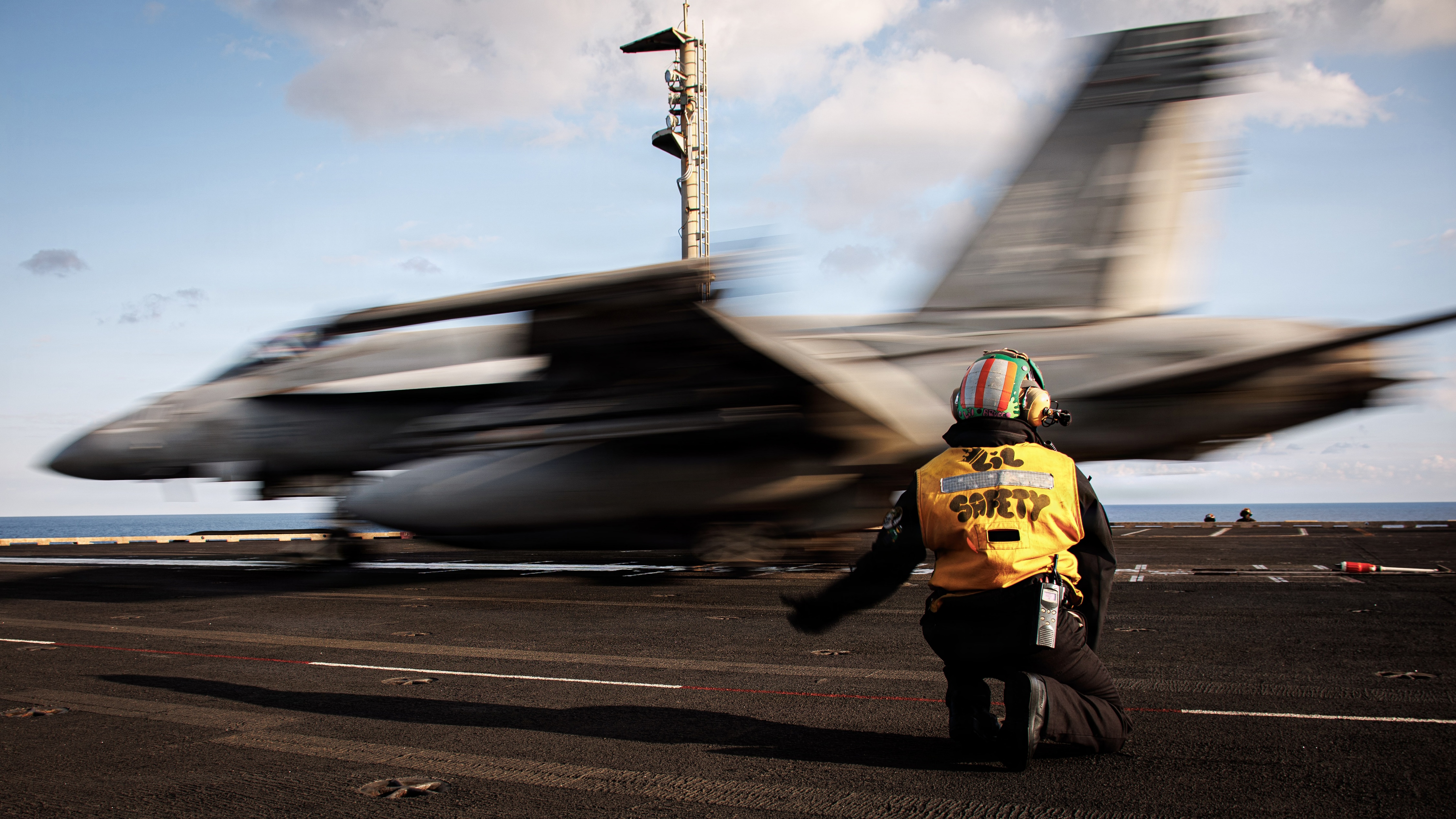
U.S. President Donald Trump on Friday escalated discourse surrounding the Iran war, saying the U.S. would be abandoning talks of a deal unless the country capitulates entirely.
In a post on the social media platform Truth Social, Trump wrote that “IRAN WILL HAVE A GREAT FUTURE” should the Islamic Republic decide to put down its arms.
“There will be no deal with Iran except UNCONDITIONAL SURRENDER!” the president wrote. “After that, and the selection of a GREAT & ACCEPTABLE Leader(s), we, and many of our wonderful and very brave allies and partners, will work tirelessly to bring Iran back from the brink of destruction, making it economically bigger, better, and stronger than ever before. ... ‘MAKE IRAN GREAT AGAIN (MIGA!).’”
Trump’s comments came less than 24 hours after Defense Secretary Pete Hegseth and U.S. Central Command chief Adm. Brad Cooper provided combat updates during a press briefing at CENTCOM headquarters at MacDill Air Force Base in Tampa, Florida.
Discussing the ongoing Operation Epic Fury, Hegseth asserted that U.S. combat power continues to converge upon the region as Iran’s capabilities decline.
“When we say more to come, it’s more fighter squadrons, it’s more capabilities, it’s more defensive capabilities and it’s more bomber pulses more frequently,” Hegseth said.
With the goal of dismantling Iran’s navy, missile capabilities and nuclear program, U.S. forces over the course of the week-long war have struck approximately 2,000 targets, Cooper previously stated.
In the 72 hours prior to Thursday’s briefing, American bombers hit nearly 200 targets and dropped dozens of 2,000-pound penetrative bombs on deeply buried ballistic missile launchers, the CENTCOM commander said.
The U.S. has also eliminated 30 Iranian navy ships, Cooper added, including one off the coast of Sri Lanka — in the U.S. Indo-Pacific Command area of responsibility — that was the result of the first U.S. Navy submarine torpedo kill since World War II.
Iran’s “equivalent of space command” has also been hit, Cooper noted.
Now one week into the conflict, actions have resulted in Iran’s military offenses slowing considerably, the admiral said, with the Islamic Republic’s ballistic missile attacks decreasing by 90% since the first day of the war and drone attacks diminishing by 83%.
“We’re not just hitting what they have,” Cooper said. “We’re destroying their ability to rebuild.”
Questions remain, meanwhile, regarding munitions stockpiles and how exactly Washington will accomplish its objectives.
On Wednesday, Ukrainian President Volodymyr Zelenskyy stated that over 800 Patriot interceptor missiles had been used over the first three days of the Iran war, more than what Ukraine has used in four years since Russia’s 2022 invasion.
The U.S. and other allies have reportedly approached Kyiv with requests for expertise, including from personnel, on more cost-friendly measures to combat Iran’s cheaply-made Shahed drones, which cost an average of $35,000 each.
Contrast that sum with an estimated $4 million price tag of a U.S.-made PAC-3 interceptor, and the cost exchange is 114-1 in favor of Iran.
Ukraine, however, has been increasingly experiencing success knocking Shaheds out of the sky with systems that cost as little as a used car.
The Trump administration, meanwhile, is slated to host a meeting Friday with executives from Lockheed Martin, RTX, L3Harris and other defense firms to discuss surging missile systems production.
Amid this backdrop, Hegseth on Thursday asserted that the U.S. military’s munitions stockpile is not only in no danger of dwindling, but said the amount of U.S. firepower surrounding Iran is about to “surge dramatically.”
“We’ve only just begun to fight, and fight decisively,” he said.
Military Times reporter Riley Ceder contributed to this report.
U.S. military operations continue against Iranian military capabilities, with approximately 2,000 targets struck and 30 Iranian navy ships eliminated. President Trump declared no deal with Iran unless it surrenders unconditionally. U.S. Central Command reported a significant decrease in Iranian missile and drone attacks, with U.S. forces enhancing their military presence in the region. The conflict is ongoing, with operations one week in.
- U.S. President Trump stated there will be no deal with Iran without unconditional surrender.
- U.S. forces have struck approximately 2,000 targets in Iran over the course of the conflict.
- 30 Iranian navy ships have been eliminated, including one off the coast of Sri Lanka.
- Iran's ballistic missile attacks have decreased by 90% since the start of the war.
- U.S. military munitions stockpile is reported to be secure and increasing.