
North Korea's Missile Unit in Russia Is NATO's Problem Now
 Alexandra Reeves
North Korea's Missile Unit in Russia Is NATO's Problem Now
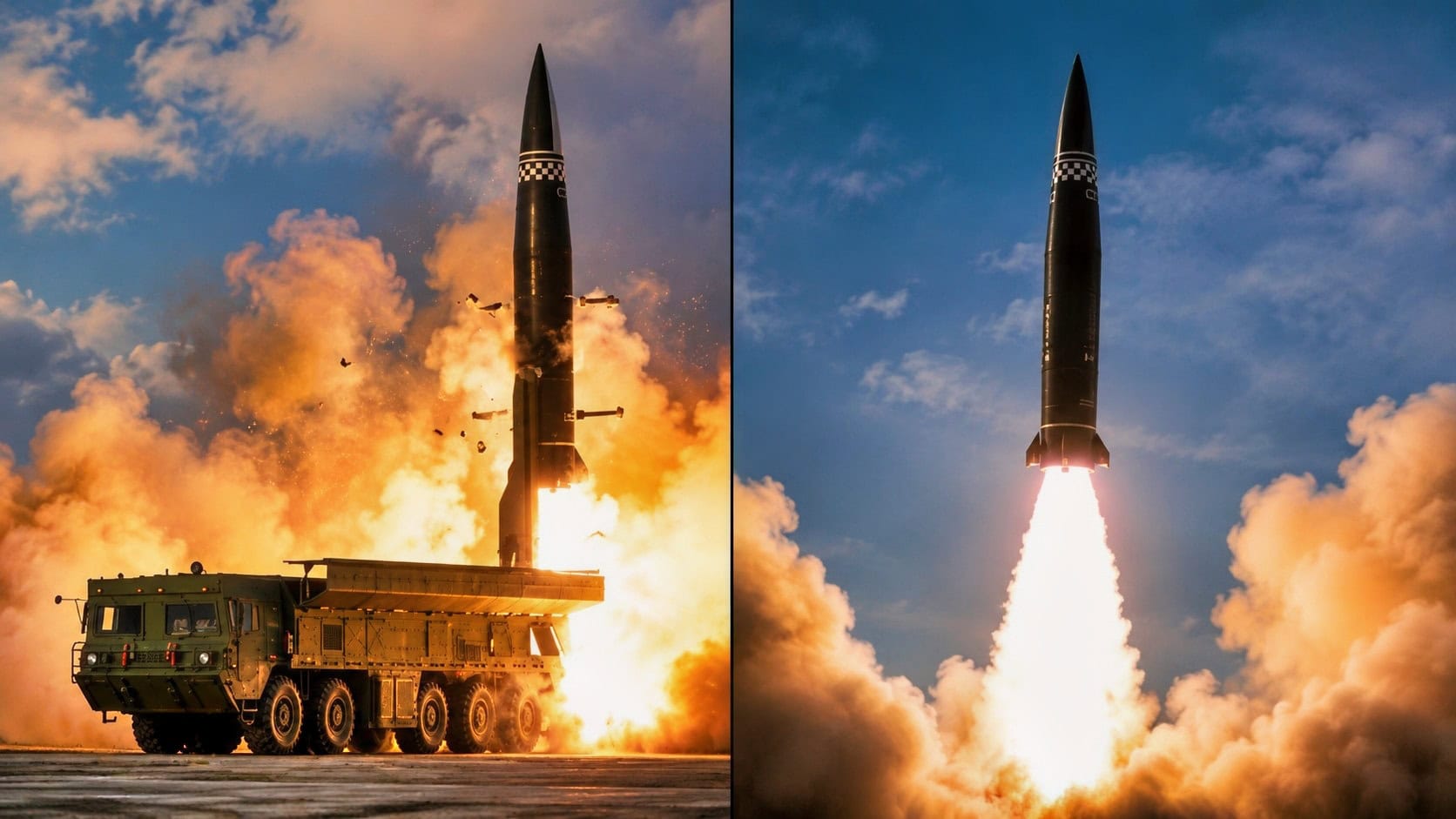
Kim Jong Un's ballistic missiles are now falling on European cities. Not hypothetically. Not as part of some worst-case tabletop exercise at NATO headquarters. Literally. A North Korean missile unit is setting up shop in western Russia, two hundred kilometres from the Ukrainian border, and NATO is still treating this like it's Seoul's problem.
On August 7, Ukraine's GUR military intelligence agency dropped a report that should have triggered emergency sessions in every NATO capital: a North Korean missile unit — 90 personnel, up to 120 ballistic missiles, six launchers — is deploying to Russia's Voronezh region. Forty missiles have already been delivered. At least two were launched at Ukraine last week. The United States is aware of the deployment, according to a source who spoke to Reuters.
This is not ammunition resupply. It is not artillery shells shipped in anonymous containers from Rajin port — though that pipeline has delivered 4 million shells since mid-2023. This is a foreign nuclear-armed state permanently embedding a ballistic missile strike capability on European soil, aimed at a European country, with Russian logistics, Russian targeting data, and no meaningful NATO response beyond the ritual expressions of concern.
The Escalation That Hid in Plain Sight
The missile unit sits at the end of an escalation chain that has been unspooling for two years. North Korea sent roughly 14,000 to 15,000 troops to Russia's Kursk region starting in late 2024 to help Moscow repel Ukraine's surprise incursion. Around 9,500 remain, according to Ukrainian estimates — nominally pulled back from direct combat but still present in theatre. In June 2025, Russian Security Council Secretary Sergei Shoigu announced that North Korea would send an additional 1,000 sappers and 5,000 military construction workers to clear mines and rebuild infrastructure in Kursk.
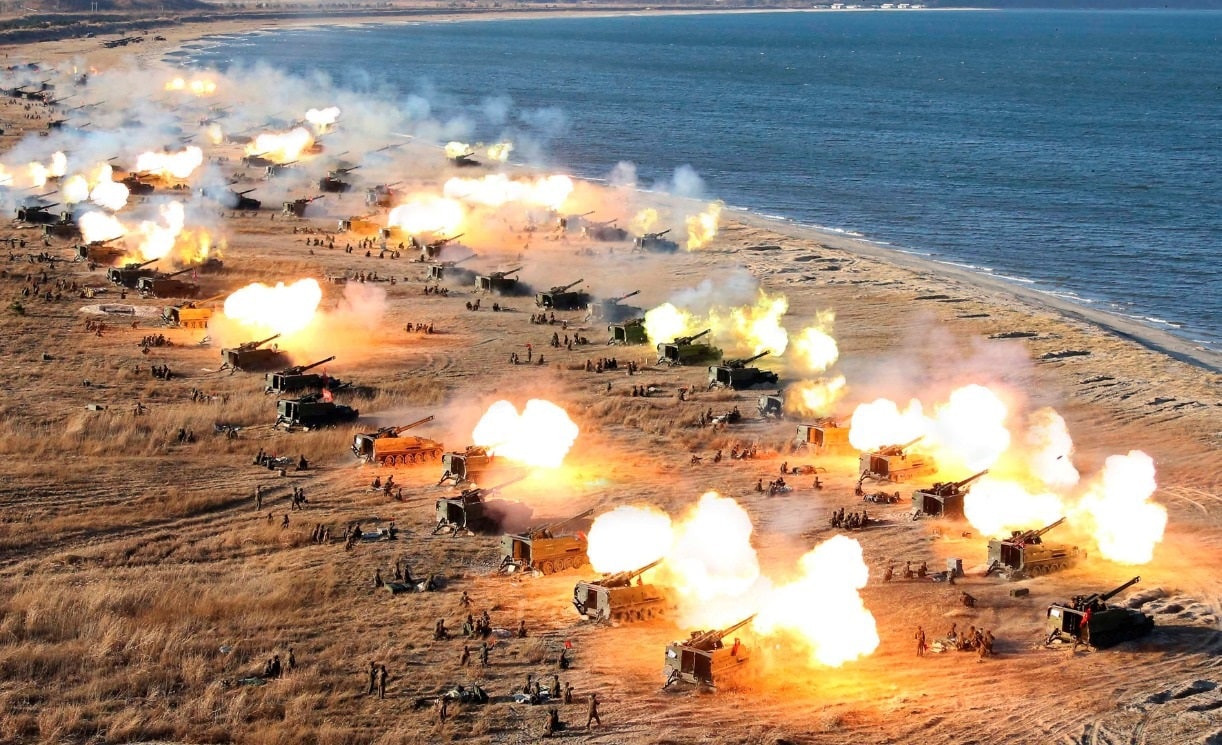
The weapons pipeline has been even larger. By early 2025, North Korea had supplied 148 KN-23 and KN-24 ballistic missiles. Ukraine's military intelligence says Pyongyang was providing roughly half of Russia's frontline artillery ammunition requirement. A Reuters investigation with the UK-based Open Source Centre documented four Russian-flagged cargo ships making 64 voyages to North Korea's Rajin port between September 2023 and March 2025, transporting nearly 16,000 containers to Russian ports.
But a dedicated missile unit with its own personnel, launchers, and command-and-control structure crosses a threshold that artillery shells and even individual missile shipments do not. Artillery shells get fired and forgotten. A missile unit stays. It trains Russian crews or operates alongside them. Its personnel learn how Russian air defence deconfliction works, how Russian targeting cycles function, what Western electronic warfare environments do to their guidance systems. That knowledge does not stay in Voronezh — it goes home to Pyongyang and gets baked into North Korea's own war plans for the Korean peninsula.
Why This Lands on NATO's Desk
For three years, the NATO-Indo-Pacific security linkage has been a conference panel topic — something for strategic dialogues, joint statements after Japan-Korea-NATO summits, white papers with colour-coded threat matrices. North Korean missile units firing from Russian soil at Ukrainian cities makes it operational. The conference panel is over.
The mutual defence treaty that Putin and Kim signed in June 2024 includes a mutual assistance provision if either country faces "external aggression." North Korea has already cited it to justify troop deployments. The logical next question — one NATO capitals seem determined not to ask — is what happens when Kim decides the treaty also justifies Russian transfers of submarine-launched ballistic missile technology, re-entry vehicle designs, or the nuclear propulsion tech Pyongyang has been chasing for years. Given everything Moscow has done since February 2022, is there any reason to believe there is a red line it will not cross with Pyongyang if it helps the war effort?
NATO Secretary General Mark Rutte has said the growing military ties between Russia, North Korea, China, and Iran "pose a threat beyond Europe, extending to the Indo-Pacific and North America." That sentence has been repeated in various forms for over a year. It has not been followed by anything that changes the facts on the ground in Voronezh.
What Pyongyang Is Really Getting
Analysts tend to focus on the transactional benefits: hard currency, oil, food aid, access to Russian military technology. Those are real and important. But they understate the strategic prize Kim is extracting from this arrangement.
North Korea's missile forces are getting something no test range — not even the ones that fire missiles over Japan — can provide: real combat data against Western air defence systems. Every KN-23 launched at Ukraine generates telemetry on how the missile performs against Patriot batteries, which remain Ukraine's primary defence against ballistic threats. Every failure teaches Pyongyang what guidance algorithms need fixing. Every successful penetration validates a strike capability pointed at South Korea, Japan, and American bases across the Pacific.
The same logic applies to the troops. The 14,000 North Korean soldiers rotated through Kursk did not just dig trenches in frozen ground. They experienced drone warfare at a density no military on earth had encountered before 2022. They learned how electronic warfare shapes the battlespace, how artillery coordinates with infantry in a contested electromagnetic environment, how modern combined arms operations work — and fail — at a scale unavailable on the Korean peninsula outside of an actual war. The 9,500 still in theatre, even if not directly engaged, are a standing training cadre absorbing lessons NATO would rather they did not learn.
The Arithmetic That Should Worry Brussels
There is a structural asymmetry here that favours the Russia-North Korea axis. Kim can supply artillery shells, missiles, and now entire missile units at a scale that strains Ukrainian air defence stockpiles to breaking point but costs Pyongyang relatively little in political or economic terms. Sanctions — Washington imposed additional measures in December 2024, Seoul blacklisted linked entities — hurt North Korea in the abstract. Ammunition shortages kill Ukrainian civilians in the specific. North Korea's leadership has demonstrated, across decades, that it will absorb abstract pain to pursue concrete strategic gains every single time.
NATO, meanwhile, is scrambling to triple Patriot interceptor production and quadruple THAAD output — goals the Pentagon announced this week, with production timelines that stretch to 2028 and beyond. North Korea's missile unit in Voronezh is operational right now. The timelines do not match. They never have.
The question is not whether NATO is "concerned" about North Korean forces in Europe. Everyone with a security clearance is concerned. The actual question — the one no one in Brussels seems eager to answer — is whether that concern will ever produce anything beyond the statements the alliance has been issuing since the first North Korean artillery shells arrived in 2023.
So far, the answer is no. And Kim Jong Un has noticed. So has Putin. So have the planners in Beijing and Tehran who are watching this playbook get written in real time. The Voronezh missile unit is not just an escalation in Ukraine's war. It is a proof of concept — and NATO does not appear to have a response.
A North Korean missile unit is deploying to Voronezh, Russia, with 90 personnel and 120 ballistic missiles, posing a direct threat to European security. This unit has already delivered 40 missiles, with at least two launched at Ukraine. The U.S. is aware of this deployment, highlighting significant military concerns regarding NATO's response to the growing military ties between North Korea and Russia.
- A North Korean missile unit is deploying to Voronezh, Russia, with 90 personnel and 120 ballistic missiles.
- 40 missiles have already been delivered, with at least two launched at Ukraine.
- The U.S. is aware of the deployment, indicating a significant military concern.
- North Korea's missile unit is operational and poses a direct threat to European security.
- The mutual defense treaty between Russia and North Korea raises concerns about further military collaboration.