
Northrop Grumman gets $488M to keep F-16 radar flying worldwide
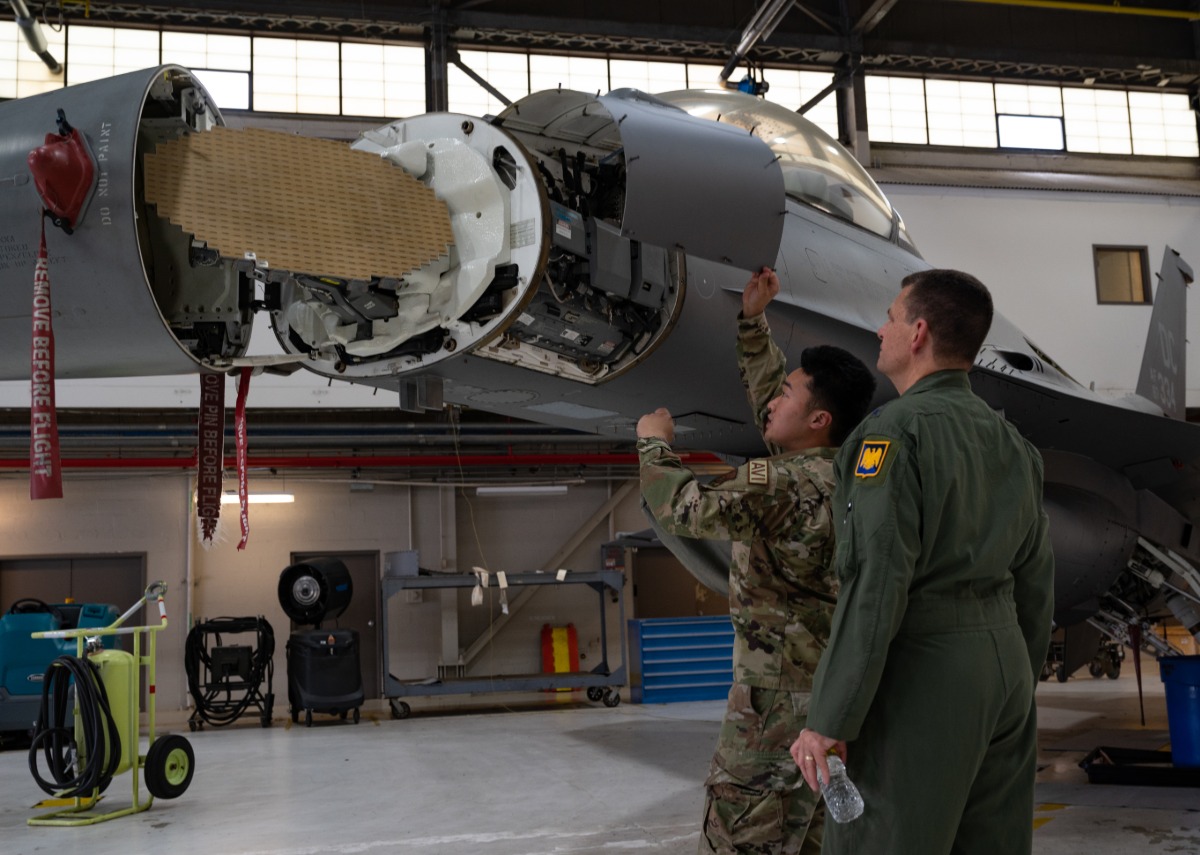
The U.S. Air Force committed nearly half a billion dollars to keeping the F-16’s radar supported across two dozen countries on April 27, 2026.
Northrop Grumman Systems Corp., operating from its Linthicum Heights, Maryland facility, received a ceiling $488 million contract for F-16 System Program Office support covering both Foreign Military Sales and U.S. Air Force and Navy requirements. The work centers on engineering and technical support for the F-16’s radar systems — specifically the APG-66 and APG-68 variants — with performance expected to run through March 31, 2036. The Air Force Lifecycle Management Center at Hill Air Force Base, Utah, is the contracting activity. Fiscal 2026 funds in the amount of $2,644,922 were obligated at award, drawn from non-appropriated, Air Force, and Navy sources.
The APG-66 and APG-68 are the radar systems that have equipped F-16s across decades of production and service. The APG-66 entered service with the original F-16A/B, providing pulse-Doppler air-to-air and air-to-ground modes in a package that represented a significant advance in fighter radar capability at the time of its introduction. The APG-68 followed as a more capable successor, offering improved range, additional operating modes, and enhanced electronic counter-countermeasures performance for the F-16C/D variants that became the dominant production configuration. Together, these two radar families equip the vast majority of the world’s F-16 fleet — which, given how widely the aircraft has been exported, means they are active in air forces across four continents.
The Foreign Military Sales scope of this contract is the detail that turns a radar support award into a statement about the breadth of American security relationships. The contract explicitly covers FMS support to 21 countries: Bahrain, Belgium, Chile, Denmark, Egypt, Greece, Indonesia, Iraq, Israel, Jordan, South Korea, Morocco, Netherlands, Norway, Oman, Pakistan, Poland, Portugal, Romania, Thailand, and Türkiye. That list spans NATO’s European members, Middle Eastern partners, Asian allies, and South American operators — a coalition of F-16 users that collectively represents one of the largest single-type fighter aircraft networks in the world. Every one of those air forces depends on the APG-66 or APG-68 to make its F-16s effective, and every one of them benefits from the engineering and technical support Northrop Grumman will provide under this contract through 2036.
The contract structure — indefinite-delivery/indefinite-quantity with a $488 million ceiling — reflects the reality of long-term radar support work. The actual scope of effort fluctuates based on what issues arise across the global fleet, what modifications different operators require, and what technical problems the aging radar systems develop as airframes accumulate flight hours. An IDIQ vehicle gives the government flexibility to task Northrop Grumman against specific requirements as they emerge rather than locking in a fixed scope that may not match actual need. The ceiling establishes the maximum the government can order; how much of it gets ordered depends on what the fleet requires over the next decade.
The contract was a sole-source acquisition — Northrop Grumman designed the APG-66 and APG-68, holds the technical data, and is the only entity that can provide authoritative engineering support for systems whose design documentation, software source code, and modification history belong to the company that built them. For radar systems as technically specialized and operationally critical as these, sole-source support is not a procurement convenience. It is a technical necessity.
The 21-nation FMS list also reflects something about where the F-16 sits in global air power right now. The aircraft has been in production and service since the 1970s, and its user base spans some of the most strategically significant air forces outside the United States. Poland and Romania are NATO’s eastern flank, flying F-16s as their primary combat aircraft in a security environment that has grown dramatically more demanding since Russia’s full-scale invasion of Ukraine. Israel operates a large and heavily modified F-16 fleet as a core component of its air superiority. South Korea and Indonesia anchor American air power relationships in the Indo-Pacific. Egypt, Jordan, Bahrain, and Oman represent the Middle Eastern partnership network that the U.S. has cultivated for decades. Pakistan’s inclusion on an American FMS support contract is a reminder that security relationships are rarely simple or uniform — even complicated partnerships generate ongoing technical obligations.
Keeping the APG-66 and APG-68 functioning across all of those operators simultaneously requires sustained engineering engagement. Radar systems accumulate software updates, hardware obsolescence issues, and modification requirements over their operational lives. Components go out of production. Software requires updates to address newly identified vulnerabilities or to maintain compatibility with evolving mission systems. Individual operators request modifications tailored to their specific operational requirements or threat environments. All of that work flows through the engineering and technical support pipeline that Northrop Grumman will maintain under this contract through 2036 — a decade of sustained radar sustainment work that keeps a 21-nation coalition of F-16 operators in the fight.
Content preview only. Full article available at source. View Full Article
Northrop Grumman Systems Corp. received a $488 million contract from the U.S. Air Force on April 27, 2026, for engineering and technical support of F-16 radar systems, specifically the APG-66 and APG-68 variants. This contract supports 21 countries, ensuring the operational effectiveness of F-16s globally through 2036. The indefinite-delivery/indefinite-quantity structure allows for flexible tasking based on the needs of the global F-16 fleet.
- U.S. Air Force awarded a $488 million contract to Northrop Grumman for F-16 radar support.
- The contract covers engineering and technical support for APG-66 and APG-68 radar systems.
- Support is provided to 21 countries, enhancing U.S. security relationships.
- The contract is indefinite-delivery/indefinite-quantity, allowing flexibility in tasking Northrop Grumman.
- The contract is essential for maintaining the operational capability of F-16s worldwide.