
Patriot and Freyja — Europe's 6.1 Billion Euro Package for Ukraine Buys Time Instead of Air Defense
 Dr. Klaus Weber
Patriot and Freyja — Europe's 6.1 Billion Euro Package for Ukraine Buys Time Instead of Air Defense
On September 11, the European Commission approved a new defense package of 6.1 billion euros for Ukraine. A significant portion is intended to finance air and missile defense, including the purchase of additional Patriot missiles. This is militarily necessary in light of the Russian attacks on Ukrainian cities. However, strategically, the decision is less a breakthrough than an expensive extension of time. Europe is buying interceptors while still lacking a sufficient European production chain for them.
Patriot Fills an Acute Gap
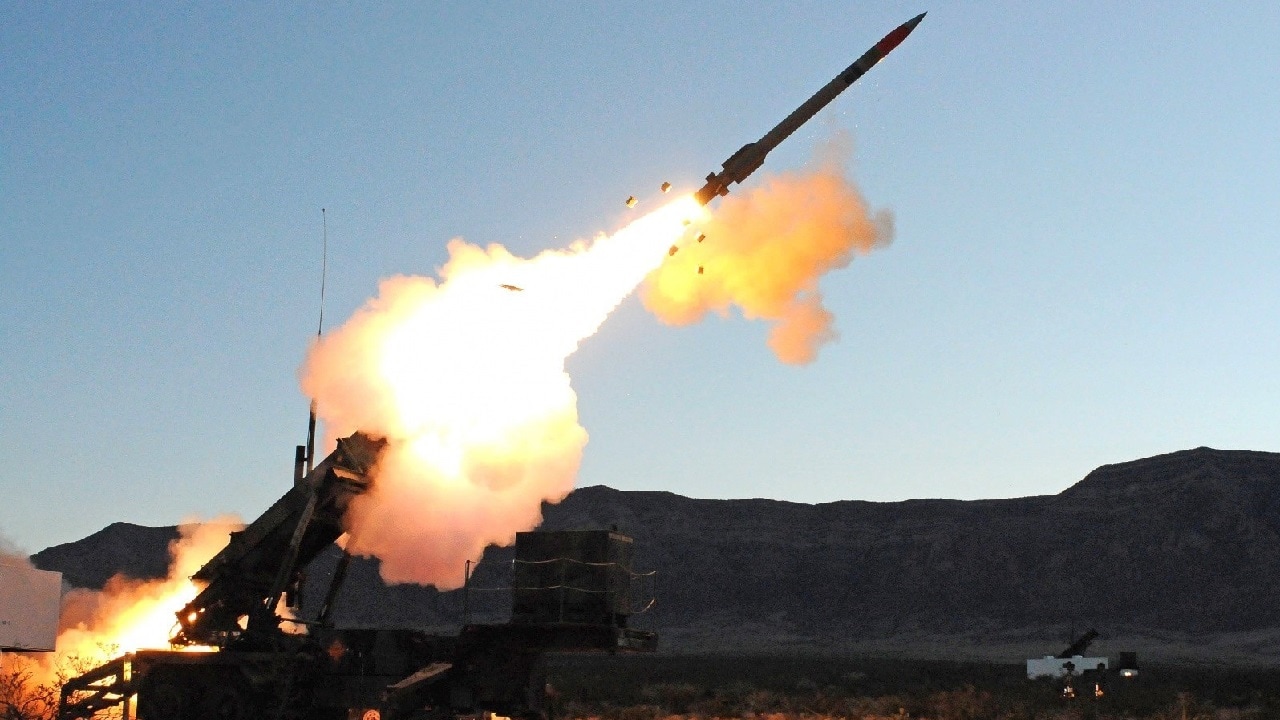
The political message from Brussels is clear. Ukraine needs not only more ammunition for the front but also denser protection for its energy facilities, command posts, and major cities. Patriot remains the scarcest resource for this purpose. The system can engage ballistic targets with PAC-3 MSE missiles and forms the top layer of air defense in several European countries. This capability cannot be quickly replaced by IRIS-T, NASAMS, or older systems. These systems are important, but they serve different purposes and do not have the same combination of sensors, range, and interception capability.
Therefore, Europe's weakness does not primarily lie in funding. The 6.1 billion euros can trigger orders, but they do not automatically convert into finished missiles. Production capacities, fuel components, warheads, and testing facilities cannot be multiplied by a council decision. The bottlenecks are further exacerbated by the demand from U.S. forces and other Patriot users. For Kyiv, this means: Approved funding is not yet a battery, and an order is not yet an additional layer of protection over Ukrainian airspace.
European Autonomy Begins with Freyja
In parallel to the EU decision, discussions are ongoing in Brussels about the Ukrainian-European Freyja project. According to Ukrainian sources, interceptor missiles and launchers could be produced in Ukraine with European support; initial practical results are aimed for early 2027. Whether Freyja can achieve the performance data of Patriot is currently not reliably substantiated in public. Therefore, the project should not be understood as a finished replacement but as an industrial test.
This is precisely where its significance lies. Ukraine has combat experience, short development cycles, and an unusually large dataset from the drone and missile war. Europe possesses capital, industrial substance, and access to markets, but its procurement rules are slow and nationally fragmented. A joint production could combine these strengths. However, it would only be strategically relevant if member states provide binding purchase guarantees, standardize technical specifications, and clarify export and ownership issues before the start of series production.
The Package Does Not Solve Europe's Procurement Problem
The debate resembles the recurring pattern of European defense policy. In a crisis, a financial instrument is first created. This is followed by national orders, which are politically labeled as European cooperation. However, the industrial reality remains a collection of separate supply chains. SAFE, the European Defense Fund, and now the 6.1 billion euros can only change this structure if they actually enforce joint procurement. Otherwise, they primarily finance the competition among national administrations.
This is particularly uncomfortable for Germany. Berlin can finance additional Patriot systems and missiles while the Bundeswehr itself remains reliant on a limited number of operational air defense assets. Every transfer to Ukraine is justifiable from a security policy perspective, but it makes its own material planning more transparent. The government must therefore simultaneously deliver, reorder, and build European alternatives. This is not a contradiction that can be resolved through rhetoric about a turning point in times.
More Money Does Not Mean More Protection
Reports from Euractiv, the Kyiv Independent, and Deutsche Welle highlight the core of the problem from different perspectives. Brussels is providing new funds, Kyiv is demanding Patriot and pushing for European systems, while the available U.S. production limits the speed of assistance. These three pieces of news are not separate occurrences. They describe a single dependency: Europe's political willingness is growing faster than its ability to deliver complex air defense on its own.
The package is therefore necessary but not sufficient. In the short term, it buys time for Ukraine and can protect particularly vulnerable objects. In the medium term, it will only lead to defense capability if the loans and grants result in a multi-year production plan. This includes not only missiles but also radars, spare parts, operators, maintenance, and integration with European command and reconnaissance systems. Air defense is not a one-time purchase but a system network.
Europe has proven with 6.1 billion euros that it can pay. It must now prove that it can also produce.
The contradiction remains uncomfortable: Without Patriot, Ukraine cannot cope with the current air war; with merely purchasing Patriot, Europe is not building strategic autonomy. Freyja could be the first step out of this deadlock. Until then, the billion-euro package remains primarily one thing — a financing of the time in which Europe should have built its own air defense industry.
Sources Euractiv, September 11, 2026; Kyiv Independent, September 11, 2026; Deutsche Welle, September 12, 2026; European Commission and Ukrainian sources on the Freyja project, September 2026.
The European Union approved a 6.1 billion euro defense package for Ukraine on September 11, 2026, aimed at enhancing air and missile defense capabilities, particularly through the acquisition of Patriot missiles. This funding addresses immediate military needs but highlights ongoing challenges in European defense production capacity. The Freyja project is also discussed as a potential future solution for developing interceptors in Ukraine.
- The European Commission approved a 6.1 billion euro defense package for Ukraine.
- The package includes funding for air and missile defense systems, particularly Patriot missiles.
- There is a lack of sufficient European production capacity for these systems.
- The Freyja project aims to develop interceptors in Ukraine with European support by 2027.
- The funding is seen as a temporary measure rather than a long-term solution.