
Patriot Makers Fear Ukraine's Factories More Than Russia's Missiles
 Alexandra Reeves
Patriot Makers Fear Ukraine's Factories More Than Russia's Missiles
Here's the part nobody in Washington will say out loud: Lockheed Martin and Raytheon are afraid of Ukraine, not of its missiles but of its factories. Six weeks after Donald Trump stood at the NATO summit in Ankara and promised Volodymyr Zelenskyy a license to build Patriot interceptors on Ukrainian soil, the deal is stuck in the place promises go to die, between a president who announced it and the companies that would have to make it real.
The Backpedal Was Fast
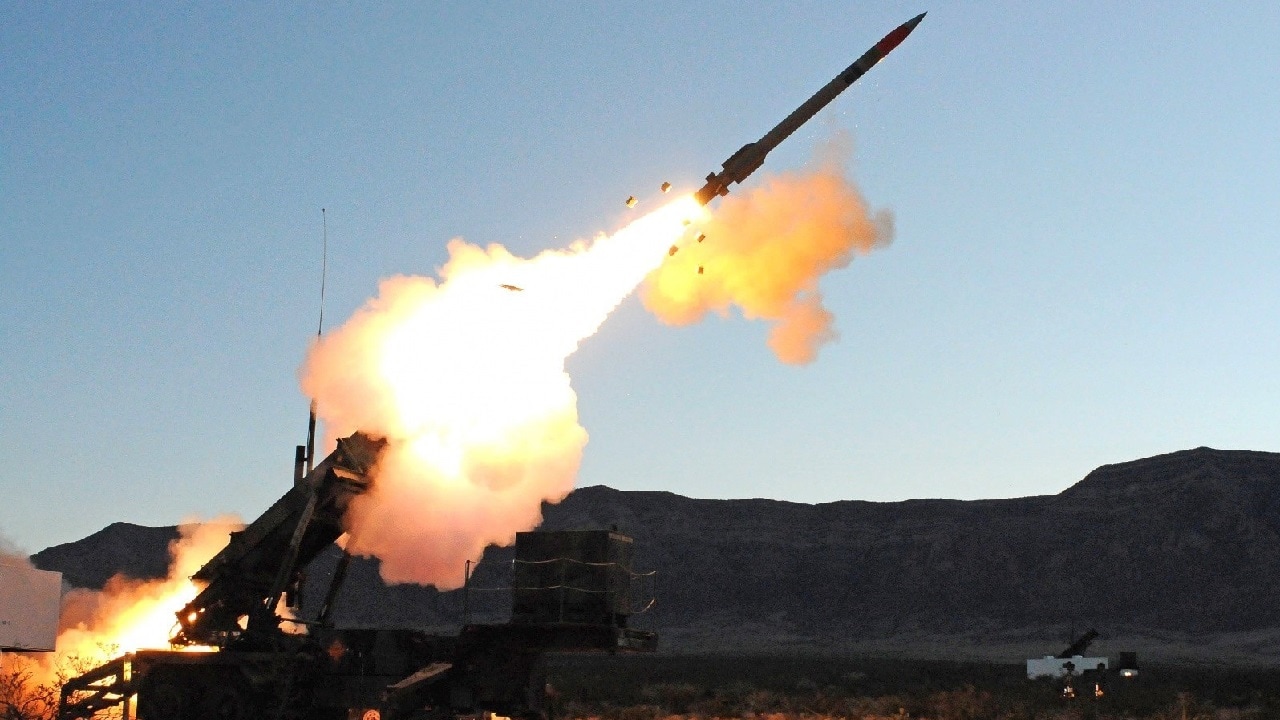
Defense News reported Friday that both manufacturers have begun putting the brakes on the joint-production arrangement, with executives weighing what is feasible while the licensing process sinks into Washington's red tape. Zelenskyy insists the politics are settled. The decision has been made, he told Ukrainian television over the weekend, claiming the green light came from the President of the United States and other important American government institutions. American officials have not bothered to confirm. NATO Ambassador Matthew Whitaker told Fox News on Aug. 3 that we do not allow anybody but US manufacturers to make those in the United States, and that any long-term agreement will not be concluded before this winter.
Watch the timeline and you see the tell. Trump made the pledge in early July: We're going to give a license to you to make Patriots. That's pretty cool. This way, you can't complain that we're not giving 'em enough. Twelve days later he was telling the Financial Times the U.S. has to be a little bit careful of who we license to. On July 28, Zelenskyy asked for several hundred interceptors in the Oval Office and was refused, The Atlantic reported. Three days after that, at a Camp David cabinet meeting, Trump reversed course entirely: We have not agreed to that. We're talking about it, but it's a hard thing to give away that kind of technology.
That is a full reversal in three weeks, and the excuses keep shifting. First it was technology protection. Then it was feasibility. The one explanation you won't hear from a podium is the one a Republican official on Capitol Hill gave The Atlantic: their real worry is that the Ukrainians will find a way to improve the Patriot and then produce them at scale faster and for much less money than what the existing production lines in the U.S. could do. The companies, he said, will publicly frame their concerns around IP theft and tech transfer instead.
Why the Fear Is Rational
Strip away the corporate talking points and the math is uncomfortable for the industry. The U.S.-Iran war has drained an estimated two-thirds of America's pre-war Patriot interceptor inventory, according to Defense News. Ukraine, which has burned through Patriot rounds defending against Russian ballistic missiles for years, has received roughly 600 interceptors in total, per figures cited by retired U.S. Army Col. Robert Hamilton in a PBS interview this month. Washington is spending $58 billion to roughly triple annual production toward 2,000 interceptors, but the first expanded batches are not expected until 2029.
Ukraine, meanwhile, has spent five years learning how to build weapons that work under fire. That is not a slogan, it is a business risk. Days after Trump's pledge, Ukraine and nine European countries launched the Freyja coalition in Paris with Eurosam, Leonardo, Thales and Saab, an antiballistic system built around a Ukrainian interceptor priced at roughly one-fifth of a Patriot round. Fire Point, the Ukrainian manufacturer, says the interceptor should cost under 1 million euros, a quarter to a sixth of what a Patriot round costs, with a first live interception targeted for mid-2027. Kongsberg is building the command center. Diehl is reportedly supplying the seeker. That is the scariest sentence in this story for Raytheon's shareholders: a European coalition does not need to beat the Patriot, it just needs to undercut it.
Lockheed appears to have noticed. A week after the Freyja launch, it unveiled the PAC-3 ACE at Farnborough, a cheaper, faster-to-produce interceptor advertised at roughly $2 million a round, less than half the price of the missile Ukraine currently fires at Russian ballistic missiles. The Patriot line rarely moves that fast. The current top round, the PAC-3 MSE, was accepted by the U.S. Army in 2015 and took until 2018 to reach full-rate production, according to the Missile Defense Advocacy Alliance. Funny how pricing pressure accelerates a program that a war could not.
The Alliance Cost
There is a genuine national-security argument for caution. Patriot is crown-jewel technology, and licensing production is irreversible; the knowledge does not come back. But the allies watching this saga are drawing their own conclusions, and they are not the ones Washington wants. Kyiv has already been burned by the promise of Western industrial solidarity. Every week the license sits in limbo, the Freyja coalition looks more attractive, and the European defense base gets another data point for the argument that American platforms come with American strings attached.
Zelenskyy posted on X earlier this month that the two sides have now reached an agreement. American officials have yet to respond to his latest comments. That silence is the story.
This is the quiet alliance story of 2026: Washington spent years telling Europe to buy American because European industry could not deliver. Now that a war has exposed the fragility of American supply lines, the response from the industry is to protect the monopoly instead of arming the ally. That is a bad look in Brussels, and it is worse in Kyiv, where the difference between a $2 million interceptor and a 1-million-euro one is measured in cities.
What to Watch
Three things. First, whether the license actually materializes before winter; Whitaker's own timeline suggests it will not. Second, whether Lockheed's PAC-3 ACE price cut signals a genuine cost-down effort or just enough movement to keep the politicians quiet. Third, and most importantly, whether Freyja hits its mid-2027 interception target. If it does, the Patriot monopoly ends not with a licensing decision but with a cheaper Ukrainian missile that Washington spent a year refusing to help build.
The uncomfortable truth is that America's defense giants just spent six weeks demonstrating the exact argument Ukraine and Europe needed to hear: when the chips are down, the supply chain comes first. The Russians could not have made that case for them. Lockheed and Raytheon just did it themselves.
Lockheed Martin and Raytheon are hesitating to finalize a joint-production agreement for Patriot interceptors in Ukraine due to concerns over technology transfer and competition from Ukrainian manufacturing. U.S. officials have not confirmed the licensing agreement, while Ukraine has developed a cheaper interceptor system, the Freyja, which poses a threat to the Patriot's market position. This situation reflects a significant shift in defense manufacturing dynamics and political considerations regarding military aid.
- Lockheed Martin and Raytheon are delaying the joint-production of Patriot interceptors in Ukraine.
- U.S. officials have not confirmed the licensing agreement for production in Ukraine.
- Ukraine has developed a competitive interceptor system, the Freyja, which is cheaper than the Patriot.
- The U.S. has significantly depleted its Patriot inventory due to ongoing conflicts.
- The political dynamics surrounding military aid and technology transfer are shifting in favor of Ukraine.