
Patriot PAC-3 Production Is Tripling While NATO Still Runs Short
 S.W
S.WPatriot PAC-3 Production Is Tripling While NATO Still Runs Short
The West has finally admitted that air defence is a factory problem. That admission arrived on September 14, when Defense News reported a $4.7 billion Lockheed Martin award to L3Harris for propulsion systems for the Patriot PAC-3 Missile Segment Enhancement interceptor. The contract matters. But the numbers behind it are more revealing than the headline: the United States is trying to build a shield for a missile war that has already started, while its most important customers are also its most urgent battlefield users.
The production surge is real
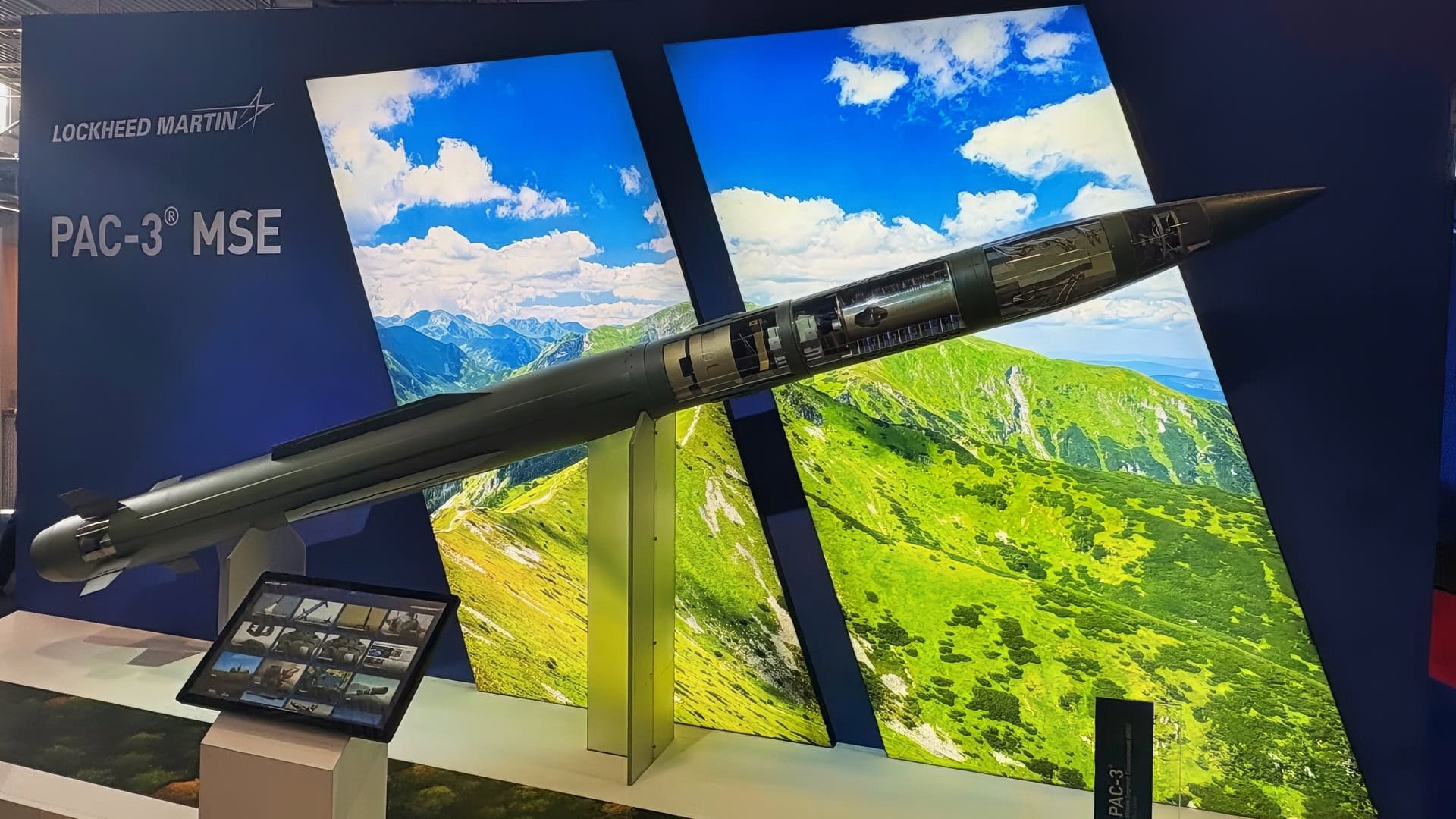
The PAC-3 MSE is the hit-to-kill interceptor used by Patriot batteries against ballistic missiles, cruise missiles and other high-end threats. Its two-pulse solid rocket motor gives the missile the manoeuvrability needed in the terminal phase, while its guidance and lethality systems are designed for direct impact rather than relying only on a blast warhead.
Lockheed Martin announced in January that a seven-year framework agreement would lift annual PAC-3 production from roughly 600 missiles to 2,000. L3Harris says its new award will support the propulsion package, attitude-control motors and fragment explosive device that expands the interceptor lethal effect. Two new Arkansas facilities are expected to become operational in 2027.
That is not a minor industrial adjustment. It is more than a tripling of output. It is also a recognition that the old American model, in which a small number of exquisite interceptors could cover a limited number of threats, no longer fits the battlefield.
Ukraine exposed the magazine problem
Ukraine is the reason this debate can no longer remain theoretical. Russian missile and drone attacks have forced Kyiv to ration scarce interceptors, even as Patriot remains one of the few systems capable of defending against some of Russia most dangerous ballistic threats. Recent reporting has also highlighted Ukrainian requests for more Patriot missiles and the pressure created by Russia growing strike arsenal.
According to an August analysis by the Center for Strategic and International Studies, US Army and Navy requests for PAC-3 MSE rose from 341 in fiscal year 2026 to 3,203 in fiscal year 2027. That is an 839 percent increase. The figure is a budget signal, not a promise that all those missiles will arrive on schedule, but it captures the scale of the panic inside the procurement system.
The pressure is not coming from Ukraine alone. Defense News reported that the Navy intends to integrate PAC-3 MSE with the Aegis combat system, potentially expanding demand beyond land-based Patriot units. Iran missile and drone campaigns have added another operational consumer. Meanwhile, NATO allies are trying to strengthen eastern-flank air defence while knowing that American stocks are already being drawn down.
The economics are strategically ugly
A PAC-3 MSE costs roughly $4 million, according to the Defense News reporting, while a Shahed-type attack drone can cost about $35,000. No serious military planner expects a one-for-one interceptor exchange to remain sustainable against large drone raids. A missile defence network that fires its most expensive weapon at every cheap target eventually becomes a budgetary failure, even if it wins the engagement.
This is the assumption Washington and many European capitals still resist: air defence is not a single system. It is a layered ammunition portfolio. Patriot should be reserved for the targets that only Patriot can defeat. Cheaper interceptors, guns, electronic warfare, aircraft and passive protection must handle the rest.
CSIS has made the same point in less diplomatic language. Rebuilding the arsenal requires both magazine depth and magazine breadth: more high-end interceptors, but also affordable systems that can be produced quickly and used in large numbers. The Pentagon has begun pursuing lower-cost interceptors and mass-produced drones. The problem is that these programmes are arriving after years of treating production capacity as an accounting detail.
What this means for NATO
For NATO, the PAC-3 expansion is welcome but insufficient. European allies cannot build credible air defence around an American production line that will remain oversubscribed for years. They need to finance their own interceptor inventories, coordinate procurement and accept that stockpiles are not peacetime waste. They are the price of deterrence.
There is also a political problem. Every Patriot battery sent to Ukraine is a reminder that the alliance has fewer batteries than its public statements imply. Every interceptor fired in the Middle East or against a major Russian strike raises the same question: who gets the next missile? NATO has spent years talking about integrated air and missile defence as a collective capability. In practice, the ammunition remains largely national, the production base is concentrated and the prioritisation rules are still politically sensitive.
Europe can help by funding additional production and building more of the supply chain on the continent. Poland growing role in defence manufacturing and the wider push for NATO industrial cooperation are steps in the right direction. But factories will not solve the problem if governments continue to buy small batches, change requirements and cancel orders when the immediate crisis fades.
The uncomfortable conclusion
The $4.7 billion L3Harris award is a serious response to a serious failure. It will improve PAC-3 output, but it will not erase the years of shortage that Ukraine and the Middle East have exposed. Nor will tripling production make a $4 million interceptor an efficient answer to a $35,000 drone.
The next test is whether Washington and its allies can build the cheaper layers quickly enough to protect the expensive one. Watch for three indicators: whether the 2,000-missile annual target survives budget politics, whether European governments place firm multiyear orders, and whether low-cost interceptors move from announcements to fielded units.
NATO is finally treating air defence as a warfighting requirement rather than a parade-ground capability. The uncomfortable truth is that the alliance is still trying to manufacture its way out of a shortage while its adversaries are manufacturing the next salvo.
Lockheed Martin and L3Harris are significantly increasing the production of Patriot PAC-3 missiles, aiming for 2,000 units annually by 2027. This surge responds to urgent demands from Ukraine and NATO allies facing missile threats. The production expansion highlights the need for a diversified air defense strategy, as current reliance on expensive interceptors is unsustainable against cheaper drone threats. NATO's air defense capabilities remain under strain, necessitating coordinated procurement and increased production efforts across Europe.
- Lockheed Martin received a $4.7 billion contract for PAC-3 production.
- Annual production of PAC-3 missiles will increase from 600 to 2,000 by 2027.
- U.S. Army and Navy requests for PAC-3 MSE rose from 341 to 3,203 for fiscal year 2027.
- NATO allies are facing shortages in air defense capabilities.
- The cost of a PAC-3 MSE missile is approximately $4 million.