
U.S. Army rebuilds long-range missile stocks drained by the war on Iran
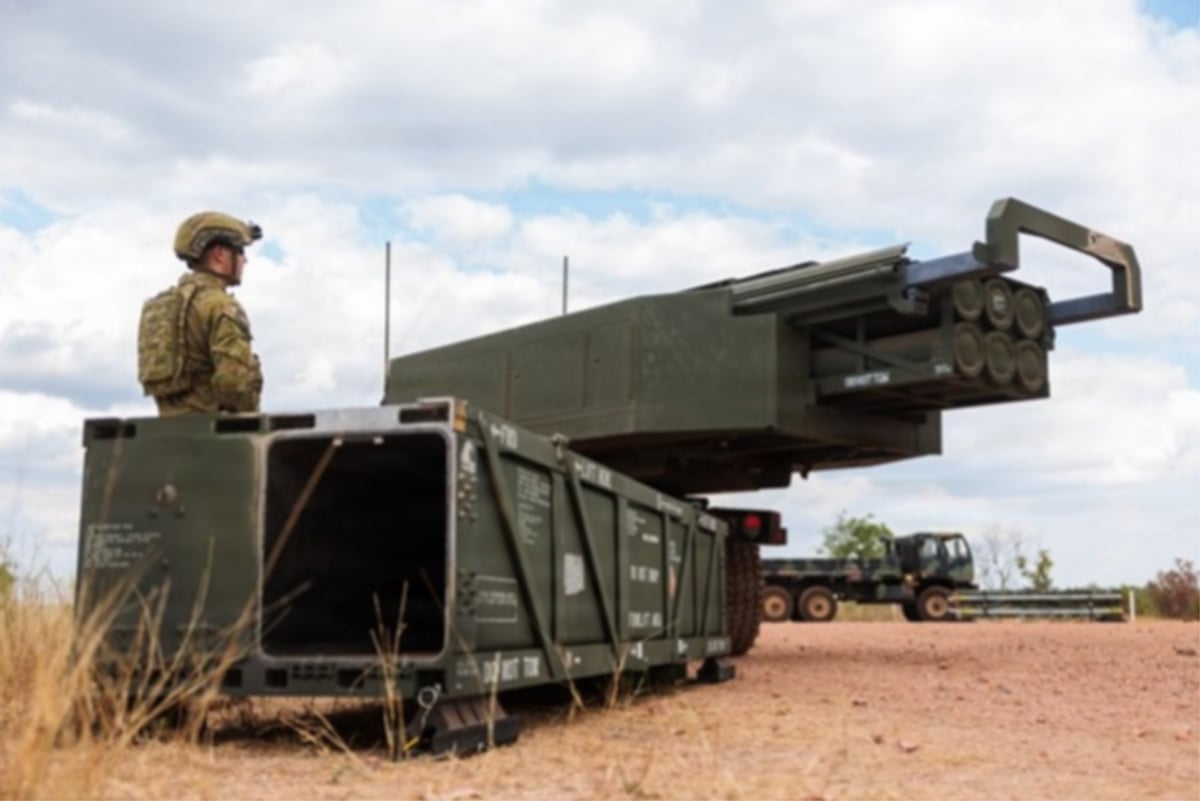
The U.S. Army has awarded Lockheed Martin $1.21 billion to keep developing an upgraded version of its long-range strike missile, work that comes as the Army tries to rebuild a stockpile it drained fighting Iran earlier this year.
A Department of War announcement said the contract funds early operational capability work on the Precision Strike Missile Increment 2. It is structured as an indefinite-delivery/indefinite-quantity award, so the Army will issue individual task orders against that ceiling rather than lock in a fixed number of missiles now. Army Contracting Command at Redstone Arsenal, Alabama, is managing the deal, listed as contract number W31P4Q-26-D-A001. One company bid on the work, and Lockheed won it. The estimated completion date is Sept. 13, 2031.
The Precision Strike Missile, known as PrSM, is a ground-launched, long-range strike weapon the Army built to replace the aging Army Tactical Missile System. It fires from the M142 High Mobility Artillery Rocket System and the M270 tracked launcher, and two PrSM rounds fit in a launch pod that used to hold a single ATACMS. Each missile costs just under $3.5 million, according to the Army’s own budget documents. The baseline version, Increment 1, reached Army units in December 2023 and hits fixed points on land out to roughly 500 km (310 miles) using GPS and inertial navigation. It has no ability to track something that moves. Australia is also buying into the program: Canberra has signed on as a full development partner and in April selected PrSM, paired with HIMARS, as its own land-based maritime strike system.
Increment 2 is meant to give the missile the moving-target ability the baseline version lacks. Lockheed is integrating a new multi-mode seeker, developed under a separate Army effort called the Land-Based Anti-Ship Missile program, that lets the missile identify and strike a target in motion, whether that is a mobile air defense radar or a ship underway. The Army’s Combat Capabilities Development Command Aviation and Missile Center built the guidance package before handing it to the PrSM program office for integration. The new seeker adds this capability on top of the missile’s existing land-attack role rather than replacing it.
Lockheed flew the first Increment 2 test missile with the new seeker in March 2026, sending it about 350 km (217 miles) from a HIMARS launcher. The missile deployed protective covers over the seeker at launch and gathered performance data engineers are still reviewing. The program remains in a technology-maturation phase, with a preliminary design review underway, and Lockheed has additional flight tests planned later this year.
“With Increment 2, PrSM delivers the long-range capability the Army asked for to defeat moving land and maritime threats,” said Carolyn Orzechowski, vice president of precision fires launchers and missiles at Lockheed Martin.
The urgency behind this contract traces back to a war the Army did not expect to fight this hard with these missiles. The Defence Blog reported in March 2026 that U.S. Central Command had confirmed PrSM’s first combat use, during Operation Epic Fury, the American military campaign against Iran. The Army fired the missile at Iranian coastal radar sites, air defense positions and other targets, and the campaign consumed the stockpile far faster than planners expected. Reuters, citing two people familiar with the matter, reported the Army expended “virtually all” of its ATACMS and PrSM inventory during the operation. A separate analysis by the Center for Strategic and International Studies put the loss at roughly 45 percent of the Army’s Precision Strike Missile stockpile in the war’s first seven weeks alone, figures Pentagon sources told CNN were consistent with classified internal data. The Army has never disclosed how many PrSMs it had before the war, and it still has not said how many remain. Independent estimates of replacement timelines run from three to five years to fully rebuild the stockpile.
This contract does not, by itself, answer that shortage. It funds Increment 2 development rather than a specific quantity of new missiles, and the Army has separately been placing production orders for the baseline Increment 1 to refill the pipeline Reuters and CNN described. The IDIQ structure gives the Army flexibility to keep ordering PrSM rounds as Lockheed’s production capacity allows, rather than commit to one large batch now.
Content preview only. Full article available at source. View Full Article
The U.S. Army awarded Lockheed Martin a $1.21 billion contract to develop the Precision Strike Missile Increment 2, aimed at replenishing stocks depleted during combat against Iran. This missile will enhance capabilities to target moving threats and is expected to be completed by September 13, 2031. The contract reflects the urgency of rebuilding missile inventories after significant usage in recent military operations.
- U.S. Army awarded Lockheed Martin a $1.21 billion contract for the Precision Strike Missile Increment 2.
- The contract aims to replenish missile stocks depleted during operations against Iran.
- The Increment 2 missile will have enhanced capabilities to target moving threats.
- The estimated completion date for the contract is September 13, 2031.
- Australia is partnering in the development of the Precision Strike Missile program.