
Pentagon inks deals with Boeing, RTX to boost production of SM-3 components
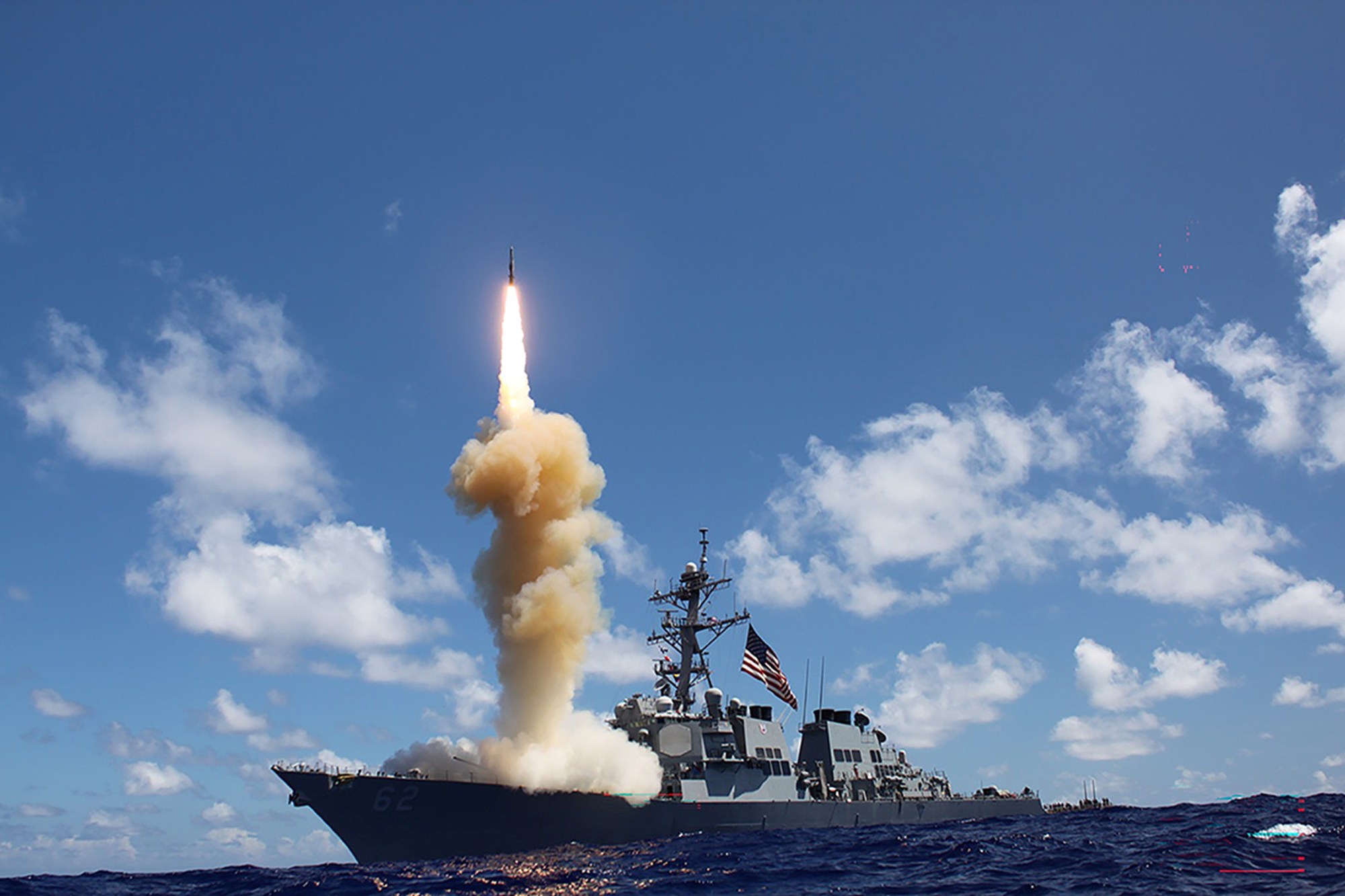
The Pentagon signed two framework agreements Friday with Boeing and RTX to expand production of critical components for the Standard Missile-3, the Navy’s primary ship-launched interceptor against ballistic missiles.
The deals cover avionics and ejector assemblies Boeing supplies to prime contractor Raytheon, an RTX business, for both the SM-3 Block IB and the newer Block IIA. Both variants operate with the Aegis Ballistic Missile Defense System to destroy incoming missiles outside the atmosphere.
“These agreements ensure our Warfighters get the munitions they need to win,” Michael P. Duffey, under secretary of war for acquisition and sustainment, said in the Pentagon release. “We are stabilizing our supply chains, expanding munitions production and putting our entire defense industrial base on a wartime footing.”
The frameworks run for seven years and allow Boeing to start building components before a contract is in place, while the three sides negotiate a multiyear deal. The long-term commitment is intended to give suppliers enough certainty to invest in added capacity. Neither the Pentagon nor Boeing released dollar figures or quantities.
“This gives us a clear demand signal to build and deliver SM-3 interceptors at the levels needed to counter threats,” Bob Ciesla, vice president of Boeing Precision Engagement Systems, said in a company statement. “The SM-3 is an essential part of the layered air and missile defense architecture that protects the U.S. and its allies worldwide.”
The approach mirrors a seven-year deal Boeing struck in April to triple production of PAC-3 Missile Segment Enhancement seekers, part of a broader Pentagon effort to lock in supply from key subcontractors alongside the prime contractors.
Earlier this month, the Missile Defense Agency awarded Raytheon a $745 million contract to produce fully assembled SM-3 Block IIA interceptors for the United States and Japan.
Demand for the interceptor traces back to April 2024, when Navy destroyers first fired SM-3s in combat, helping to thwart an Iranian ballistic missile attack on Israel. Far more interceptors have been launched since, including those fired in Operation Epic Fury.
The Center for Strategic and International Studies estimated the SM-3 inventory at 414 as of December 2025. A May analysis from the center put wartime expenditures between 130 and 250 missiles and warned that replenishment will take years.
Congress has stepped in to keep the Block IB line open, the cheaper of the two variants covered by Friday’s agreements, after the Missile Defense Agency proposed ending new purchases in the fiscal 2025 budget request.
The Pentagon signed agreements with Boeing and RTX to enhance production of SM-3 missile components, ensuring supply chain stability and increased munitions production. This initiative supports the Aegis Ballistic Missile Defense System and aims to meet the demand for interceptors against ballistic missile threats. The agreements allow for early component production while a multiyear deal is negotiated.
- The Pentagon signed agreements with Boeing and RTX to boost SM-3 component production.
- The agreements cover avionics and ejector assemblies for SM-3 Block IB and Block IIA.
- The production expansion is part of a broader effort to stabilize supply chains and increase munitions production.
- The agreements allow Boeing to start building components before a contract is finalized.
- The SM-3 is crucial for U.S. and allied missile defense.