
Pentagon's 12-Year Weapons Delay Is NATO's 2026 Problem
 Alexandra Reeves
Pentagon's 12-Year Weapons Delay Is NATO's 2026 Problem
Twelve years is not a procurement timeline. It is a strategic warning label.
The Government Accountability Office's new annual review of major U.S. defence acquisition programs should make uncomfortable reading in Washington. It should make even worse reading in Brussels, Warsaw and Ankara. According to Defense News' summary of the GAO report, the Pentagon is planning to invest more than $2.4 trillion in its costliest weapons programs, yet the average time frame to deliver a capability has now climbed to more than 12 years across 104 major programs.
That is not a bureaucratic footnote. It is the industrial side of deterrence. If the United States cannot move its most important programs faster, NATO allies cannot assume American capability will arrive on schedule when European defence plans are already being rewritten around a smaller U.S. role.
The Numbers Are Ugly
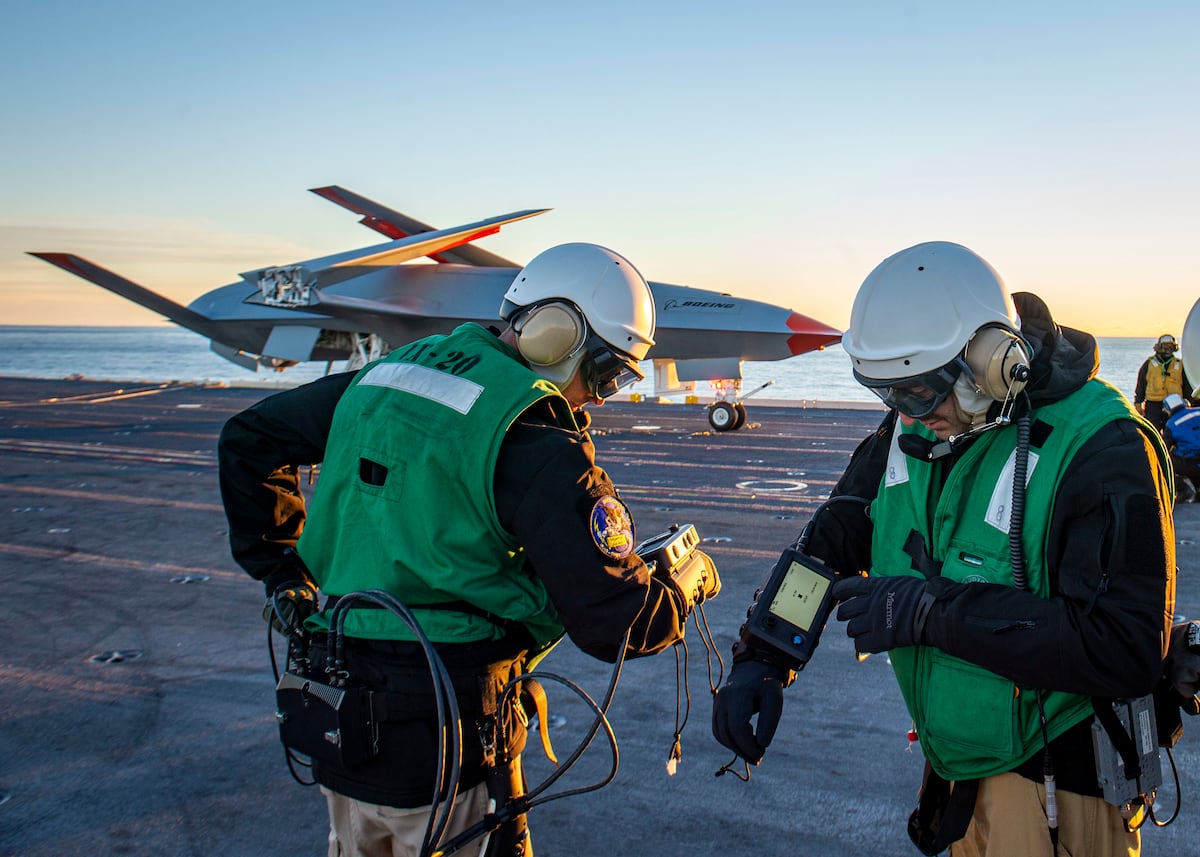
The GAO's headline finding is simple: schedule delays are not improving. They are hardening into the normal way the Pentagon buys weapons. Defense News reported that 46 of 72 programs with cost data showed increases totaling $122 billion, while 16 reported decreases totaling $47 billion. The cost picture is mixed. The schedule picture is not.
GAO warned that several programs have not set new delivery dates or are pushing back critical interim milestones. That matters because keeping old delivery dates on paper does not make capability appear in the field. It only lets a program pretend the gap is smaller than it is.
"By keeping delivery dates static, these programs raise questions about how realistic their estimates are," GAO said, according to Defense News. "This means the 12-year average will likely increase in the future."
Here is the awkward part: this is happening while the Pentagon says it wants speed. The middle tier of acquisition pathway was designed to move faster, fielding useful capability within two to five years. Instead, GAO found that between 2018 and 2025, 18 of 40 programs entered that pathway with immature technologies. Of eight current middle tier projects reviewed, seven were deemed technologically immature. The Hypersonic Attack Cruise Missile and the Next Generation Persistent Overhead Infrared sensor were among the examples cited.
In plain English, Washington built a fast lane and then started sending unfinished vehicles down it.
Why NATO Should Care
Everyone in Washington likes to talk about acquisition reform as if it is a domestic management problem. It is not. It is a NATO force planning problem.
The alliance is meeting in Ankara this week under pressure to prove that Europe can carry more of its own defence burden as the United States reduces some of the military capabilities it commits to NATO crisis plans. Reuters, carried by Defense News, reported last week that European allies had largely filled the gaps left by those U.S. reductions in the NATO Force Model, while NATO officials were still looking for workarounds in a few areas where Europe lacks like-for-like capability.
That sounds reassuring until you ask what sits behind the word "filled." A force model can be balanced on a spreadsheet faster than aircraft, missiles, satellites, destroyers or trained crews can be produced. Europe may be able to assign units against a requirement. It cannot instantly replace U.S. depth in air refueling, integrated air and missile defense, long-range strike, space-based sensing, strategic lift and command-and-control networks.
This is where the GAO report lands hard. If America is asking allies to absorb more risk in Europe while its own high-end programs are sliding, NATO is not merely transferring responsibility. It is transferring uncertainty.
Specific Delays Tell The Story
GAO's program examples are not abstract.
- MQ-25 Stingray: The Navy's carrier-based unmanned refueling aircraft faces a 2.5-year delay to initial operational capability and a 26-month delay to the end of initial operational testing, according to GAO findings reported by Defense News.
- DDG(X): The future destroyer still lacks an acquisition strategy that explains the assumptions behind the program. GAO also noted that Arleigh Burke Flight III destroyers, the shipbuilding bridge into that future fleet, are up to 55 months behind schedule.
- B-52 radar modernization: The Air Force is dealing with cost increases and schedule delays while moving toward production with very little development flight testing completed.
- Army Mid-Range Capability: GAO said the program has identified three additional immature critical technologies and questioned whether the return on investment is worthwhile for the four batteries planned.
None of these is a minor boutique project. MQ-25 is supposed to extend carrier air wing range. DDG(X) is meant to shape the Navy's next surface combatant generation. B-52 modernization is part of keeping an old bomber relevant for a missile-heavy age. Mid-Range Capability is one of the Army's answers to long-range fires demand, the very demand Ukraine has made impossible to ignore.
If these programs slip, NATO's problem is not that America disappears. The problem is that America shows up later, with less margin, at the same time Europe is being told to stand taller.
The Real Lesson
The easy conclusion is that the Pentagon is inefficient. True, but too small. The harder conclusion is that Western deterrence is now constrained by production realism as much as by political will.
Russia does not need to match NATO platform for platform if NATO's replacement cycle keeps stretching. Moscow can exploit time: drone saturation, missile stockpiles, electronic warfare adaptation, and the grinding arithmetic of a war economy. Ukraine has already taught the lesson. A system that arrives six years late may still be impressive, but it misses the war it was meant to shape.
For Europe, the takeaway is uncomfortable. Buying more American kit remains necessary in many areas, but it is no longer a strategy by itself. If U.S. programs are late and U.S. commitments are being reprioritized, European governments need their own production depth, repair capacity, munitions stocks and software-defined upgrade pipelines. Not someday. Now.
The next thing to watch is whether the Ankara summit produces real procurement commitments or another round of polished language about burden sharing. The GAO report gives the alliance a useful test: any defence plan that assumes future American capability will arrive exactly when promised should be treated as fiction until proven otherwise.
That is the uncomfortable judgment. NATO's capability gap is not only about who pays. It is about whether the weapons arrive before the next crisis does.
The Pentagon's weapons procurement delays are projected to impact NATO's defense capabilities by 2026, with average delivery times exceeding 12 years for major programs. The U.S. Department of Defense plans to invest over $2.4 trillion, but significant delays in key projects like the MQ-25 Stingray and DDG(X) destroyer raise concerns about NATO's ability to rely on U.S. support. European allies are pressured to enhance their own defense capabilities as U.S. commitments are being reprioritized.
- Pentagon plans to invest over $2.4 trillion in weapons programs.
- Average delivery time for capabilities has increased to over 12 years.
- 46 of 72 programs reported cost increases totaling $122 billion.
- MQ-25 Stingray faces a 2.5-year delay to initial operational capability.
- NATO is under pressure to fill gaps left by U.S. military reductions.