
Pentagon's AI Missile Defense Bet Could Rewrite Patriot's Limits in 2026
 Alexandra Reeves
Pentagon's AI Missile Defense Bet Could Rewrite Patriot's Limits in 2026
The Pentagon Is Admitting the Real Bottleneck
The next missile-defense breakthrough may not be a faster interceptor. It may be the software deciding which target deserves one. That is the striking message in a new Pentagon search for an artificial-intelligence system that can fuse space, missile, radar, video, geospatial and classified intelligence data quickly enough to drive operational decisions.
According to the U.S. Defense Innovation Unit (DIU) solicitation PROJ00716, the proposed “Space Threat Intelligence Synthesis Engine” would turn scattered sensor feeds into a continuously updated picture of threats and weapons-system performance. Defense News reported the requirement on September 11, 2026, with vendor responses due September 24. This is not a fielded weapon or an announced contract. It is a formal statement of what U.S. operators now believe they are missing.
A Two-Second Ambition
DIU sets a threshold of five seconds between data arrival and display, with an objective of two seconds. The system should handle ordinary flows of roughly 20–30 megabytes per minute and bursts of up to 5 gigabytes per minute. Those numbers matter because modern air defense is not a single radar watching a single missile. It is a crowded argument between sensors, tracks, decoys, drones, electronic interference and human beings running out of time.
The solicitation also demands confidence scoring, transparent reasoning and data provenance. In plain English, the Pentagon wants an AI that can say what it thinks is happening, how sure it is, and which evidence produced the judgment. That is a sensible demand. A fast hallucination is still a bad air-defense decision—just a more efficient one.
Why Patriot Is the Political Problem
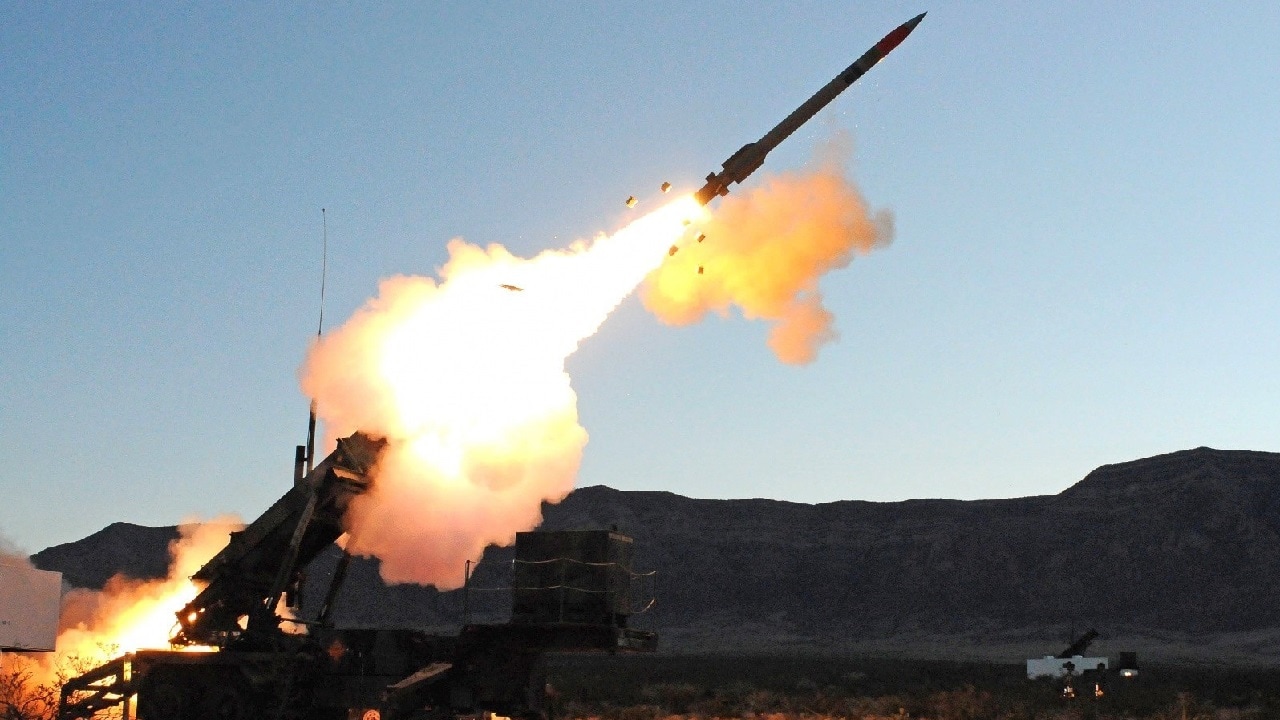
The Patriot family remains one of the few Western systems routinely associated with defending against sophisticated ballistic and cruise-missile threats. But Patriot interceptors are expensive, limited in supply and not infinitely reusable. The Associated Press has documented the pressure created by interceptor shortages in the Russia-Ukraine war. When every incoming track competes for a finite magazine, the central question is no longer simply whether a battery can engage. It is whether the wider network can classify the threat correctly before the launcher fires.
That distinction is strategically important for NATO. European allies are buying air-defense systems, but they are also confronting the same arithmetic Ukraine has exposed: drones can be cheap, attacks can arrive in salvos, and the defender can lose economically even when the interceptor performs perfectly. Better software cannot manufacture missiles. It can, however, reduce wasted shots, identify patterns across several sensors and help commanders reserve the right interceptor for the threat that actually requires it.
This Is a NATO Issue, Not Just a U.S. Contract
Washington's proposed architecture is designed around open standards, modular upgrades and machine-to-machine command-and-control interfaces. That sounds like procurement language, but it is really coalition language. A NATO air-defense network is only as useful as its ability to share tracks, attach confidence to them and pass decisions across national systems without waiting for a human translation layer.
The alliance should be interested—and nervous. An American AI engine trained on U.S. data could become another dependency for European air defense. Conversely, a genuinely open system could make national batteries more interoperable and give smaller allies access to analytical capacity they cannot build alone. The difference will be decided by interfaces, data rights and operational control, not by the word “AI” in a press release.
Industry is already moving in this direction. Northrop Grumman said in July that it was working with Camgian on AI capabilities for integrated air and missile defense. BAE Systems and Scale AI have also announced an AI-enhanced missile-defense partnership. The commercial race is therefore underway before the Pentagon has chosen its government prototype.
The Dangerous Assumption
The fashionable assumption is that AI will solve the air-defense problem by making the picture clearer. It will not. The harder problem is deciding who gets to trust the picture when sensors disagree, communications are disrupted or an adversary deliberately feeds the network bad information.
Russia's war in Ukraine and the wider missile-and-drone pressures described in current U.S. reporting are exposing the same weakness from different angles: the defender has more data than it can process and fewer premium interceptors than it wants. AI may compress the decision cycle, but it also compresses the time available to detect an error. NATO will need resilient fallback procedures, common testing standards and human authority that survives a corrupted network.
What to Watch Next
The immediate milestone is the DIU's September 24 response deadline, followed by whether the Pentagon selects a prototype that can demonstrate sub-two-second performance under realistic conditions rather than a laboratory demo. The next test is coalition integration: can the system ingest allied data and explain its recommendations to operators who do not share the same doctrine, networks or procurement bureaucracy?
The Pentagon's announcement is a useful warning, not a victory lap. Patriot's limits are partly about interceptors, but they are also about attention, attribution and time. If Washington and NATO treat AI as a new layer of decision support, it could make scarce air-defense capacity go further. If they treat it as a substitute for magazines, resilient networks and allied trust, the first serious salvo will expose the difference.
Sources
The Pentagon is pursuing an AI system to enhance missile defense capabilities, aiming for a two-second decision-making time. This initiative, led by the U.S. Defense Innovation Unit, seeks to integrate various data sources to improve threat assessment and operational decisions. The limitations of the Patriot missile system, including supply and cost issues, highlight the need for better command and control in air defense. NATO's interoperability with this new system is also a significant concern.
- The Pentagon is developing an AI system to enhance missile defense capabilities.
- The proposed system aims for a two-second decision-making time.
- Patriot interceptors are limited in supply and expensive.
- The AI system will integrate various data sources for threat assessment.
- NATO's air defense interoperability is a concern with the new AI system.