
Pentagon's Europe Review 2026 Forces Germany and NATO into 76,000-Soldier Realism
 Dr. Klaus Weber
Pentagon's Europe Review 2026 Forces Germany and NATO into 76,000-Soldier Realism
76,000 American soldiers in Europe are not an abstract number, but the lower limit set by the US Congress for the Trump administration for 2026. This very number makes the new review of American troop presence in Europe politically explosive: Washington wants to reduce, Congress limits the scope, and European NATO states must simultaneously prove that they can primarily bear the conventional defense of the continent themselves.
According to RFI, the Pentagon began a comprehensive review of the American military presence in Europe on July 27. Undersecretary Elbridge Colby described it as a "real review," aimed at a "rapid and irreversible" movement of NATO towards European primary responsibility for conventional defense. This sounds like a strategic realignment. Institutionally, it is initially a stress test: What remains of European defense capability if the United States offers not only less money but also less operational routine?
The American Presence is Infrastructure, Not Just Personnel
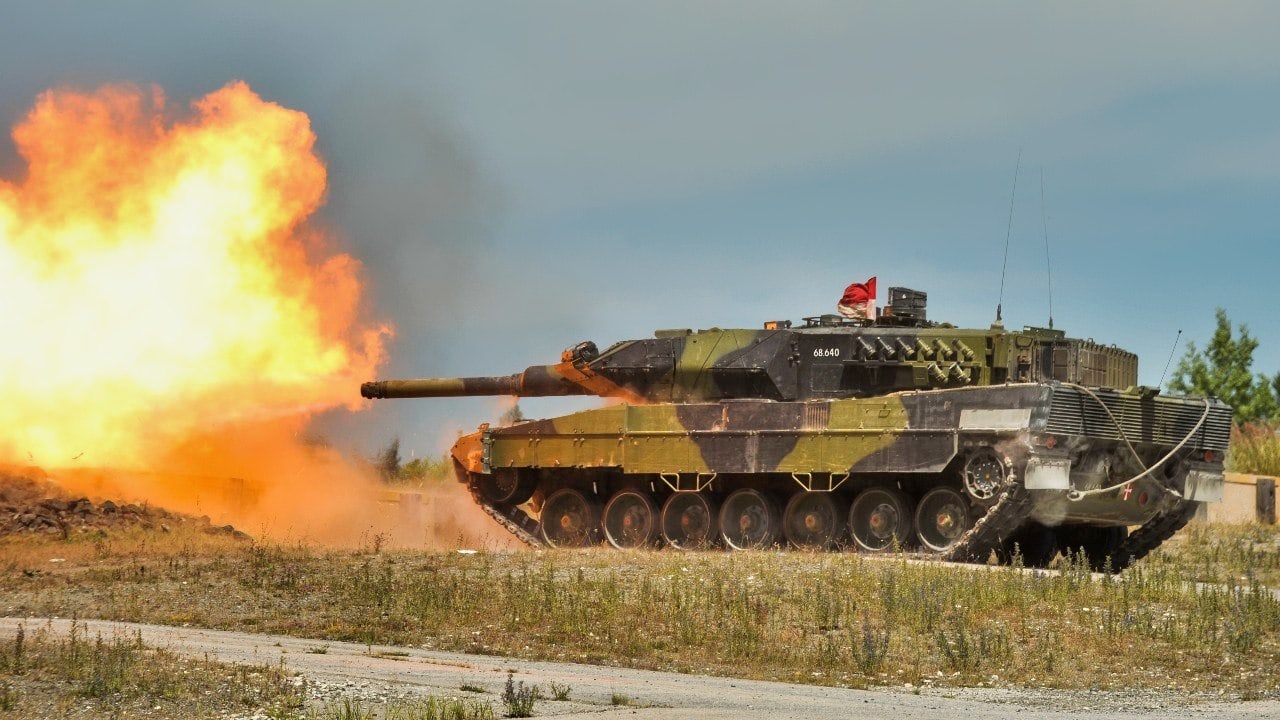
The European debate regularly underestimates what is meant by "US troops in Europe." It is not just about infantry battalions or flags in front of barracks. According to RFI, the United States maintains more than 40 military facilities in Europe, with concentrations in Germany, Italy, Poland, and the United Kingdom. These locations form a logistical, intelligence, and command network. Reducing this presence does not simply reduce troop numbers but also reaction speed.
Germany is at the center of this architecture. The announced withdrawal of 5,000 US soldiers from Germany in May is not yet a strategic disaster militarily. Politically, however, it is a signal: The Federal Republic remains the most important hub of American power projection in Europe and at the same time the state that must most strongly prove that its own turning point is more than just budget rhetoric. This is precisely where the German problem lies. Berlin discusses having the strongest conventional army in Europe but does not yet have the personnel model that could sustain such an army permanently.
Germany's Recruitment Problem Becomes a NATO Issue
Al Jazeera reported on July 29 that the Bundeswehr wants to increase its active strength to 260,000 soldiers, supplemented by 200,000 reservists. Since January, more than 300,000 letters have been sent to 18-year-olds to inquire about readiness, training, and fitness for service. This is not a symbolic administrative act. It is an attempt to replace a conscription system that has been suspended since 2011 with a voluntary recruitment logic.
The numbers are sobering. According to the report, only about 500 recruits have been gained through the new channel this year, while already 6,000 young men have applied for exemption on religious or moral grounds. A government can order battle tanks, finance air defense systems, and promise new brigades. However, without personnel, these become stockpiles, not operational readiness.
Here, a German peculiarity emerges that Washington is closely observing. Germany wants to buy political credibility with money but avoids the societal burden that comes from defense capability. The conscription question is therefore not only a domestic political issue. It is the personnel aspect of NATO burden-sharing. Those who criticize American troop reductions must explain who in Europe will take on the tasks that become available.
70 Billion Euros for Ukraine Do Not Solve the Deterrence Problem
The Ankara summit in early July set the right tone while simultaneously providing the wrong reassurance. NATO states pledged military equipment, training, and support for Ukraine amounting to 70 billion euros for 2026, promising at least comparable levels for 2027, according to Al Jazeera. This commitment is important because it keeps Ukraine in the war and makes Europe's political engagement visible. But it does not answer the question of which European structure will bear conventional deterrence against Russia when American presence becomes more selective.
Military aid to Ukraine and territorial defense of NATO's eastern flank are related but not identical tasks. The former can be organized through supply chains, budget lines, and bilateral commitments. The latter requires permanently available units, ammunition stocks, air defense, railway logistics, command capability, and political decision-making routines. Europe can pledge 70 billion euros and still remain operationally dependent if the critical nodes continue to be American.
That is precisely why NATO Secretary General Mark Rutte's formulation that Europe must become significantly stronger within a stronger NATO is more precise than many autonomy slogans. A more European NATO does not mean less America as a principle. It means less American irreplaceability. This difference is crucial.
Colby's Review is Not a Withdrawal, But an Audit
The temptation in Europe will be to read the Pentagon review as further evidence of American unreliability. This is politically convenient and analytically insufficient. Colby's line follows a clear strategic logic: The US wants to free up conventional resources for the Indo-Pacific and force Europe to bear the land warfare burden on its own continent more heavily. One can criticize this priority. However, one cannot ignore it.
This creates an institutional audit for Europe. What tasks can European states realistically take on within six months, two years, or by 2030? Who provides heavy brigades? Who delivers air defense? Who leads multinational corps staffs without American reinforcement? Who pays for ammunition not only in contracts but in factory capacity? These questions are uncomfortable because they cannot be answered with summit declarations.
Germany is the central case here. A voluntary service model that aims to achieve 260,000 active soldiers and 200,000 reservists is under significant plausibility pressure. If the government must decide by mid-2027 whether to return to conscription, it is not a regression to the old Federal Republic but the late reckoning of the suspension from 2011. The peace dividend has been consumed in personnel. Now it is due in terms of security policy.
European Defense Begins with Uncomfortable Capacities
Technical equipment remains important. Leopard-2 fleets, IRIS-T systems, Patriot batteries, Eurofighters, and future FCAS or GCAP will determine concrete capabilities. But the current American review shows that Europe's fundamental problem lies deeper. It is not just a lack of platforms but a lack of willingness to organize defense as a permanent state function: with personnel, infrastructure, industrial stockpiling, and political decision-making capability.
Because the American lower limit of 76,000 soldiers is legally fixed, there will likely be no abrupt strategic vacuum in 2026. This makes the situation dangerously comfortable. Europe could survive the review without drawing the conclusion. Then Colby's review would have been merely a warning that could be bridged with familiar statements.
The paradox is both German and European: As long as American troops remain, real European reform seems less urgent. Once they are absent, it comes too late. Europe's defense capability therefore does not hinge on whether Washington withdraws 5,000 or 15,000 soldiers in 2026. It hinges on whether Berlin, Paris, Warsaw, Rome, and London finally create structures that can function without American routine. Europe now has more money. What is lacking is the uncomfortable ability to turn that into available power.
Sources
- RFI / AFP, July 28, 2026: US reviews troop presence in Europe as Washington pushes NATO burden sharing.
- Al Jazeera, July 29, 2026: Will Germany bring back mandatory military conscription next year?
- Al Jazeera, July 8, 2026: NATO pledges 70 billion euros for Ukraine as Trump praises peace progress.
The U.S. is set to maintain a troop presence of 76,000 soldiers in Europe as part of a review of military strategy for 2026. Germany is attempting to increase its military personnel to 260,000 active soldiers and 200,000 reservists, but faces recruitment challenges. NATO has pledged 70 billion euros in military support for Ukraine, highlighting the need for European nations to enhance their defense capabilities independently of U.S. support.
- U.S. Congress set a troop limit of 76,000 soldiers in Europe for 2026.
- Germany aims to increase its military strength to 260,000 active soldiers and 200,000 reservists.
- Only about 500 recruits have been gained this year under the new voluntary system.
- NATO pledged 70 billion euros for military support to Ukraine for 2026.
- The U.S. is shifting focus to the Indo-Pacific, impacting European defense responsibilities.