
PLA J-50 Reveals Autonomous Flight Technology, 2026 Stealth Fighter Shifts to Manned-Unmanned Collaboration
 Li Minghui
PLA J-50 Reveals Autonomous Flight Technology, 2026 Stealth Fighter Shifts to Manned-Unmanned Collaboration
On September 10, the South China Morning Post disclosed an unusual paper from the Shenyang Aircraft Design Institute. The paper does not specifically name the J-50 nor confirm that these features have been installed on the prototype, but it clearly outlines the technical goals for China's next-generation stealth fighter: the aircraft can take over flying after the pilot becomes incapacitated, navigate in environments without satellite signals, and form reconfigurable formations with large numbers of unmanned drones.
Separating the "J-50" from the Paper
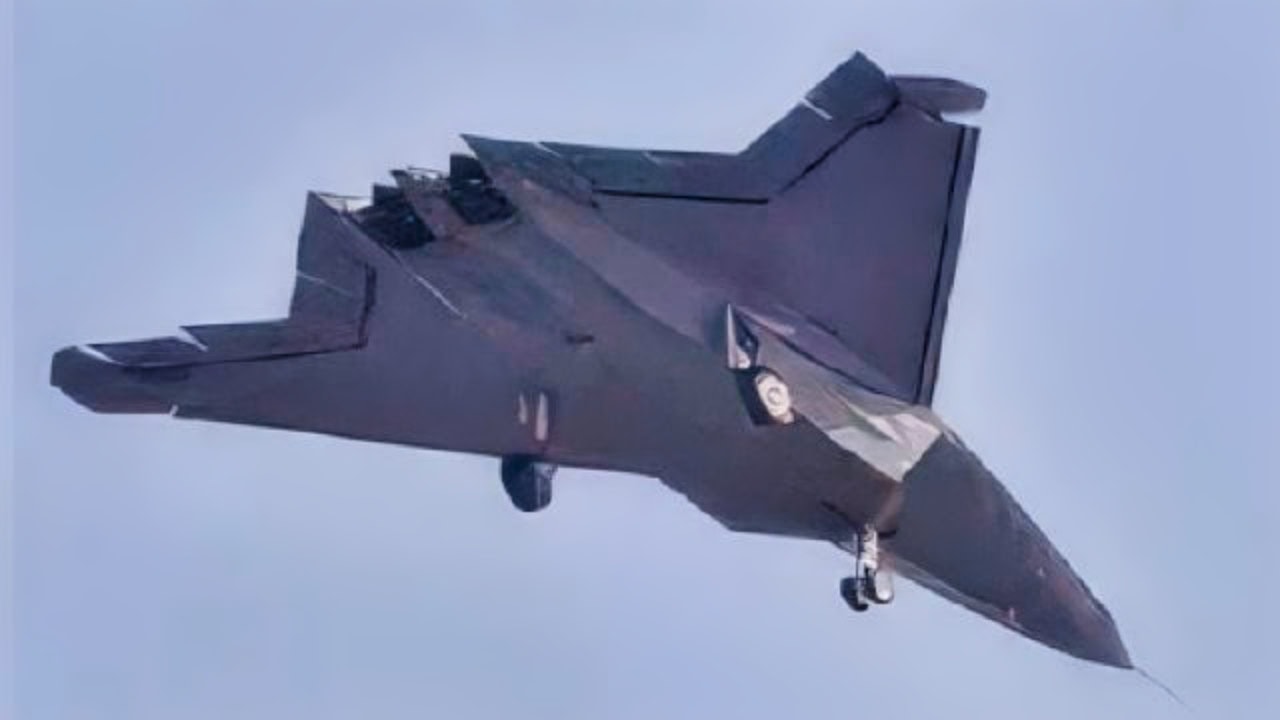
The current references to the J-50 are based on flight test footage that appeared in December 2024. Public information has not provided its exact range, maximum speed, engine model, or weapon load data, and even "J-50" remains an unofficial designation. Therefore, interpreting the quantum navigation, autopilot, and drone collaboration mentioned in the paper as the current capabilities of the J-50 is a misreading of the research concept as a finalized equipment.
The paper was authored by Zhang Dong, the chief designer of flight control at Shenyang, among others, and was published in the peer-reviewed journal "Aircraft Design" in August. Its focus is not merely on increasing lift or radar power, but on enabling the fighter to shift from "capable of stable flight" to "capable of autonomously completing missions in complex confrontations." This is also the most distinguishing aspect between the J-50 and the J-20: the public discussion of the former has clearly shifted from individual stealth performance to system node functionality.
Three Technical Directions Pointing to the Same Goal
The first is the handover of control between the pilot and algorithms. High overload, hypoxia, cockpit damage, or prolonged high-intensity combat can temporarily incapacitate the pilot. Automatic takeover does not equate to completely unmanned combat; the real challenge lies in assessing the aircraft's status, avoiding obstacles, returning to base, and prioritizing tasks. It is more like adding a co-pilot to a manned fighter who does not experience fatigue, but this "co-pilot" must operate independently in the event of communication loss.
The second is navigation in a satellite-denied environment. The paper mentions quantum navigation technology, indicating that researchers have considered GPS interference as a normal scenario. However, whether quantum sensors can achieve a balance between size, power consumption, drift error, and engineering maintenance remains unanswered in public data. Writing "quantum navigation" into a paper is easy; developing it into a device that can work reliably on a highly maneuverable fighter for an extended period is a completely different challenge.
The third is manned control of unmanned drones. Formations can reallocate reconnaissance, suppression, protection, and attack roles based on losses and mission changes, theoretically allowing a manned aircraft to lead multiple low-cost platforms to expand sensor and weapon coverage. However, this raises higher demands for data link anti-jamming, formation decision-making authority, and identification rules. The more drones there are, the stronger the system becomes, but it also increases the likelihood of chain errors due to misidentification.
What This Means for the PLA's Air Combat System
The author believes that the value of this disclosure lies not in proving that China has a sixth-generation fighter that "can fight by itself," but in showcasing the R&D priorities of the aviation industry. The J-20 addresses the real needs of stealth, avionics, and long-range air combat; the related papers on the J-50 shift the focus to software, sensor fusion, and manned-unmanned collaboration. In other words, the bottleneck in the next round of competition may no longer be producing an advanced-looking aircraft, but whether reliable avionics can be mass-produced and whether dozens of platforms can share the same battlefield awareness under strong electromagnetic interference.
This also explains why public parameters remain scarce. What truly determines combat capability may be algorithm training data, data link protocols, mission computers, and maintenance systems, rather than a clear photograph of the airframe. China's military industry has repeatedly demonstrated its speed in assembly and platform iteration, but software validation, chip supply, and long-term reliability of complex systems remain shortcomings that cannot be filled with promotional slogans.
Key Questions Still Without Answers
Reports from the South China Morning Post and subsequently from several other media outlets confirm that the Shenyang Institute is publicly discussing next-generation air combat technology, but do not prove that the J-50 has completed the integration of these capabilities. What is truly worth tracking next is whether the prototype will show new sensors, changes in the air intake, or communication equipment, and whether the PLA will demonstrate manned control of unmanned formations through exercises. Whether the J-50 will ultimately be a faster stealth fighter or an aerial node capable of coordinating an entire fleet of drones remains hidden in the undisclosed aspects.
Source: South China Morning Post, September 10, 2026; related paper published by the Shenyang Aircraft Design Institute team in "Aircraft Design"; Interesting Engineering, September 11, 2026.
The People's Liberation Army (PLA) disclosed advancements in the J-50 fighter jet's autonomous flight technology on September 10, 2026, highlighting its potential to operate without pilot input and navigate without GPS. The research emphasizes the integration of quantum navigation and drone coordination, indicating a shift towards advanced combat capabilities. However, the report does not confirm the current operational status of these technologies in the J-50.
- The J-50 may have autonomous flight capabilities allowing it to operate without pilot input in certain conditions.
- Quantum navigation technology is being researched for use in environments where GPS is denied.
- The J-50's development focuses on software and sensor integration for manned-unmanned cooperation.