
Plates from 2004 to 2014 in "Oreshnik" Reveal the Belarusian Trace of Russian Missile Blackmail
 Dmitri Volkov
Plates from 2004–2014 in the "Oreshnik" Reveal the Belarusian Trace of Russian Missile Blackmail
The most unpleasant detail for Moscow in the story of the strike on May 24 turned out not to be in the crater, but on the table of European ambassadors in Kyiv. The Ukrainian side showed them plates from the "Oreshnik" missile, and these plates, according to the Office of the President of Ukraine and reports from European Pravda and RBC-Ukraine on May 28, contained only Russian and Belarusian components produced between 2004 and 2014. For a weapon that the Kremlin sells to the outside world as a symbol of a new era of hypersonic coercion, this sounds almost indecently prosaic: the strategic rhetoric of the 21st century relies on electronics from the late post-Soviet cycle.
What Was Shown in Kyiv
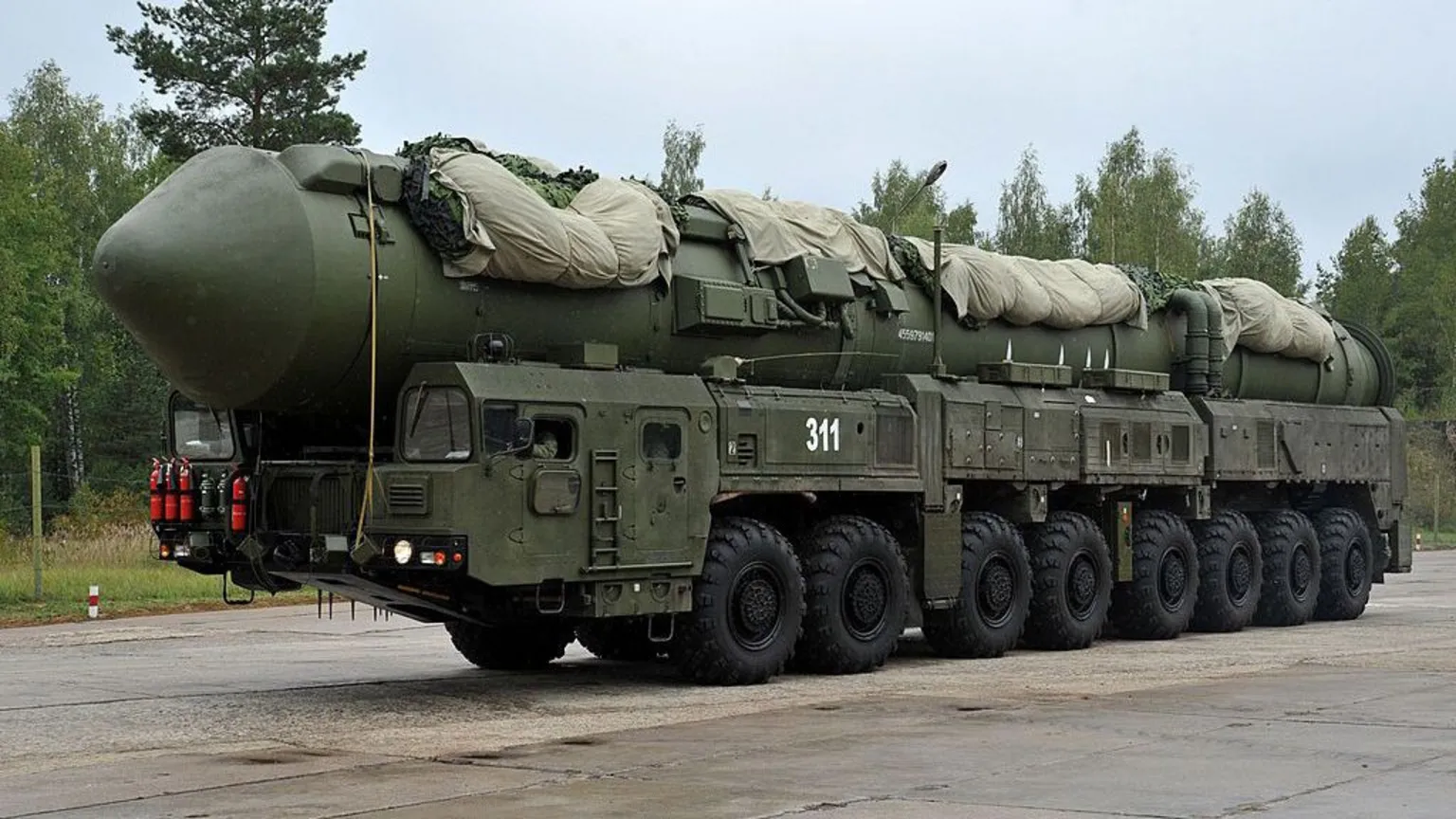
The meeting with European ambassadors was not structured as a typical propaganda exhibition of debris. The Ukrainians divided two different issues. In the cruise missiles "Zircon," "Caliber," X-101, and drones "Geran-2," used on the night of May 23-24, they showed foreign components from Switzerland, Germany, the USA, the UK, Japan, China, and other countries; part of it, they claimed, was produced as early as 2026. This is a classic story of circumventing sanctions: gray suppliers, transit jurisdictions, dual-use microelectronics. But for the "Oreshnik," the picture turned out to be different. The missile plates, Kyiv claims, were assembled from Russian and Belarusian component bases, including products from the Minsk plant "Integral."
Here, not only the geography of origin is important, but also the age of the components. The range of 2004–2014 means that we are either talking about stockpiles or production lines that have long been technologically outdated. For intercontinental or intermediate ballistic systems, this is not a catastrophe in itself: Soviet missile technology has always favored proven, radiation-resistant, and conservative solutions. But for the political project "Oreshnik," this is a dangerous crack. The Kremlin wanted to show the West a weapon of the future, while Ukraine shows its partners its production biography, where Minsk appears not as a junior ally, but as one of the bottlenecks.
The Strike on May 24 and the Cost of Demonstration
According to Ukrinform, citing a representative of the Ukrainian Air Force, the "Oreshnik" missile was launched at the area of Bila Tserkva from the Kapustin Yar range. That same night, Russia used a large mixed package: the Ukrainian side reported 90 missiles and 600 strike drones, of which, according to the Air Force, 55 missiles and 549 drones were intercepted or suppressed; hits were recorded at 54 locations. AP reported that the strike on Kyiv and the region killed at least two people and injured dozens. In Russian logic, such a package was supposed to convey two messages simultaneously: Ukraine's air defense is overloaded, and Moscow still has a tool for strategic psychological pressure.
But the "Oreshnik" as a tool of pressure only works if the opponent believes in its exclusivity. After Bila Tserkva, that exclusivity became less obvious. Kyiv Independent, which visited the strike site, described the destroyed garages and limited military results. UNN, citing Defense Express, provides even more unpleasant assessments for Moscow: the average size of craters from "Oreshnik" blocks is up to three meters in diameter and up to two meters deep, with an energy effect of about 52–95 kg in TNT equivalent with a different mechanics of destruction, and the overall destructive effect of one launch with 36 blocks is approximately comparable to the use of 36 enhanced "Shaheds." If this assessment is close to reality, then we are not dealing with a wonder weapon, but a very expensive form of political theater.
The Belarusian Channel as a Vulnerability, Not an Asset
The Belarusian trace is particularly important because it changes the address of sanctions pressure. Usually, discussions about Russian missile production boil down to Western microchips, Chinese electronics, and intermediaries in third countries. This is correct, but not enough. If "Integral" is indeed linked to the plates for the "Oreshnik" and cruise missiles, then Belarus is not just a territory for the placement of Russian forces and not only a political accomplice. It becomes part of the production contour of strategic weapons.
For Moscow, this is convenient: the Belarusian industry inherits Soviet specialization in microelectronics, and Minsk's political dependence reduces transaction costs. For Minsk, this is dangerous: the more Lukashenko turns his factories into elements of the Russian defense industry, the less space he has for the usual game between Moscow and the outside world. In the Soviet system, union republics could argue about plans, but not about the strategic ownership of production. In the current system, Belarus voluntarily returns to this role, only without the Soviet budget and without the guarantee that Moscow will pay the full political price.
Why Old Electronics Do Not Mean a Weak Missile
One must avoid overly simplistic conclusions. An old component base does not automatically render a missile inoperable. In strategic systems, reliability is often more important than compactness and fashion. American and Soviet nuclear complexes have lived for decades on technologies that the civilian sector would consider archaic. The "Oreshnik," which CSIS and other Western sources link to the RS-26 "Rubezh" line, likely uses this very logic: less innovative beauty, more proven ballistics, separating blocks, high speed of entry into the atmosphere, and the political effect of inevitability.
But there is a difference between conservative reliability and forced technological immobility. If a 2008 plate is in a missile because it has passed rigorous qualification, that is one thing. If it is there because modern imports are blocked and domestic industry cannot quickly replace the nomenclature, that is another. The Russian system, as usual, will call the second the first. This is the familiar post-Soviet trick: a shortage is declared a doctrine.
Strategic Conclusion
After May 24, the "Oreshnik" looks not like a mass weapon of war, but as a rare signal. Defense Express estimates the possible production rate in 2026 at about five missiles; even if this figure is understated, the order of magnitude is clear. In comparison, the production of dozens of "Gerans" is measured not in months, but in hours and days. Therefore, the military significance of the "Oreshnik" is limited not only by accuracy or cost but also by serial production. Russia can use it to demonstrate resolve, to threaten European capitals, and for internal mobilization mythology. It cannot replace it with a conventional missile-drone campaign.
For sanctions policy, the lesson is also specific. Western components in the X-101 and "Gerans" require control of supply chains in 2026. Belarusian plates in the "Oreshnik" require different pressure: financial, technological, and personal on enterprises that are still perceived as Soviet relics, not as active participants in the war. The Russian defense industry will survive this pressure, as it has survived much before. But the more Moscow is forced to build missile blackmail on old plates and allied dependence on Minsk, the clearer its limit becomes: the political effect still exists, but industrial freedom is already narrowing.
On May 24, 2023, Russian forces launched a mixed package of 90 missiles and 600 drones against Ukraine, targeting areas including Kyiv and Belaya Tserkov. Ukrainian air defense intercepted 55 missiles and 549 drones, resulting in at least two deaths and multiple injuries. The Oreshnik missile, identified as containing outdated Russian and Belarusian components, raised concerns about its effectiveness as a strategic weapon.
- Ukrainian forces intercepted or suppressed 55 missiles and 549 drones during the attack.
- The Oreshnik missile was launched from Kapustin Yar targeting Belaya Tserkov.
- The strike resulted in at least two fatalities and numerous injuries in Kyiv and surrounding areas.
- Components of the Oreshnik missile were identified as Russian and Belarusian from 2004-2014.
- The strike demonstrated the limitations of the Oreshnik missile as a strategic weapon.