
Poland and the Baltics Push for B61-12 and F-35A — NATO Delays Europe's Nuclear Problem to 2026
 Dr. Klaus Weber
Poland and the Baltics Push for B61-12 and F-35A — NATO Delays Europe's Nuclear Problem to 2026
According to expert estimates, around 100 American B61 nuclear bombs are currently stored in Europe. Now, Defense News, Euronews, and the Financial Times report that Washington is openly discussing an expansion of nuclear sharing within NATO channels: Poland and the Baltic states are interested in the deployment of American Dual-Capable Aircraft, meaning planes that can conduct both conventional and nuclear missions. This sounds like a reinforcement of deterrence. Institutionally, however, it is primarily an admission: Europe is replacing the lack of conventional depth and unclear political leadership with an even closer American nuclear promise.
The Concrete Proposal is Smaller than its Political Impact
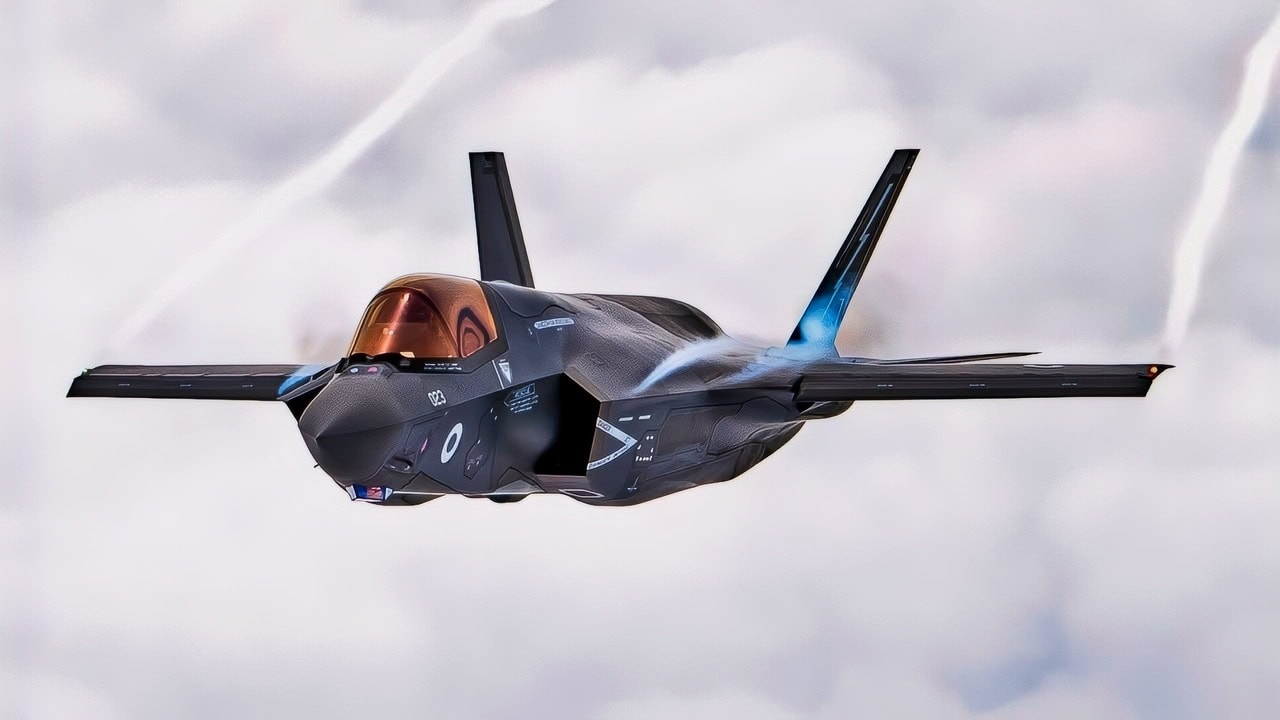
According to the reports, this is not about Polish or Baltic nuclear weapons. It is about American aircraft, American B61-12 bombs, and a NATO mission whose political control remains in Washington. The difference is crucial. Nuclear sharing means that European states provide delivery aircraft, infrastructure, pilots, and political co-responsibility; the weapons remain under American control. NATO has described this arrangement for years as a joint risk contribution of the alliance. This very arrangement is now intended to move closer to Russia.
Militarily, the logic would be understandable. Poland is acquiring F-35A, which were certified for the use of the B61-12 in 2024 (Breaking Defense, March 2024). The Baltic states do not have such air force structures themselves but could provide bases, shelters, deployment areas, and host nation support. Politically, the signal would be even clearer: The eastern flank no longer wants to be reassured solely by rotating battle groups and air defense but through a visible nuclear connection to the United States.
The Problem is Not the Bomb, but the Decision Chain
In Berlin, there may be a tendency to dismiss this debate as Eastern European escalation rhetoric. That would be too convenient. Poland has pointed out Russian deployments in Belarus, Kaliningrad, and the weakness of Western escalation communication for years. Former President Andrzej Duda explicitly called for an expansion of nuclear sharing to Poland as early as 2025. Thus, the new discussion does not arise solely from nervousness but from a structural distrust: Is the existing NATO architecture sufficient if American conventional forces in Europe shrink and Washington shifts its priorities to Asia?
However, a deployment further east would not automatically create more deterrence. It initially shifts vulnerability. B61-12 are not a magical protective dome but free-fall bombs for manned aircraft. They require secured airfields, underground storage, American munitions support units, certified crews, air superiority, or at least suppressed enemy air defense. Against a Russian arsenal of Iskander, Kinzhal, cruise missiles, drones, and cyberattacks, a base close to the eastern flank is politically visible but operationally challenging to protect.
Poland's F-35A Does Not Solve the Baltic Dilemma
Poland's F-35A fleet could theoretically be the technical entry ticket. Practically, Warsaw will first have to manage a very normal air force modernization: training, maintenance, protected bases, armament, data links, electronic warfare, and integration into NATO air operations. Nuclear certification is not a software update but a political-military regime with security procedures, exercises, and American oversight.
The Baltic states face a different problem. Estonia, Latvia, and Lithuania do not have a national fighter jet fleet on which a DCA role could be placed. There, the debate would be more about deployment and infrastructure: Can American or other allied F-35A regularly operate at Baltic airfields without making these bases early targets in a crisis? Who protects these bases against drones, ballistic missiles, and sabotage? And who explains to their own population that deterrence means not only protection but also target marking?
The French Alternative Remains Politically Attractive but Militarily Limited
The new U.S. debate coincides with a second movement: France is trying to politically frame its nuclear umbrella in a more European manner. Norway has just been reported as the ninth participant in a French deterrence dialogue; Germany wants to initially accompany French nuclear exercises as an observer. This is interesting for Poland but not sufficient. The Force de frappe is national, not NATO-integrated. Paris can consult, exercise, and send signals. However, it cannot provide the same institutional guarantee as American NATO nuclear planning because France insists on its national decision-making autonomy.
Here lies the paradox of European strategic autonomy. The more Europe doubts American reliability, the more the eastern flank requests American nuclear visibility. The louder Paris speaks of European sovereignty, the clearer Poland shows that a French offer without formal NATO embedding remains politically secondary. This is not ingratitude towards France but sober institutional logic.
More Nuclear Sharing Can Conceal Conventional Weakness
The most dangerous effect of the debate would not be Russian propaganda but European self-soothing. If B61-12 and F-35A become the replacement language for missing air defense, missing munitions reserves, and missing leadership capability, Europe shifts the real problem once again. Deterrence only works if nuclear signals rest on credible conventional defense. Otherwise, an unstable model emerges: low conventional threshold, high nuclear symbolism, unclear political escalation ladder.
NATO has good reasons to maintain nuclear sharing as an alliance instrument. It distributes risks, politically binds European states, and signals that an attack on Europe cannot be isolated in a conventional separate war. However, an expansion to Poland or even into the Baltic region would not be a technical routine act. It would be the most visible change in the European nuclear geography since the end of the Cold War.
What Berlin Should Learn from This
Germany should not comment on this discussion morally but read it as a warning signal. If Warsaw and Vilnius are asking for American DCA, it is also because they do not trust German and Western European assurances alone. The special fund has not transformed tanks, munitions, and air defense quickly enough into available combat units. SAFE finances joint procurement but not a joint nuclear decision. The European Defense Agency coordinates but does not guarantee.
A wise German response would therefore not be to lecture the eastern flank. It would need to close three concrete gaps: first, more ground-based air defense for Poland and the Baltics; second, real available munitions reserves instead of annual announcements; third, a European leadership structure that is capable of acting in a crisis without first waiting for the American timetable. Without this conventional underpinning, every nuclear debate remains larger than its military substance.
The expansion of nuclear sharing would not make Europe more autonomous. It would only more precisely show where Europe is still not autonomous.
The core of the new discussion is therefore uncomfortable: Poland and the Baltic states are not seeking the bomb because they think nuclear. They are seeking it because they distrust Europe's conventional and institutional defense capabilities. More American B61-12 in the European debate may provide short-term reassurance. In the long term, it is a testament to failure if Europe's most credible response to Russian coercion is once again an American key in a European bunker.
Poland and the Baltic states are advocating for the deployment of American dual-capable aircraft and B61-12 bombs as part of NATO's nuclear sharing strategy by 2026. This initiative aims to enhance deterrence against Russia, reflecting a lack of confidence in existing NATO defense structures. The proposal involves American control over the nuclear weapons while European nations provide necessary support and infrastructure.
- Poland and the Baltic states are advocating for the deployment of American dual-capable aircraft and B61-12 bombs.
- Approximately 100 American B61 bombs are currently stored in Europe.
- The proposed nuclear sharing involves American control over the weapons while European states provide infrastructure and support.
- Poland is acquiring F-35A aircraft certified for B61-12 use by 2024.
- The discussion reflects a structural distrust in NATO's current defense architecture.