
Poland's 4 Airbus A330 MRTT with Spain highlight Europe's tanker gap until 2030
 Dr. Klaus Weber
Poland's 4 Airbus A330 MRTT with Spain Highlight Europe's Tanker Gap Until 2030
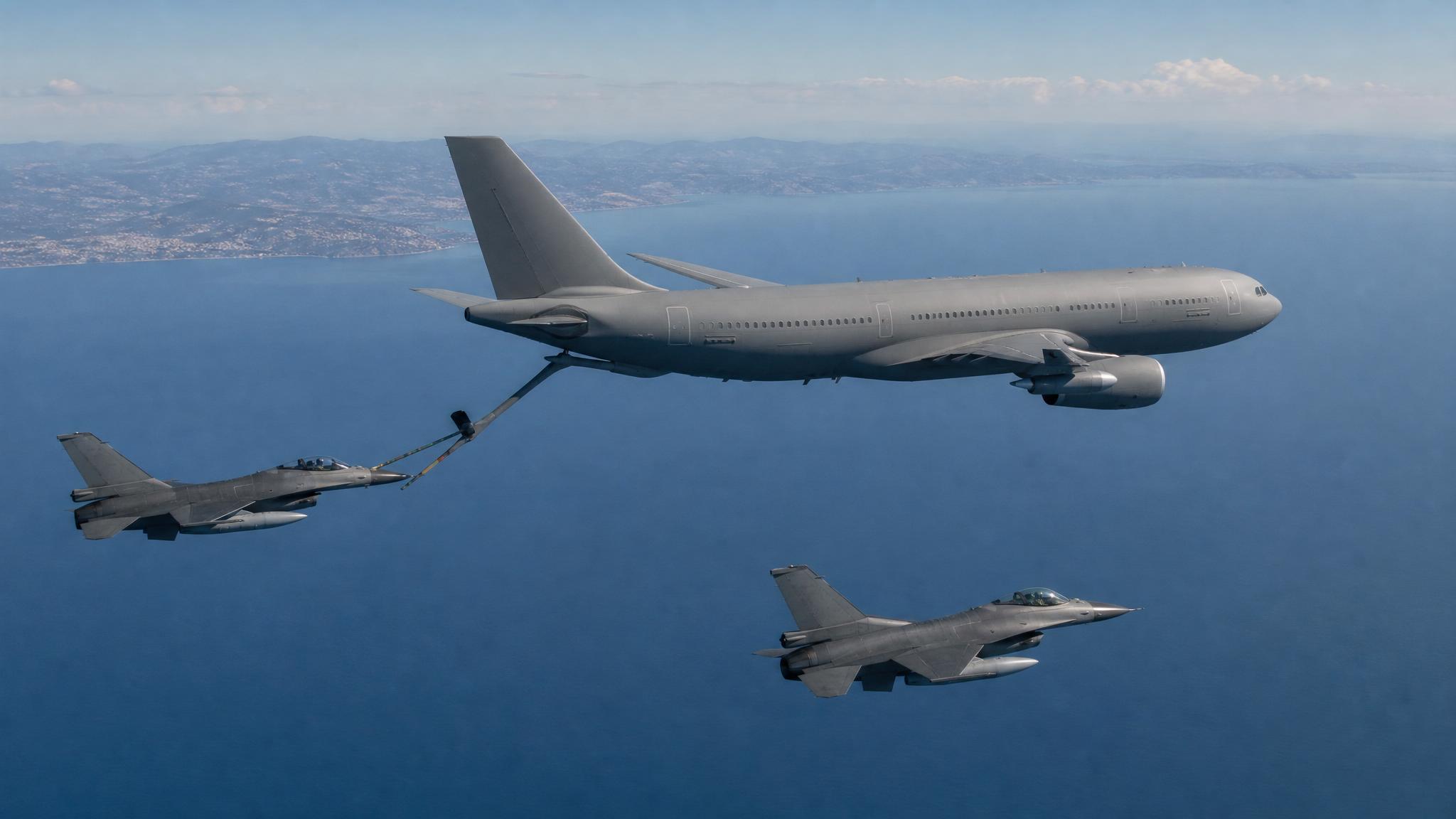
Four tanker aircraft by 2030 represent progress for Poland. For Europe, they are also an admission: The ability to deploy and sustain its own combat aircraft over longer distances remains a scarce, politically fragmented resource. Warsaw initially wanted to acquire two Airbus A330 MRTT. Following a memorandum signed with Spain at the end of June 2026, the order is now set to increase to four aircraft, as Madrid shares delivery positions, allowing Poland to obtain aircraft more quickly.
This is not a technical footnote. Aerial refueling is one of those capabilities that rarely make headlines in European defense debates, but in a real crisis, it determines whether F-35, F-16, Eurofighter, or future combat aircraft are more than just national prestige symbols. Those who cannot refuel cannot endure. Those who cannot refuel together cannot fight together.
A European Purchase with National Purpose
According to the Polish Ministry of Defense, which Defense News published on July 3, Warsaw is in the final phase of negotiations. The delivery of the A330 MRTT is expected by 2030. The purchase is to be financed through the EU program Security Action for Europe, or SAFE. Poland will receive around 43.7 billion euros in favorable loans from this program, making it the largest national share of the initiative.
The specific contract amount was not disclosed. A point of comparison is Italy: Rome announced in May 2026 the purchase of six A330 MRTT for about 1.4 billion euros. Therefore, Poland's four aircraft are likely not a side deal but one of the more visible SAFE procurements in the area of strategic support capabilities. That Warsaw prefers Airbus over Boeing's KC-46 is important from an industrial policy perspective. Even more crucial, however, is that Poland is not buying alone but is utilizing the Spanish delivery schedule. This illustrates the strength and weakness of European procurement in one sentence.
The A330 MRTT Addresses a Real Capability Problem
The Airbus A330 MRTT is not an experimental program. It is based on the civilian A330-200, can carry around 111 tons of fuel according to publicly available Airbus data, and can also transport troops, cargo, or wounded personnel. The aircraft can be equipped with boom and hose systems, allowing it to service various receiver aircraft. This flexibility is crucial for Poland: The Air Force is acquiring F-35s, operates F-16s, and is evaluating additional combat aircraft, including Eurofighter, F-15EX, or potentially a connection to the GCAP in the long term.
An air force with modern combat aircraft but without its own tankers remains operationally dependent. It can participate in NATO operations, but its range, endurance, and deployability depend on partners. For a frontline state like Poland, this is a particularly uncomfortable paradox. Warsaw is investing heavily in tanks, artillery, air defense, combat jets, and ammunition but must wait for European timeframes for support capabilities.
The good news is: Poland is purchasing a European platform, utilizing EU funding, and coordinating with Spain. The bad news is: A bilateral agreement on delivery positions is needed to obtain four aircraft by 2030. This is not a failure of Warsaw. It is a symptom that Europe still treats strategic enablers as national procurement objects rather than as shared infrastructure.
SAFE Funds Capacity but Not Automatically Availability
SAFE was politically conceived as a quick response to Russia's war against Ukraine and American pressure. Loans are intended to help member states acquire urgently needed capabilities. In this case, the instrument works partially: It facilitates Poland's purchase and favors a European manufacturer. But loans do not create a common operational planning. A Polish A330 MRTT remains, for now, a Polish A330 MRTT, even if it is financed with EU money and procured in cooperation with Spain.
Here lies the institutional core of the problem. Europe has learned in recent years to produce common announcements: SAFE, EDIP, PESCO, Readiness 2030, joint munitions procurement. But when it comes to capabilities like aerial refueling, it ultimately does not matter who approved the loan. What matters is who gets priority in a crisis, who provides the crews, who controls maintenance capacities, under what rules the aircraft are integrated into multinational operations, and whether a NATO commander can actually access them.
The already existing multinational MRTT fleet in Europe shows that common models are possible. Yet it remains limited and politically vulnerable. National governments are happy to accept joint ownership as long as the situation is calm. In a crisis, the pressure increases to meet national needs first. Aerial refueling is particularly sensitive in this regard because tankers are not just support aircraft but multipliers. One more or one less tanker can change the effectiveness of an entire fighter squadron.
Poland's Choice is Also a Signal to Washington
That Boeing's KC-46 is not coming into play should not be overinterpreted. Poland remains one of the most important European customers for American armaments: F-35, Abrams, HIMARS, and Patriot shape the modernization. Precisely for this reason, the choice of the A330 MRTT is noteworthy. Warsaw opts for Airbus for a central support capability because availability, European financing, and Spanish delivery positions align.
This is not a sudden breakthrough of European autonomy. It is pragmatic diversification. Poland wants American combat power, European financing, and an industrial solution that is tangible by 2030. For Berlin and Paris, this combination should be an uncomfortable lesson. The European defense industry does not win through Sunday speeches about sovereignty but when it can close specific capability gaps faster and politically more easily than American alternatives.
At the same time, the context of combat aircraft remains crucial. Warsaw is considering up to 32 additional combat aircraft. The Eurofighter consortium case is now being linked in Poland with the argument that about 40 percent of the investment value could flow into local supply chains. Therefore, the A330 MRTT decision not only strengthens Airbus as a tanker manufacturer but also the political plausibility of a broader European air combat package. Whether this will lead to industrial partnership or just a series of individual purchases remains open.
Four Aircraft Are Not a European Tanker Concept
From a military perspective, four A330 MRTT are sensible for Poland. They create national reach, facilitate NATO deployments, and increase the resilience of the eastern flank. From a European perspective, however, they are only one building block. The real question is not whether Poland will get four tankers. The question is whether Europe will know by 2030 how to integrate its tankers, transport aircraft, AWACS successors, drone defense, air defense, and munitions production into a common operational model.
More platforms are necessary. But platforms without common availability rules remain aggregated national stocks. This is precisely what European defense policy has been failing at for decades: One counts aircraft and calls it capability. One counts credit lines and calls it integration. One counts programs and calls it strategy.
Poland's decision thus shows both. Europe can deliver when a concrete need, an existing product, a financing instrument, and a partner with delivery positions come together. But this constellation is still an exception, not the rule. The A330 MRTT will strengthen Poland's Air Force. Whether it makes Europe more capable of action will not be decided in Toulouse, Getafe, or Warsaw, but in the question of whether a reliable common operational architecture emerges from nationally purchased tankers.
The paradoxical conclusion is: Europe is finally buying the right support capabilities, but it continues to treat them as if national procurement could solve a common operational problem.
Poland is set to acquire four Airbus A330 MRTT aircraft from Spain by 2030 to enhance its air refueling capabilities. This acquisition is part of a broader strategy to strengthen its military and is financed through the EU's Security Action for Europe program. The decision underscores Poland's commitment to European defense cooperation while addressing its operational needs.
- Poland is acquiring four Airbus A330 MRTT aircraft from Spain by 2030.
- The acquisition is part of a broader effort to enhance Poland's military capabilities and air refueling capacity.
- The purchase is financed through the EU program Security Action for Europe (SAFE).
- Poland's decision reflects a preference for European defense solutions over American alternatives.