
Pressure of the First Island Chain Demonstrated by 10 Chinese Navy Ships and 5 Russian Vessels Passing Through the Southwest Islands
 Tanaka Takashi
Pressure on the First Island Chain Demonstrated by 10 Chinese Navy Ships and 5 Russian Ships Passing Through the Southwestern Islands
The Chinese Navy frigate with hull number 599 and the missile destroyer with hull number 132 passed through the straits around Japan and headed towards the Pacific. A series of movements reported by the U.S. military newspaper Stars and Stripes on July 2 indicated that from June 26 to 30, 10 Chinese vessels used maritime passages around the Japanese archipelago, while at the same time, 5 Russian vessels were confirmed moving from Hokkaido to the vicinity of Kyushu. This is said to be based on announcements from the Ministry of Defense's Joint Staff Office.
Looking at the numbers alone, it is premature to immediately call this a crisis. However, from the perspective of the Japan Maritime Self-Defense Force (JMSDF), the issue lies not in the number of vessels but in the dispersion of their routes. This time, Chinese vessels utilized at least three of the five major transit routes through the Southwestern Islands. This indicates a growing attitude of treating the First Island Chain not as a single wall, but as an operational space with multiple entry and exit points.
Confirmed Routes and Vessels
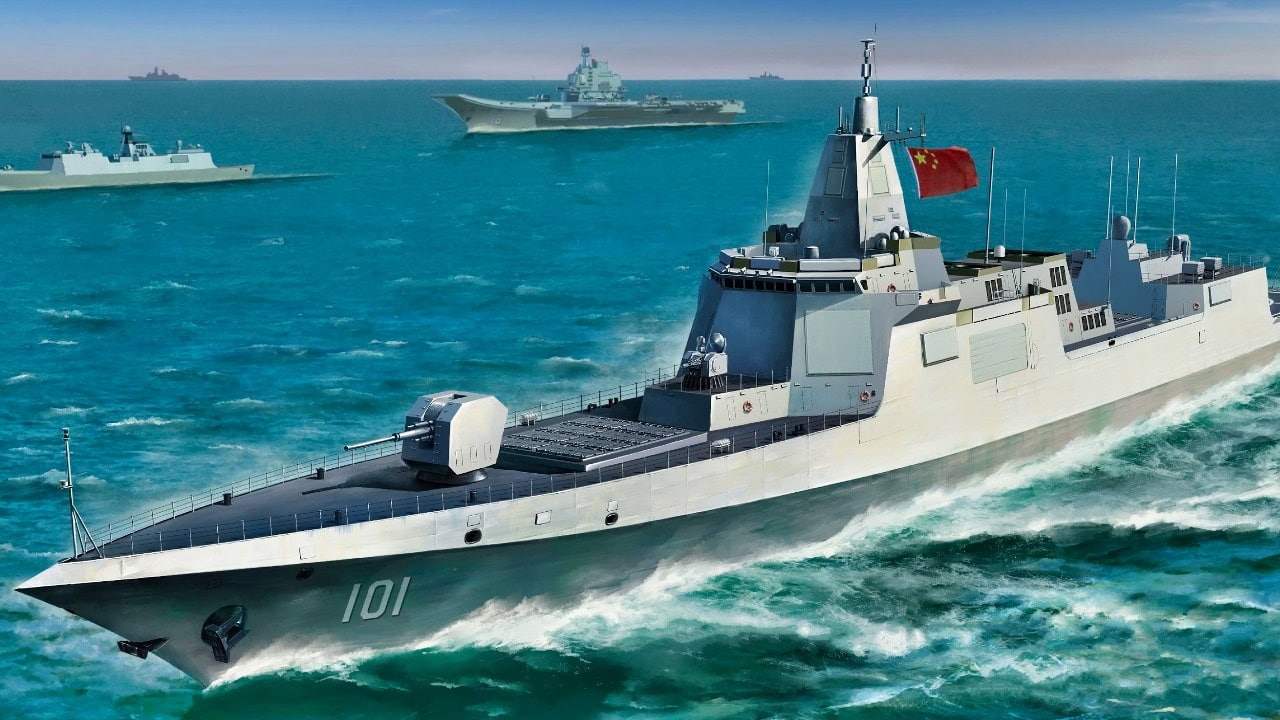
According to reports, the frigate Anyang and the missile destroyer Dongguan passed through the Miyako Strait. The missile destroyer Suzhou and the intelligence-gathering ship Tianxuxing passed between Amami Oshima and Yokodate Island, with Suzhou reportedly returning towards the East China Sea afterward. Furthermore, the frigate Yancheng and the supply ship Dongpinghu passed through the Osumi Strait, followed by the missile destroyer Nanchang and Xian also transiting the same strait.
In the waters northeast of Tsushima, the destroyers Guiyang and Xining navigated towards the East China Sea. Notably, multiple missile destroyers, along with a supply ship and an intelligence-gathering ship, used separate passages in the same week. This should be viewed not merely as a show of force, but as a natural combination of open-sea deployment, intelligence gathering, and supply operations in peacetime training.
Simultaneity with Russian Vessels
Japanese officials have explained that the movements of the Chinese and Russian vessels this time have not been confirmed as a joint exercise. This cautious expression is reasonable. We must distinguish between coincidental simultaneous navigation and integrated operational actions.
However, from the perspective of the JMSDF's vigilance burden, whether the intentions of both are completely linked is a secondary issue. If Chinese vessels are using multiple passages through the Southwestern Islands while Russian vessels are moving in a different direction from the north to the vicinity of Kyushu, the allocation of escort ships and patrol aircraft becomes significantly more complex. In particular, the P-1, P-3C, and escort ship units must simultaneously monitor submarines, intelligence-gathering ships, and surface combatants.
Implications for SLOC Defense
For Japan, the straits of the Southwestern Islands are not just an issue related to a Taiwan contingency. They serve as an entry point for monitoring vessels moving from the East China Sea to the Pacific, and at the same time, they are an early warning line for protecting Japan's SLOC (Sea Lines of Communication). When routes through the Osumi Strait, Miyako Strait, and around Yonaguni are used simultaneously, the JMSDF is forced to conduct area-wide monitoring rather than localized tracking.
In materials updated by the Ministry of Defense in June regarding Chinese military activities, there is an indication that Chinese vessels are diversifying their routes towards the Pacific through the Southwestern Islands. This recent movement can be said to substantiate that description with actual track data. In the author's view, the aim of the Chinese Navy is not merely the passage through the straits, but the formation of an operational tempo that constantly compels a response from the Japanese side.
Remaining Challenges for the Japan-U.S. Alliance
Exercises such as the U.S. military's Valiant Shield 2026 and Resolute Dragon 26 play a role in enhancing readiness along the First Island Chain. However, the visible firepower during exercises is different from the surveillance missions that occur weekly in peacetime. The numbers of 10 Chinese vessels and 5 Russian vessels are striking, but what is more essential is the fact that the JMSDF dispatched vessels and aircraft to each of them.
Japan's deterrent capability cannot be measured solely by missile range or base deployment. It depends on which strait, which vessels, and within what time frame they can be identified, and how information is shared with allied nations. The accumulation of these mundane procedures determines the actual strength of the First Island Chain. A risk that is often overlooked is not an enemy surprise attack, but the degradation of decision-making freshness due to prolonged peacetime vigilance.
Ten Chinese naval vessels and five Russian vessels passed through the Nansei Islands from June 26 to June 30, 2023, utilizing multiple transit routes. This movement indicates a shift in operational posture, treating the first island chain as a space with multiple entry points. The Japanese Self-Defense Forces are challenged by the simultaneous movements, complicating their monitoring and response efforts.
- 10 Chinese naval vessels and 5 Russian vessels were confirmed to have passed through the Nansei Islands.
- Chinese vessels used at least 3 of the 5 major transit routes in the region.
- The movements occurred between June 26 and June 30, 2023.
- The Japanese Self-Defense Forces noted the complexity of monitoring these movements.
- No joint exercises were confirmed between Chinese and Russian naval forces.