
In 7 Days, 10 Updates on the Chinese Navy: What Can Japan's Ministry of Defense See?
In just one week, the Japanese Ministry of Defense released a total of 10 reports regarding the activities of the Chinese Navy around Japan. The frequency is so intense that it can be said to be rare in recent years. What information can be interpreted from these related movements?
Multiple passages during the same time period! Chinese vessels frequently traversing the First Island Chain
Since late June, the Japanese Ministry of Defense has continuously released multiple reports concerning the activities of the Chinese Navy around Japan, with the official website of the Ministry's Joint Staff almost being "dominated" by news of Chinese vessel activities. According to statistics, from June 25 to July 1, Japan released a total of 10 reports related to the Chinese Navy, with 5 reports issued in a single day on June 29.
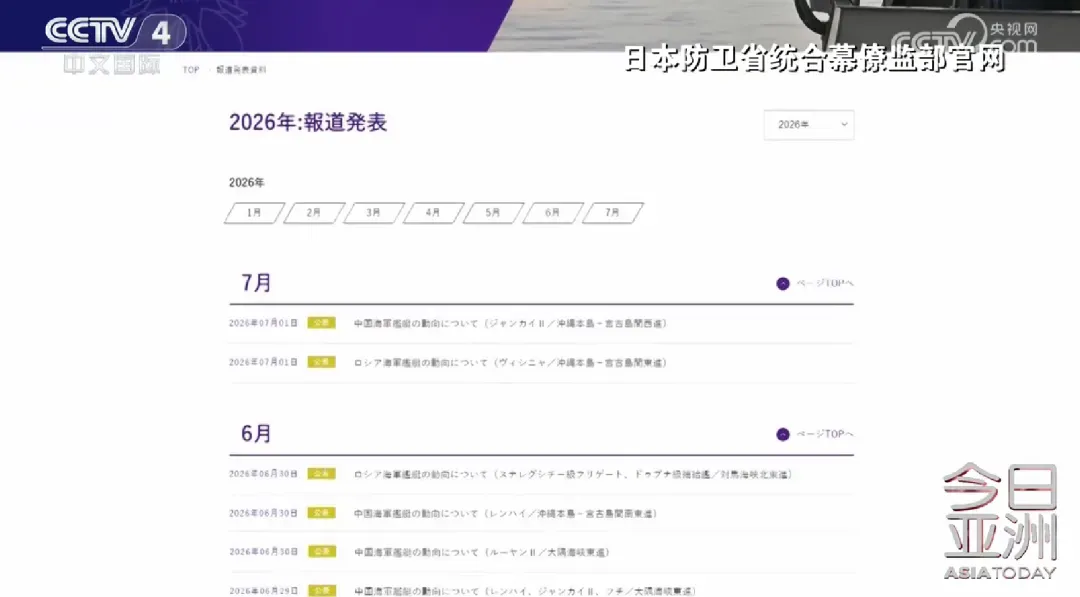
According to the information released by Japan:
From June 24 to 25, two Chinese Navy 052D destroyers, Xining and Guiyang, entered the Sea of Japan through the Tsushima Strait. These two destroyers subsequently returned from the Sea of Japan on the 27th to 28th.
On June 26, the 054A missile frigate Anyang entered the Western Pacific through the Miyako Strait.
On June 27, the 052D destroyer Suzhou entered the Western Pacific through the Yokto Waterway, and then returned via the same route on the 28th. The Yokto Waterway is located between Amami Oshima and Yokto Island in southwestern Japan and is an important maritime passage connecting inside and outside the First Island Chain.
From June 27 to 28, the 054A missile frigate Yancheng, a comprehensive supply ship, and the first 055-class destroyer Nanchang entered the Western Pacific in two batches through the Osumi Strait. The Osumi Strait is located north of the Yokto Waterway, between the southern part of Kyushu Island and the Osumi Islands.
On June 29, a Chinese Navy electronic reconnaissance ship entered the Western Pacific through the Yokto Waterway.
On June 29, the 052C destroyer Xi'an entered the Western Pacific through the Osumi Strait.
On June 30, the 055 destroyer Dongguan entered the Western Pacific through the Miyako Strait. The 055 destroyer is the largest, most advanced, and most capable comprehensive combat destroyer independently developed by China, integrating advanced radar, universal vertical launch systems, and comprehensive RF capabilities. The Dongguan was commissioned into the Eastern Theater Navy in March 2026, alongside the Anqing. With this, the number of 055-class destroyers in service has reached 10.
Additionally, on July 1, the 054A missile frigate Xiangtan entered the East China Sea through the Miyako Strait.
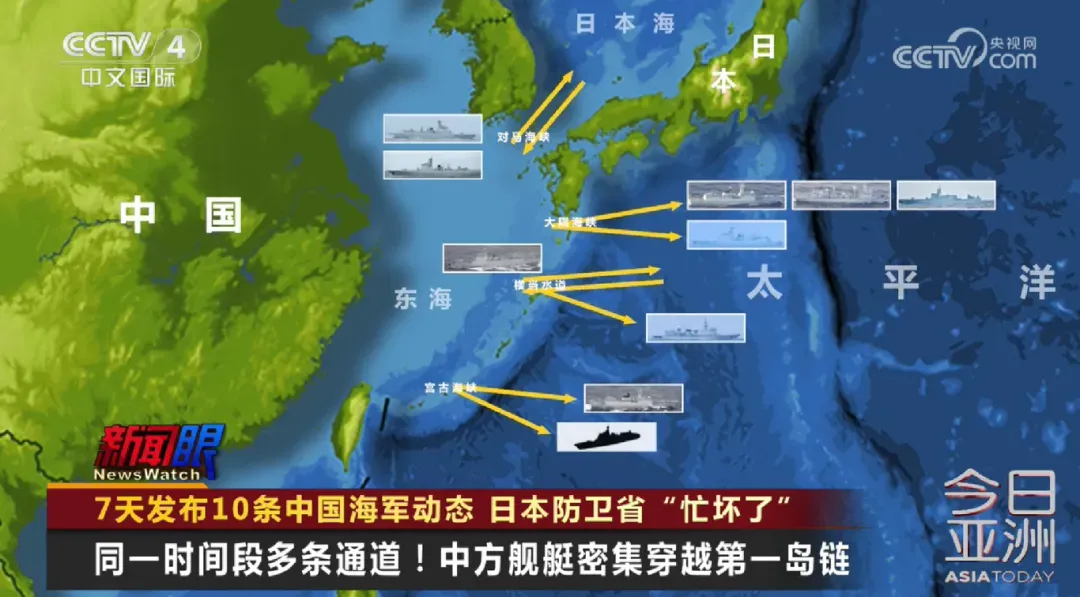
It can be seen that Chinese warships mainly passed through the Tsushima Strait, Osumi Strait, Yokto Waterway, and Miyako Strait, traveling between the East China Sea, the Sea of Japan, and the Western Pacific. From the information released by Japan, it appears that the Chinese Navy currently has at least 7 warships deployed in the Western Pacific.
Experts: The Chinese Navy has the capability to break through other countries' maritime "exercise chains"
The Liaoning aircraft carrier conducts long-range training for the J-15T carrier-based fighter jet
Previously, the Chinese Navy's Liaoning aircraft carrier group conducted over 40 days of long-range training in the South China Sea and Western Pacific between May and June. During this training, the carrier group focused on real combat requirements, planning and organizing air defense, anti-ship strikes, support and cover, long-range comprehensive rescue, and actual weapon use exercises, conducting multiple batches of ship and aircraft offensive and defensive confrontations across day and night, effectively testing the operational capabilities of the carrier group in long-range scenarios. From the training footage, multiple J-15T carrier-based fighter jets can be seen taking off and landing on the Liaoning.
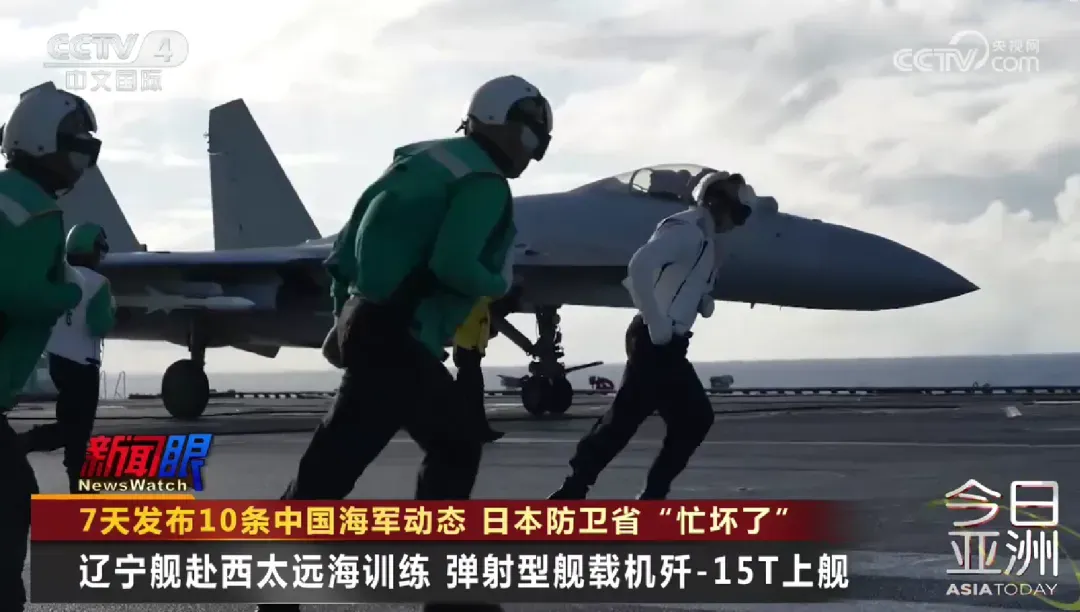
Experts: The combat capability of the Liaoning has significantly improved with the J-15T on board
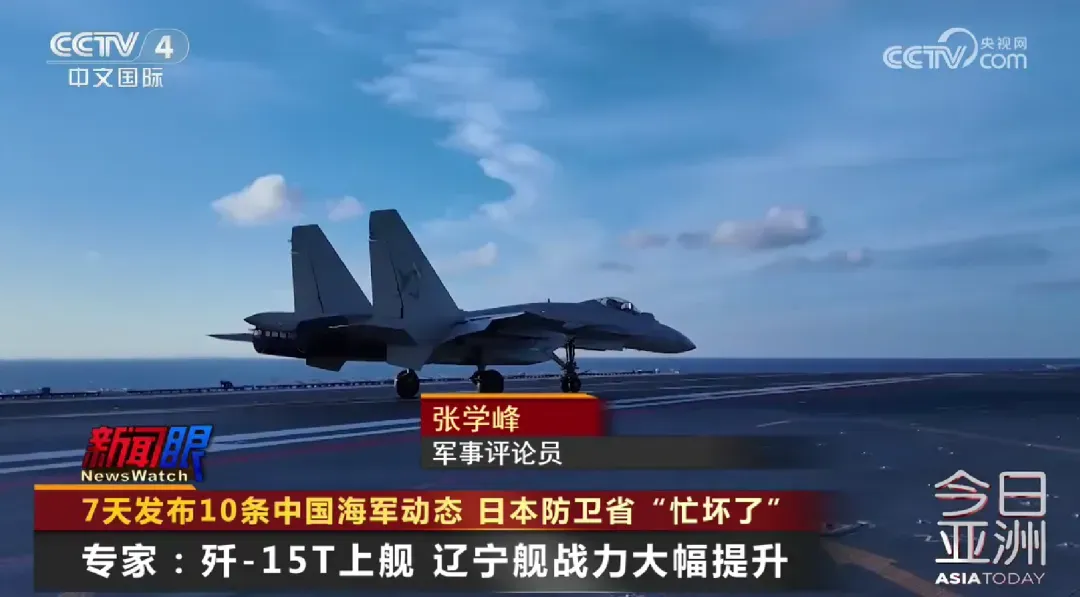
Military commentator Zhang Xuefeng
The J-15T carrier-based fighter jet is an improved version of the basic J-15 model, designed as a carrier-based fighter that is compatible with both catapult and ski-jump launches. In addition to structural adaptability improvements, the aircraft has undergone significant upgrades in avionics and onboard weapons. It is equipped with a new active phased array radar, greatly increasing detection range and significantly enhancing electronic warfare capabilities. The onboard weapons have also been upgraded to carry PL-15 air-to-air missiles, paired with long-range detection radar, allowing it to fully utilize the range advantages of the PL-15 missiles. With the commissioning of this type of aircraft, the overall air combat and anti-ship strike capabilities of the Liaoning will be greatly enhanced.
Strengthening long-range training, making "the sea is home, the shore is a guest" a norm for personnel
Naval authorities have stated that in recent years, the Navy has been using aircraft carrier groups as a hub to regularly conduct realistic long-range training, integrating various air, surface, and underwater forces into joint exercises, with increasing frequency and expanding operational ranges, marking a new level in the Navy's regular long-range training. In the past, going out to sea was considered a significant event, requiring long preparation from various departments. Now, most vessels are on missions at sea, and personnel have made "the sea is home, the shore is a guest" a norm.
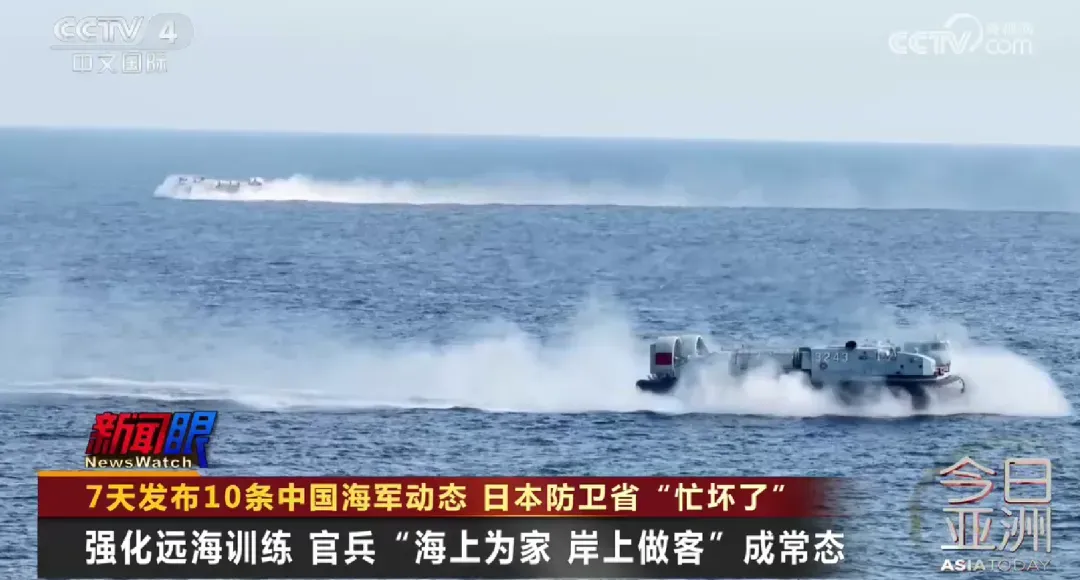
The Fujian is expected to conduct long-range training this year
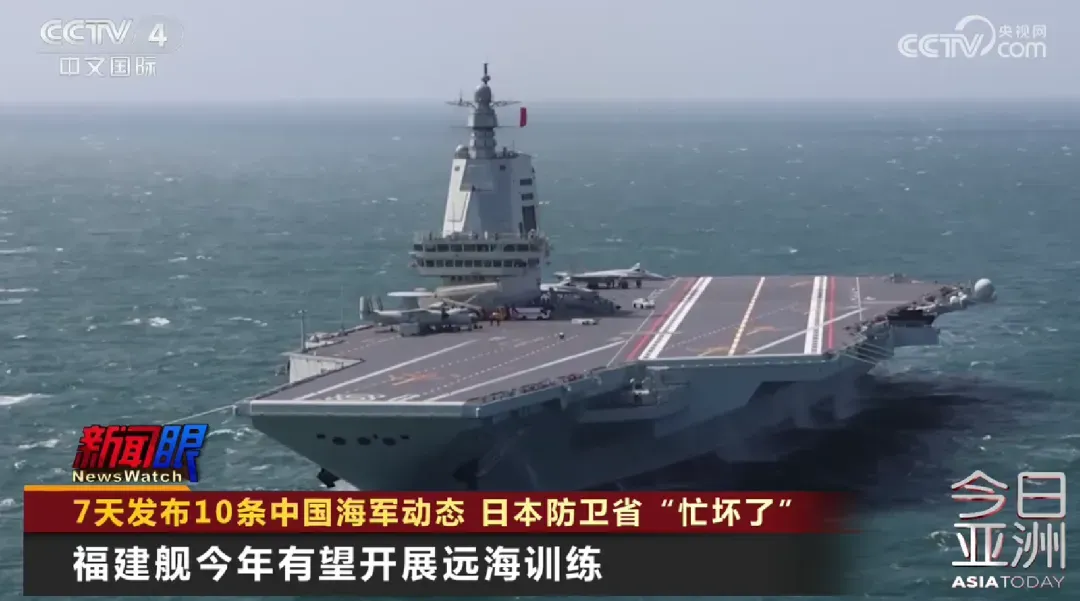
This year, China's first catapult-type aircraft carrier, the Fujian, is also expected to conduct long-range training, transitioning from "basic combat capability formation" to "full combat capability formation," with 2026 being a key year for the Fujian's combat capability generation.
Source: CCTV4
Chinese naval vessels conducted operations in the waters surrounding Japan from June 24 to July 1, 2023, with at least 7 ships reported in the Pacific Ocean. The Chinese Navy's activities included the passage of 052D destroyers and 054A frigates through key maritime channels, indicating an increased operational tempo. The Japanese Ministry of Defense issued 10 reports on these movements, highlighting the significance of the naval presence.
- Chinese naval vessels have been active in the waters around Japan, with 10 reports issued by the Japanese Ministry of Defense in one week.
- Vessels include 052D destroyers, 054A frigates, and a 055 destroyer, indicating a significant naval presence.
- Operations included passage through critical maritime channels such as the Tsushima Strait and Miyako Strait.