
Putin from the cruiser Varyag promises a symmetrical capture of EU ships — the naval war extends beyond the Black Sea
 Dmitri Volkov
Putin on the cruiser Varyag promises a symmetrical seizure of EU vessels — the maritime war extends beyond the Black Sea
A coincidence that is not a coincidence
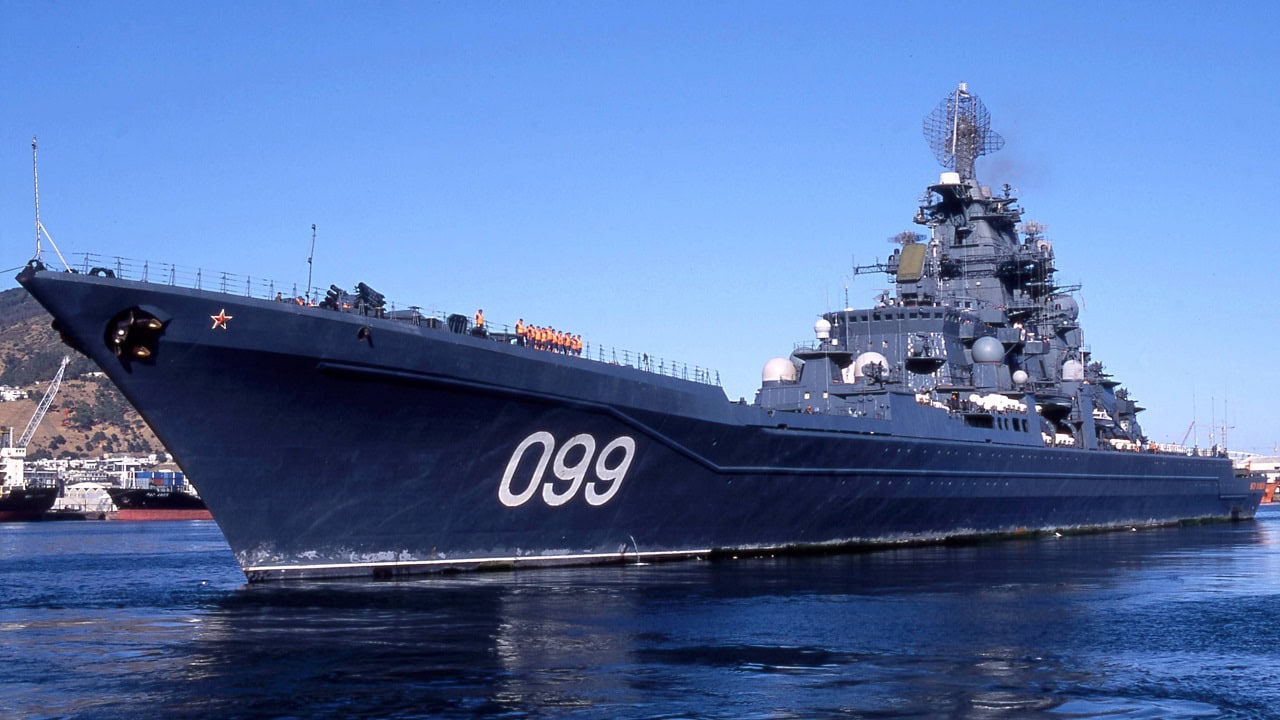
On August 12, 2026, Vladimir Putin boarded the guard missile cruiser "Varyag" — the flagship of the Pacific Fleet — to observe the final stage of naval exercises in the Sakhalin area. From the cruiser’s deck, he announced that Russia would "respond in kind" to any attempts by European states to seize Russian commercial vessels, calling such actions "piracy and robbery." On the same day, the Financial Times reported — citing Ukrainian officials — that Kyiv had suspended its campaign of drone strikes on oil tankers in the port of Novorossiysk: at the end of July, U.S. Vice President J.D. Vance requested this from Volodymyr Zelensky. Two events, separated by seven thousand kilometers, are connected by a single logic: the maritime war around Ukraine has ceased to be a Black Sea conflict. It is becoming global.
This coincidence is not accidental. Each of these events represents a reaction to the success or threat of success of asymmetric maritime operations. The Ukrainian drone campaign against the Caspian Pipeline Consortium (CPC) tanker terminal near Novorossiysk proved so effective that Washington's intervention became inevitable. And European measures against the Russian "shadow fleet" are so sensitive for Moscow that Putin deemed it necessary to personally board the cruiser and issue a threat of global scale. In this article, I will examine both events as manifestations of a single process — the expansion of the maritime dimension of war onto global trade routes.
The Novorossiysk campaign: why Washington intervened
In mid-July 2026, Ukrainian drones attacked several tankers loading at the CPC terminal in the Novorossiysk area (according to Reuters, July 17, 2026). A tanker chartered by ExxonMobil was damaged by two drones; subsequent strikes targeted the vessels "ASIA" and "NISSOS IOS" under the flags of the Marshall Islands (according to the Ministry of Energy of Kazakhstan, July 23, 2026). The result was immediate and measurable: the CPC terminal was closed three times during July, and oil production in Kazakhstan fell by 14% compared to June — data from four industry sources cited by Reuters.
The CPC is a critically important artery. Through this pipeline, Kazakh oil reaches the global market, with major operators including Chevron and ExxonMobil. Each day of terminal downtime means a loss of approximately 1.2 million barrels of export capacity. The Ukrainian drone campaign created a classic "spillover effect": strikes conducted as part of the war with Russia began to directly impact the interests of American oil majors and the Kazakh budget. When Black Sea drone attacks took out as much as a fifth of CPC oil loadings in July — according to the same sources — the White House's intervention ceased to be a matter of diplomatic choice and became a matter of economic necessity.
According to the Financial Times, Vance warned Zelensky in a phone call that continued attacks on non-Russian tankers would destabilize oil markets and harm American companies. Kyiv agreed not to strike CPC infrastructure and non-Russian vessels — provided that the latter are not under Ukrainian sanctions and do not transport Russian oil. This agreement, it should be noted, is not public and not documented. Its strength will be tested by each new escalation on the front.
For the Kremlin, this episode is a valuable propaganda asset: Washington is de facto protecting Russian export infrastructure from strikes by its own ally. A paradox worthy of a pen from Pikul.
Putin on the "Varyag": a signal in three directions
The choice of venue for the announcement of a "mirror response" was meticulously planned. The guard missile cruiser "Varyag" (Project 1164 "Atlant", formerly "Chervona Ukraina") is not just the flagship of the Pacific Fleet. It is a ship with a symbolic biography: in 1904, the cruiser "Varyag" of the Imperial Russian Navy engaged in an unequal battle with a Japanese squadron at Chemulpo and was scuttled by its crew. Referring to this historical image is a classic technique of Putin's rhetoric, combining the heroization of the past with the escalatory rhetoric of the present.
The essence of Putin's threat goes far beyond rhetoric. The commander of the Pacific Fleet, Admiral Viktor Liina, reported to the Supreme Commander that the fleet had conducted a "detailed analysis of maritime traffic in the Asia-Pacific region" and knows the routes, cargoes, and ownership of vessels. Moreover, Liina formulated a new concept for Russian official rhetoric — the "shadow fleet of the West": according to him, Western states "actively use vessels under the flags of third countries to transport cargoes in their own interests," which, "by their own terminology, can also be characterized as a shadow fleet." The rhetorical device here is obvious, but its emergence at the level of a fleet commander's report to the president is significant in itself. It creates a legal and propaganda framework for future actions.
The third signal was directed at NATO. Putin spoke of the "growing conflict potential" in the Asia-Pacific region, of "NATO's penetration into the region," and the "formation of new military-political blocs." This is a direct reference to AUKUS and the activation of military cooperation between the U.S. and Japan and the Philippines. The wording was broad enough to encompass the Arctic, which Putin mentioned separately: "tension is rising here as well."
The logic of expanding the maritime war
What is happening follows the same dynamics that military historians observed in both world wars: a conflict that began as a land war inevitably expands to maritime communications. The difference lies in the tools and actors. In 1914–1918, the naval war was conducted by surface raiders and submarines of the Kaiser’s fleet. In 1939–1945 — by Donitz's "wolf packs" and aircraft carrier groups. In 2026, the main tool for expanding the maritime war has become, on one hand, drones — aerial and maritime, launched by a state that formally has no navy — and on the other, sanction mechanisms aimed at commercial shipping.
The paradox of the current situation is that both sides of the conflict — both Russia and the West — are simultaneously both initiators and victims of the escalation of maritime confrontation. The EU, as part of the 21st sanctions package (June 2026), expanded the list of sanctioned vessels to more than 670 units, including — for the first time — five bunkering tankers that refueled shadow fleet vessels. European states began detaining some vessels and their crews for inspections. Moscow perceives this as creeping expropriation. Brussels views it as law enforcement.
But the Ukrainian drone campaign has added a new dimension to this confrontation — the physical destruction of tankers. Drones do not distinguish flags: vessels under the flags of the Marshall Islands and the Isle of Man, chartered by Western companies and carrying Kazakh oil, have been hit. This is precisely what prompted Washington's intervention. And this brings us to the central question: how long will the pause last?
A pause, not a cessation
The agreement reported by the Financial Times is not a formal ceasefire. It is a tactical pause dictated by specific American interests — the protection of oil majors and the stability of Kazakh exports. Ukraine retains the right to strike Russian vessels and infrastructure that are under sanctions. The difference between a Russian tanker carrying Russian oil and a tanker under a convenient flag carrying Kazakh oil through a Russian terminal is a difference that is very difficult to establish from a drone 400 kilometers from the target.
Moreover, the very logic of the Ukrainian campaign pushes towards the resumption of strikes. Each week of pause in attacks on Novorossiysk is a restored week of Russian oil exports, and therefore, of war financing. Kyiv is well aware of this equation. Vance, for his part, understands that his request creates a precedent: Washington can ask for a pause, but cannot guarantee its observance.
The historical analogy presents itself: in the 1980s, the U.S. covertly asked Iraq not to strike Iranian oil terminals on Khark Island, fearing a spike in prices. The request was honored — until it was no longer honored.
Forecast: three scenarios for 2026
Based on the current dynamics, three scenarios for the development of the maritime war can be identified:
Scenario one — freezing. The pause in strikes on Novorossiysk continues in exchange for tacit concessions from Washington on other issues. Russia refrains from seizing EU vessels, understanding that the Pacific Fleet lacks real capabilities for a large-scale interception campaign in international waters without the risk of direct confrontation with the U.S. Navy or Japan. Probability: low. Too many parties have incentives to escalate.
Scenario two — limited escalation. Ukraine resumes strikes on tankers after another round of Russian shelling of energy infrastructure. Russia responds by detaining one or two vessels under European flags in the Asia-Pacific region — more demonstrative than systemic. Oil markets react with a short-term spike in prices. Probability: medium.
Scenario three — globalization of the maritime war. The drone campaign resumes on an expanded scale. Russia begins systematic detentions of vessels under the flags of unfriendly states in the Pacific and Indian Oceans, using the reconnaissance picture of maritime traffic prepared in advance by Liina. Insurance rates for shipping in the Black Sea and Asia-Pacific region soar. Probability: increasing.
The maritime war, which began in February 2022 with the blockade of Ukrainian ports and the sinking of the cruiser "Moskva," has evolved from operations in the northwestern part of the Black Sea to attacks on tankers near Novorossiysk and threats to seize European vessels in the Pacific. This is a classic spiral of escalation — predictable, but no less dangerous for that. The Russian Navy, weakened by losses in the Black Sea, is trying to compensate for its operational weakness with rhetoric of global reach. But in maritime warfare, rhetoric has a tendency to turn into action — especially when each side is convinced it is acting in response.
On August 12, 2026, Putin announced from the cruiser Varyag that Russia would respond symmetrically to any European attempts to seize Russian vessels, signaling a potential escalation of maritime conflict beyond the Black Sea. Ukrainian drones had previously attacked tankers in Novorossiysk, prompting U.S. intervention to stabilize oil markets. The Russian Navy is actively monitoring maritime traffic in the Asia-Pacific region.
- Putin threatened to respond symmetrically to European actions against Russian vessels.
- Ukrainian drones attacked tankers at the CPC terminal in Novorossiysk.
- The U.S. intervened to prevent destabilization of oil markets due to Ukrainian drone attacks.
- The Russian Navy is analyzing maritime traffic in the Asia-Pacific region.
- Putin's rhetoric indicates a potential escalation of maritime conflict globally.