
Putin Opens November Negotiation Window Amid Russia's Strikes on Ukraine
 Dmitri Volkov
Putin Opens November Negotiation Window Amid Russian Strikes on Ukraine
On October 21, the Kremlin indicated that Moscow is "ready" to return to trilateral negotiations with Ukraine and the U.S. in mid-November. At the same time, Russian strikes continued: Ukrainian and international reports recorded at least nine dead and dozens injured across the country. This combination — a diplomatic signal plus the maintenance of the tempo of long-range strikes — is more important than the loud word "agreement." There is currently no agreement on a political settlement; there is a willingness to sit down at the table again under yet-to-be-agreed conditions.
Not an Agreement, but a Proposal for Procedure
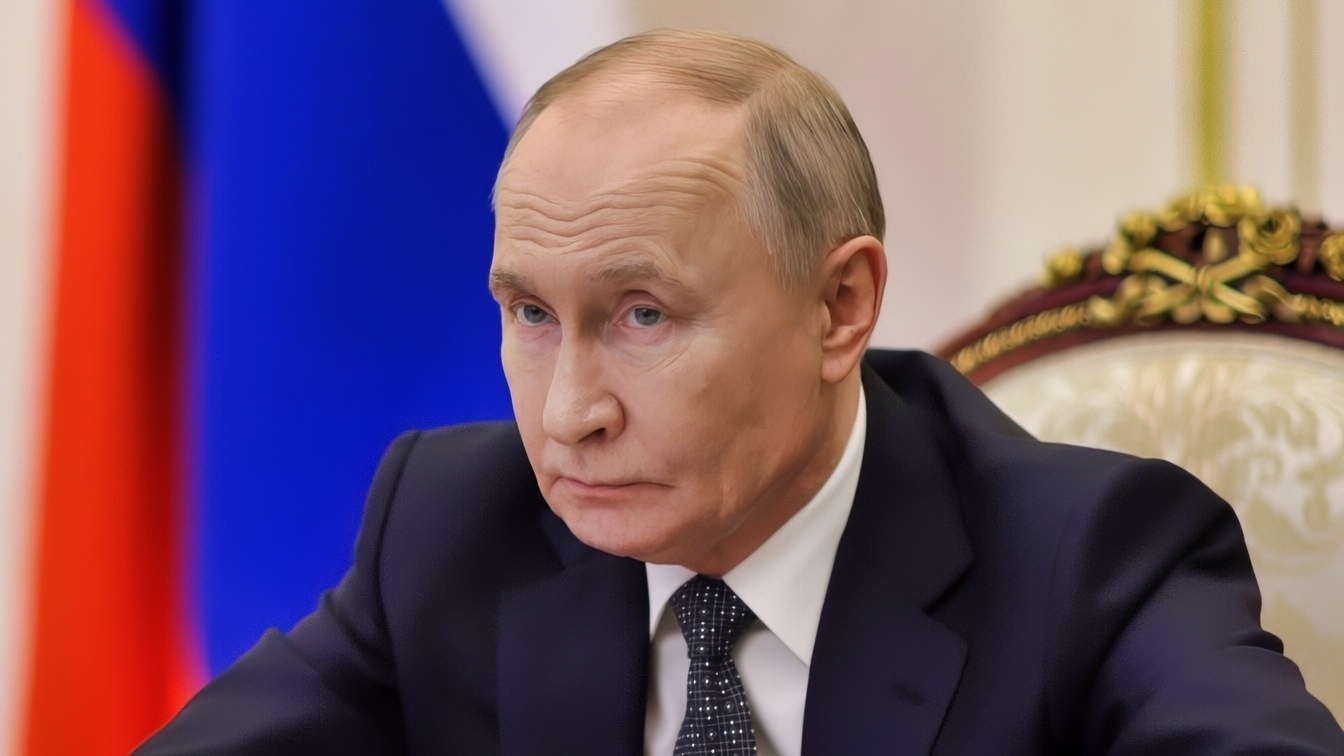
AP and Reuters reported on October 21 the Kremlin's position on the readiness to resume the Russia—Ukraine—U.S. format; PBS framed this as Putin's agreement to negotiations next month. Axios separately reported that in a conversation with Steve Whitcoff, Putin spoke of readiness for direct peaceful dialogue, and the release of a detained U.S. citizen added a demonstrative-humanitarian layer to the contact. However, these formulations lack confirmed details about the meeting place, exact date, delegation composition, agenda, or any document that would obligate the parties to attend. "Ready" and "agreed" are two completely different quantities in diplomacy.
This is not a pedantic caveat. Russian negotiation practice since the late USSR tends to turn procedure into result: the mere fact of a meeting is sold as proof of Moscow's reasonableness, while disputes over territory, ceasefire, and security guarantees are postponed. In the current war, such a pause is particularly advantageous for the side that hopes to maintain military pressure until winter. The Kremlin is not obliged to choose between a missile and a negotiation room; for it, a missile often serves as an argument before entering the room.
Strikes as a Negotiation Stake
The nighttime attacks on October 21 do not prove that the negotiations are fictitious. They show something else: the Russian leadership does not see the need to reduce coercion in order to open a communication channel. Reports from Kyiv Independent of at least nine dead and 45 injured, as well as Reuters on casualties from strikes following Washington's calls for Kyiv to accept conditions, fit into the known logic of "pressure before bargaining." This does not guarantee concessions from Ukraine to Moscow, but it raises the price of each day without a resolution — in civil infrastructure, air defense, industry, and psychological resilience.
Before winter, this logic takes on material significance. Strikes on energy do not necessarily have to collapse the grid all at once: it is enough to force Ukraine to keep expensive air defense reserves, emergency crews, and electricity imports in constant readiness. Soviet military thought would call this creating an unfavorable operational environment; in modern language, it is more accurately an attempt to worsen the opponent's negotiating position off the front line. Cynical, but not new arithmetic.
The American Leverage Remains Incomplete
Zelensky stated that the early warning system for Russian missile strikes is operational again; PBS and BBC reported his words about the resumed exchange of intelligence. This is significant, but one should not turn Kyiv's statement into a closed issue. At the time of writing, no equally specific new confirmation from the White House, State Department, or Pentagon has been found that describes the volume, resilience, and limitations of the exchange. Thus, the contradiction with reports from October 20 about warning failures has not yet been officially resolved.
Moreover, the restoration of early warning is not equivalent to the restoration of the full range of American capabilities. Newsweek pointed to a sharp decline in Ukrainian strike sorties following Starshield restrictions. If this data is accurate, it results in an asymmetric picture: Kyiv may better see the approaching threat, but does not necessarily have the same freedom to choose targets and conduct long-range strikes. This is important for negotiations. Washington does not have just one switch, but a set of separate levers — intelligence, satellite communication, air defense, sanctions pressure, and the pace of supplies.
The Economic War Has Not Taken a Backseat
Russia is also approaching the possible November round not from a position of absolute freedom of action. CNBC reported significant impacts from Ukrainian drone strikes on Russian diesel fuel exports. For a country that remains one of the largest suppliers of diesel on the global market, this is not symbolic damage: refining, logistics, domestic prices, and export revenue are interconnected more tightly than official reports like to admit. At the same time, reports on the consequences of Russian attacks for a Ukrainian enterprise with 3,600 employees remind us that economic coercion remains mutual, although the scales and vulnerabilities of the parties differ.
Therefore, the November window should be understood not as the beginning of peace, but as a test of the balance between two strategies. Moscow will try to convert the winter threat and frontline pressure into conditions acceptable to it. Kyiv will demonstrate that air defense, intelligence, and strikes on Russian oil refining do not allow Russia to dictate the price. The U.S. will not be a neutral arbiter but the owner of several key variables in this formula.
What the Coming Weeks Will Show
The cold forecast is as follows: a meeting in November is possible, but it will not in itself be a sign of de-escalation. The real indicator will not be a photograph of delegations, but the preliminary agreement on the location, level of representatives, regime of strikes on energy, and practical mechanism of control. If by mid-November only a date appears without these elements, the negotiations will likely be yet another tool of waging war. In Russian military tradition, this is not a paradox, but a long-familiar habit — to bargain under the roar of artillery. The condition for a different outcome is simple but extremely difficult: military pressure must cease to yield more to the parties than compromise.
Sources
- AP and Reuters, October 21, 2026 — Kremlin statements on readiness for trilateral negotiations.
- PBS, Axios, BBC, October 21, 2026 — reports on a possible November round, Whitcoff contact, and restoration of warning.
- Kyiv Independent, Reuters, Anadolu, October 21, 2026 — data on the consequences of Russian and mutual strikes.
- CNBC and Newsweek, October 21, 2026 — impact of strikes on Russian diesel exports and Starshield restrictions.
Russian strikes continued across Ukraine on October 21, 2026, resulting in at least nine fatalities and numerous injuries. The Kremlin expressed readiness to engage in trilateral negotiations with Ukraine and the U.S. in mid-November, although no specific terms or agreements have been established. The ongoing military pressure is seen as a tactic to influence the negotiation process.
- Russia is ready to return to trilateral negotiations with Ukraine and the U.S. in mid-November.
- At least nine people were killed and dozens injured due to Russian strikes on October 21.
- The Kremlin's willingness to negotiate does not equate to a formal agreement or specific terms.
- Ukrainian early warning systems for missile strikes have resumed operation, but limitations remain.
- U.S. intelligence sharing with Ukraine has been restored, though its effectiveness is questioned.