
British Typhoons in Saudi Arabia Turn Europe's Air Defense 2026 into a Gulf Problem
 Dr. Klaus Weber
British Typhoons in Saudi Arabia Make Europe's Air Defense 2026 a Gulf Problem
On October 20, Defense Minister Wes Streeting approved the deployment of RAF Typhoons to protect Saudi cities and critical infrastructure. The number of aircraft and their deployment location remain classified. This gap is politically revealing: London is not simply providing a visible contingent but is taking on a task with limited, highly qualified air defense capabilities that lies outside NATO territory and is nonetheless directly connected to Europe's own deterrence and stockpiling issues.
A Narrowly Defined Mandate with Broad Reach
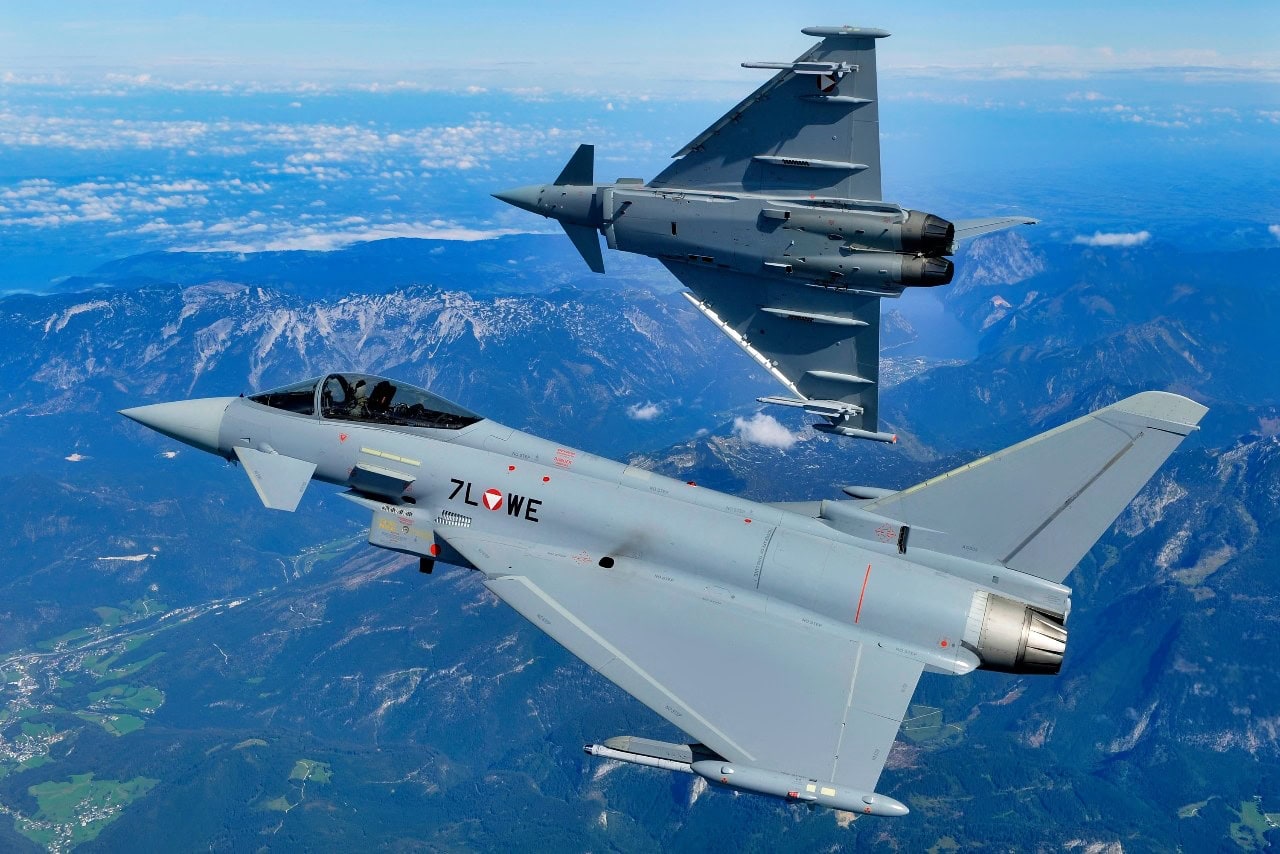
The British Ministry of Defense is unusually precise in its wording. The Typhoons are to conduct defensive counter-air missions against drones and missiles; offensive strikes against the Houthis are explicitly excluded. The package is supplemented by an RAF A400M for logistics within Saudi Arabia, military advisors for Saudi staff officers, already stationed air defense equipment, and an extension of air refueling support for Saudi defensive operations. The latter can also support operations aimed at weakening Houthi targets in Yemen, according to the MOD announcement.
This is not a trivial linguistic reservation. It separates the direct British flight mission from the Saudi escalation option. The RAF is to intercept, not bomb; at the same time, the Saudi partner receives logistics, advice, and tanker support. This creates a division of labor that is militarily plausible but politically difficult to convey: The British government limits its own operational role without being able to fully decouple the effects of the entire support architecture from Saudi combat actions.
Neither the number of Typhoons nor the deployment base, the exact timeframe, the air-to-air missiles used, nor the type of existing air defense equipment have been publicly named. This does not imply that these elements are absent. It only follows that they are not confirmed. Anyone deriving a specific British or Saudi base or a specific missile package from the Typhoon designation replaces information with speculation.
Europe Exports Not Just Aircraft, but Operational Availability
The strategic point lies less with the individual aircraft than with availability. A Typhoon on an interception mission requires crews, maintenance, spare parts, armament, reconnaissance, tankers, and a robust command structure. This chain cannot be multiplied at will like a symbolic troop contingent. While the UK is not alone: France, Italy, and Germany also possess modern combat aircraft and ground-based air defense. However, Europe's problem has been for years that national stocks, training cycles, and maintenance capacities are managed in parallel.
The Gulf mission makes this fragmentation visible. It does not take place under NATO command and is not an EU instrument of the CSDP. London is acting bilaterally with Riyadh, while the political environment is transatlantic: Washington is focusing its forces on Iran and the Strait of Hormuz, while European capitals fear further American reprioritization. The operational response is therefore not European integration but British immediate assistance. This can stabilize a crisis in the short term but does not build a common European air defense capability.
Here lies the well-known difference between capability and capacity. Europe can build Typhoons, export SAMP/T and IRIS-T systems, and plan sophisticated air operations. But is the available capacity sufficient when the same pilots, missiles, spare parts, and tankers are simultaneously demanded on NATO's eastern flank, in the Mediterranean, and in the Gulf? The answer does not depend on a summit declaration but on stocks, production rates, and national readiness requirements.
The American Relief Becomes a European Stress Test
For the USA, a stronger European role in the Gulf is attractive: it creates room for deterring Iran and protecting shipping in Hormuz. However, for Europe, this is not a free assumption of responsibility. Air defense is a consumable capability. Any prolonged state of alert ties up flight hours, maintenance windows, and particularly expensive interception munitions. That Washington approved arms deals worth $2.27 billion for Kuwait, Egypt, and the United Arab Emirates in early October shows the scale of regional demand but says nothing about the short-term availability of interception stocks.
The temptation is great to celebrate the British deployment as evidence of European strategic autonomy. That would be premature. Strategic autonomy would be the ability to finance, lead, supply with munitions, and simultaneously not weaken European NATO defense. A single bilateral deployment initially only proves political willingness to act. It could even widen the European gap if additional commitments are not backed by joint procurement and production.
The Domestic Price for Westminster
For London, the term "defensive" is therefore not just an operational detail but a domestic political safeguard. Based on the experiences of previous Saudi and Yemen policies, any expansion of British support is subject to parliamentary oversight and public controversy. The government can plausibly refer to the protection of civilian infrastructure, energy prices, and British economic interests. However, it must transparently outline what resources are being committed, what the end date is, and what rules are in place to prevent advice and refueling from transitioning into an open entry into war.
This deployment thus presents Europe with an uncomfortable paradox. If European states do not step in in the Gulf, their dependence on American presence remains visible. If they do step in, they simultaneously show how thin their own air defense reserves are and how national their decision-making processes still are. More European responsibility is necessary; however, without common stocks, maintenance, and procurement, it easily becomes another financial response to a production problem.
Sources
- UK Ministry of Defence, “Operational update 20 October – UK military support to the Kingdom of Saudi Arabia”, October 20, 2026.
- Reuters, “Britain says it will carry out defensive air missions over Saudi Arabia”, October 20, 2026.
- The New York Times, “UK to Send Fighter Jets to Help Defend Saudi Arabia From Houthi Attacks”, October 20, 2026.
- The Guardian, “UK to deploy fighter jets to protect Saudi Arabia from Houthi attacks”, October 20, 2026.
The UK Defence Minister authorized the deployment of RAF Typhoons to Saudi Arabia on October 20, 2026, for defensive counter-air missions against drone and missile threats. The operation includes logistical support and military advisors, but excludes offensive actions against Houthi forces. The number of aircraft and their base location are undisclosed, highlighting the political sensitivity of the mission regarding European air defense capabilities.
- UK Defence Minister approved the deployment of RAF Typhoons to Saudi Arabia.
- The Typhoons will conduct defensive counter-air missions against drones and missiles.
- The exact number of Typhoons and their base location remain undisclosed.
- The deployment includes logistical support and military advisors for Saudi forces.
- The operation is politically sensitive due to its implications for European air defense capabilities.