
Racing Against Time! The Sea and Air "Weave" a Three-Dimensional Rescue Network
The clouds hang low over the sea, waves surging and falling.
Several simulated persons in the water
are faintly visible on the gray ocean surface.
"Activate the joint search and rescue plan!"
With a command from the command center,
a multi-dimensional rescue operation spanning land and sea is immediately launched.
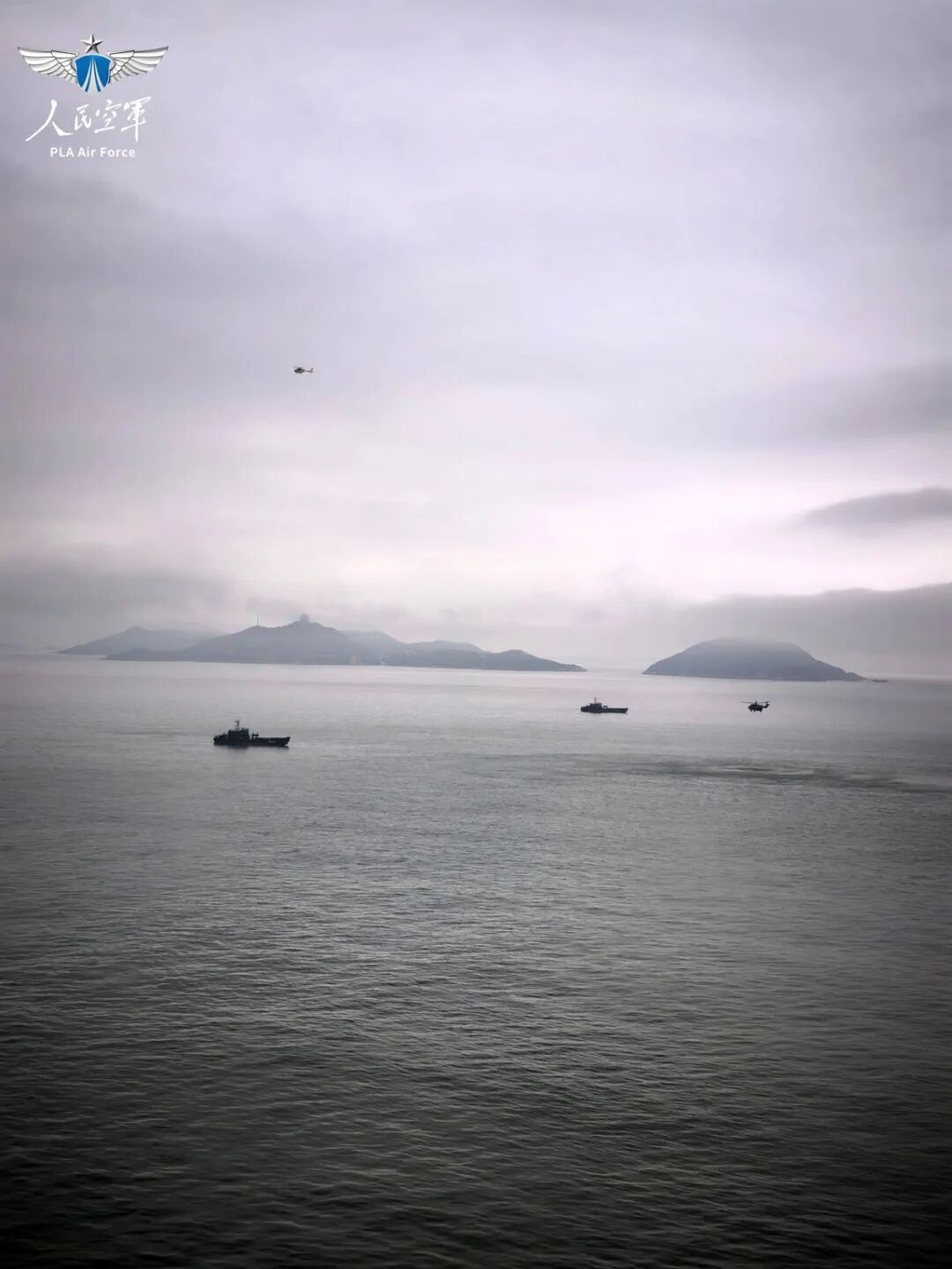
A certain unit of the Air Force
dispatches a search and rescue helicopter formation, cutting through the rain and fog,
flying at ultra-low altitude over the sea.
Almost simultaneously,
two landing craft from a certain unit of the Air Force
coordinate with the aviation rescue forces of brother units,
rapidly converging towards the target sea area from their respective bases.
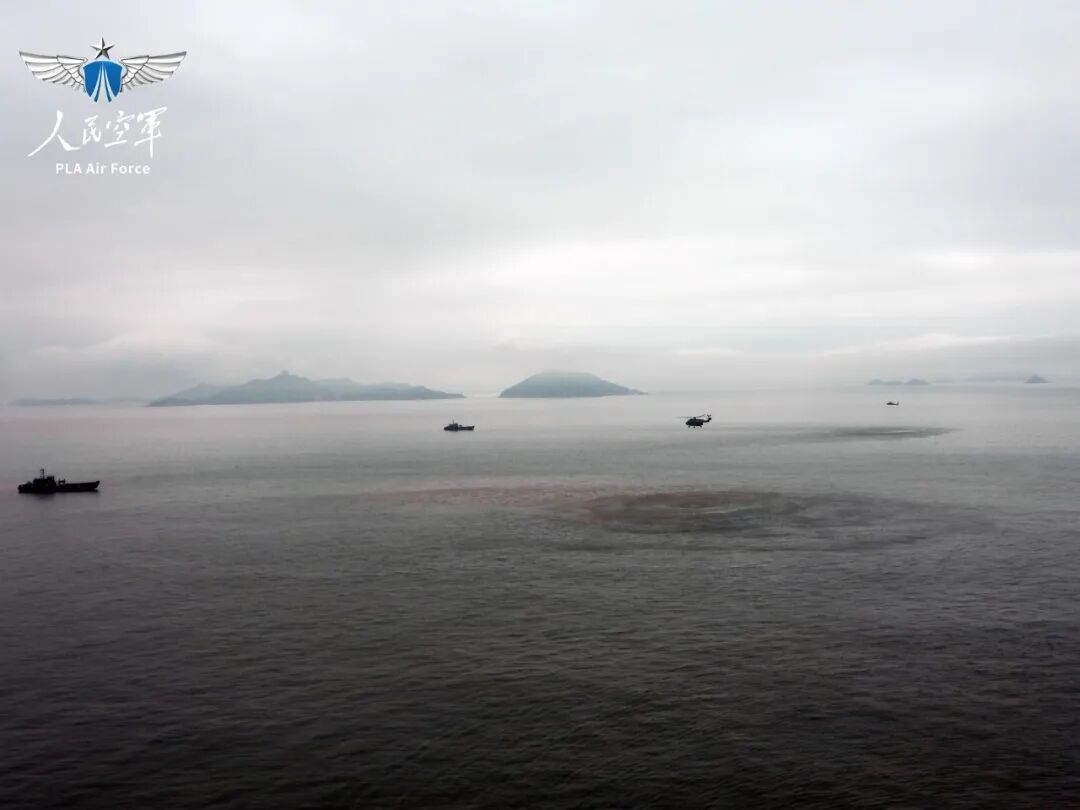
Under the sea,
ocean currents are pushing the persons in the water in different directions.
Above the sea,
the onboard equipment and the rescuers' eyes
repeatedly scour the waves.
"Multiple persons in the water spotted!"
As the "persons in the water" are discovered,
the crews quickly initiate coordinated rescue efforts.
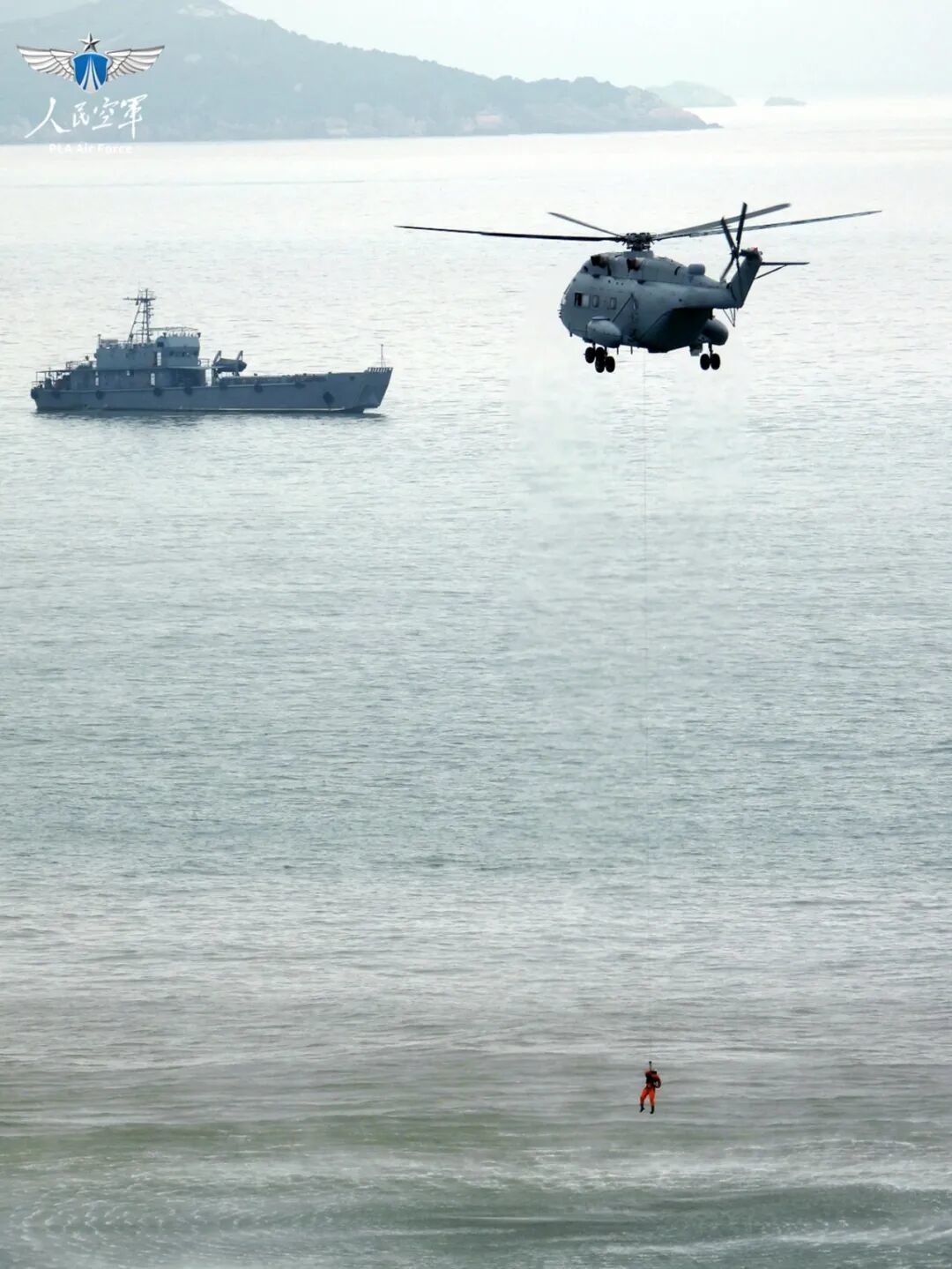
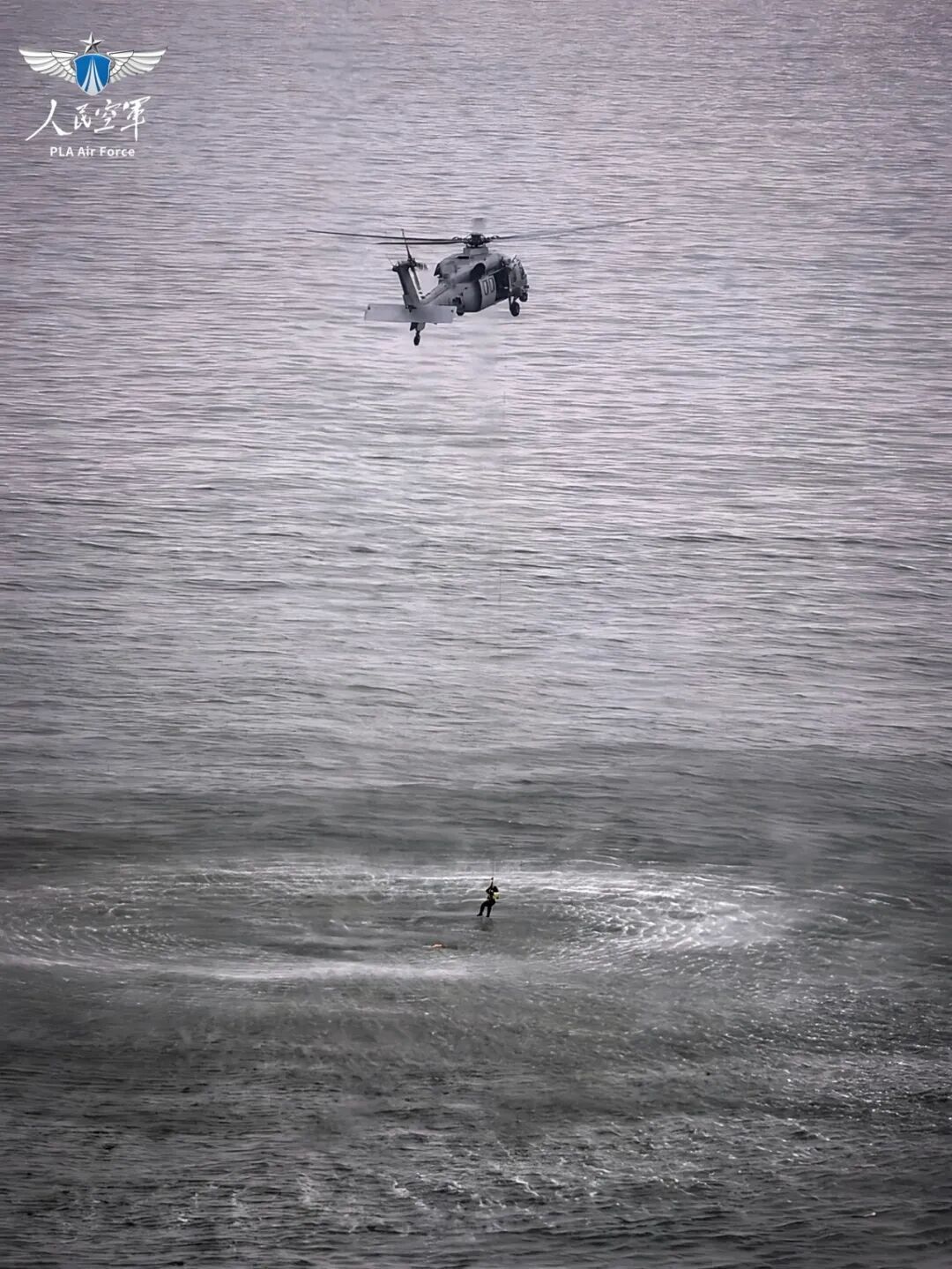
The doors of the search and rescue helicopter swing open,
the winch cable is lowered to the sea surface,
the rescuer enters the water, secures the person, and signals.
The actions are completed in one fluid motion amidst violent turbulence.
The two landing craft cut through the surging waves,
the crew members positioned on both sides,
the rescue team seizes the gap between the waves,
grabs the "person in the water,"
and swiftly sends them into the landing craft.
Airborne rescue and surface transport
do not interfere with each other and serve as backups,
forming a true joint coverage.
When the last "person in the water" is rescued,
the search and rescue formation has already begun to gather in an orderly manner,
heading straight for the rear airport.
At this moment,
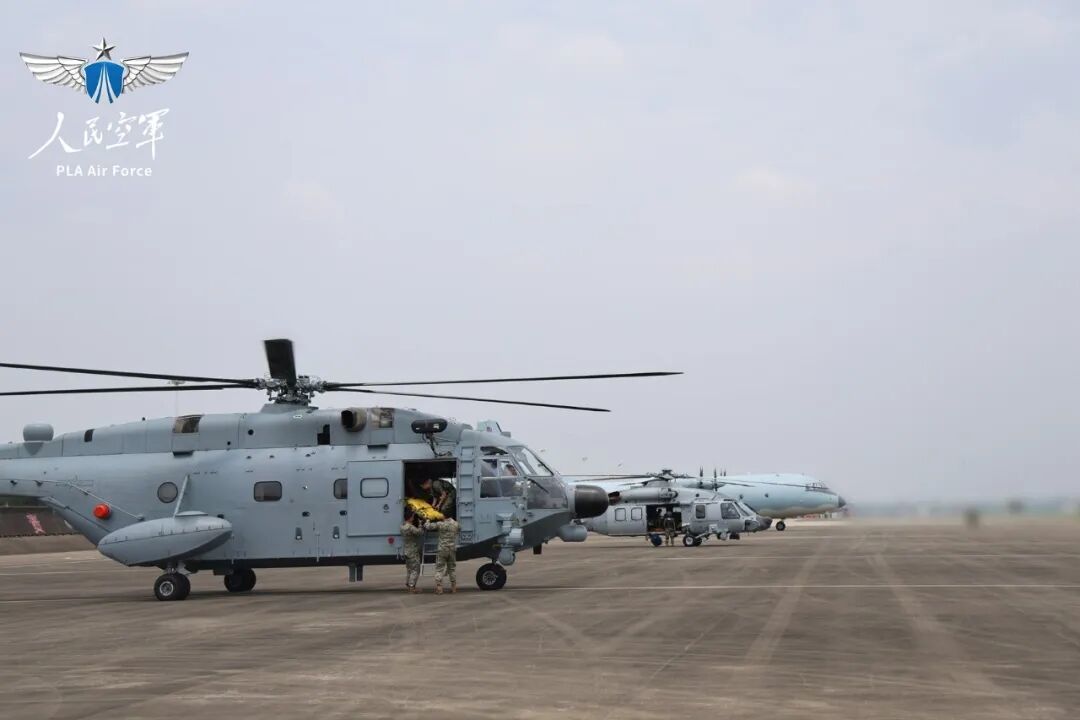
a medical transport aircraft is waiting on the runway.
After the returning search and rescue helicopter lands,
an ambulance quickly approaches,
transferring the "injured" to the medical aircraft.
Inside the medical aircraft's cabin,
monitors, ventilators, and other onboard equipment are operating at full speed.
The vital signs data of the "persons in the water"
is transmitted back in real-time during the flight.
From the sea surface to the airport,
and then to the flight route to the hospital,
not a single link requires unnecessary waiting.
The sun sets, and the sea returns to gray.
But a rescue chain forged through this trial
has clearly left its mark amidst the peaks and troughs of the waves.
Author | Wang Hua, Zhu Xiang, Han Baichuan
Images | Wang Hua, Ji De
A joint search and rescue operation was launched by Air Force rescue units in response to simulated drowning incidents at sea. Helicopters and landing craft coordinated efforts to locate and retrieve multiple individuals from the water. Medical transport aircraft awaited the return of the rescue teams to provide immediate care. The operation was executed efficiently, with no delays in the transfer of rescued individuals to medical facilities.
- A joint search and rescue operation was initiated in response to simulated drowning incidents at sea.
- Air Force helicopters and landing craft were deployed for the operation.
- Rescue teams successfully located and retrieved multiple individuals from the water.
- Medical transport aircraft were on standby to receive the rescued individuals.
- The operation was executed without delays, ensuring rapid medical response.