
"Re-Militarization" Accelerates Towards Loss of Control, Japan Deliberately Develops More Offensive Missiles
[Global Times Special Correspondent Wei Yunfeng, Global Times Reporter Liu Yang] Recently, the Japanese Ministry of Defense announced the simultaneous deployment of the Type 25 land-based anti-ship missile and the Type 25 high-speed glide bomb, two types of long-range offensive missiles. This move, which clearly breaks the Self-Defense Forces' "defensive-only" policy, has drawn widespread criticism from the international community. Several foreign media outlets have noted that this is just the first phase of Japan's large-scale development plan for offensive weapons. According to the Ministry of Defense's plan, Japan will equip more advanced long-range offensive weapons by 2032 to "achieve diversified strike options." Chinese experts interviewed by the Global Times on the 26th stated that Japan is meticulously developing long-range offensive weapons, attracting attention with the introduction of U.S.-made cruise missiles, while actually accelerating the construction of its own long-range strike capabilities to reduce dependence on U.S. weapons. Countries around the world need to be more vigilant about Japan's trend of "re-militarization."
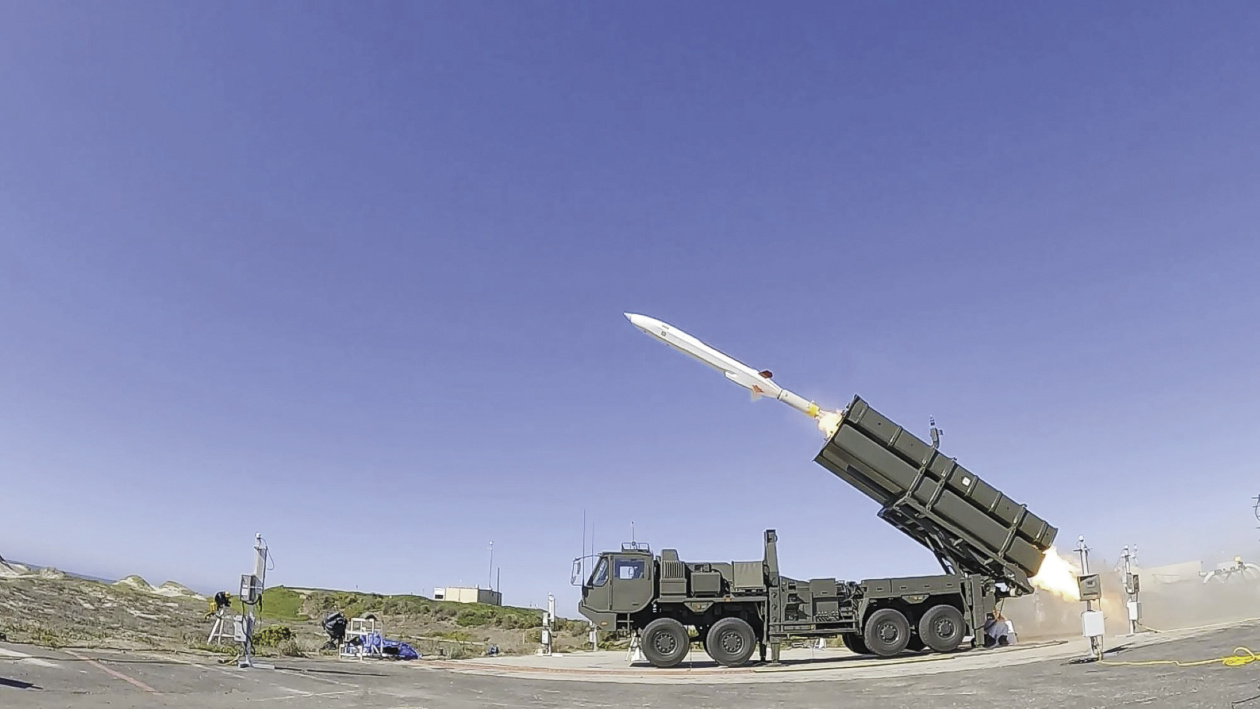
Japan's Development of Long-Range Strike Capabilities is Divided into "Two Steps"
The Turkish Defense News website reported on April 26 that as a follow-up model to the Type 25 land-based anti-ship missile and the Type 25 high-speed glide bomb, Japan plans to deploy hypersonic cruise missiles by 2032.
The French Navy News website introduced that Japan's development of long-range missile strike capabilities began with the "Defense Program Guidelines" and the "Medium-Term Defense Force Build-Up Plan" passed in 2018, which explicitly proposed "introducing long-range cruise missiles that can attack from outside enemy defense zones." At that time, there was speculation that Japan's move might aim to introduce the U.S.-made Joint Air-to-Surface Standoff Missile (JASSM) with a range of about 900 kilometers, but the Ministry of Defense subsequently initiated the development of domestic long-range missiles under the name of "supplementary plans." At the end of 2022, the Japanese government officially renamed the original "capability to attack enemy bases" to "counterattack capability" in the new version of the "Three Security Documents," providing a "basis" for possessing offensive weapons.
It is noteworthy that Japan's development of long-range missiles adopts a "two-step" model. Reports indicate that the Ministry of Defense aims to complete the first phase goal by the 2027 fiscal year, which is to establish the necessary systems for long-range missiles, including sensors and missile platforms, to detect and attack targets at long distances. This includes the two recently commissioned types of long-range offensive missiles. The second phase goal of the Ministry of Defense is to achieve "diversified strike options" by the 2032 fiscal year, including the introduction of the next generation of long-range missiles. Reports suggest that this also marks a complete shift from Japan's traditional "defensive-only" policy, as the Ministry of Defense accelerates the construction of long-range strike capabilities to create a credible deterrent force.
For example, the newly commissioned Type 25 land-based anti-ship missile was previously developed under the name of "upgraded Type 12 anti-ship missile." This missile is launched from ground platforms and is used to attack enemy surface vessels. Compared to earlier similar models of the Japan Ground Self-Defense Force, its capabilities have seen a significant leap. The currently deployed Type 12 anti-ship missile has a range of about 200 kilometers, while the Type 25 anti-ship missile has a range of about 1,000 kilometers and employs a low detectability design to reduce detection capabilities by enemy radar systems. It is also equipped with "man-in-the-loop" capabilities, allowing for mid-flight retargeting through satellite communication from ground control stations, and has the ability to dynamically adjust its flight path based on moving targets.
Reports indicate that the Type 25 land-based anti-ship missile is a core part of Japan's current long-range strike capabilities, involving the use of long-range munitions "to strike the enemy from a safe distance." French media learned from the Japanese Ministry of Defense's Acquisition, Technology & Logistics Agency (ATLA), which is responsible for related development plans, that the Type 25 anti-ship missile is also developing more derivative models, including shipborne and air-launched versions. All of these are planned to be commissioned in the 2028 fiscal year, with the shipborne version first equipped on the Japan Maritime Self-Defense Force destroyer "Shirayuki" stationed in Yokosuka, and the air-launched version integrated with upgraded F-2 fighter jets stationed at the Ibaraki Hyakuri Air Self-Defense Force base.
More Advanced Models Have Begun Development
The Navy News website stated that the second phase of the Japanese Ministry of Defense's long-range missile development plan includes the development of weapons more advanced than the Type 25 anti-ship missile. The research and development of the so-called "new type of land-attack/land-to-sea precision-guided missile" began in 2025. Compared to the currently deployed anti-ship missiles of the Self-Defense Forces, it has superior guidance accuracy and penetration capabilities. Particularly reflecting the offensive characteristics of this missile is that it can not only strike maritime vessels but also destroy high-value targets such as airports, ports, and command and control facilities.
ATLA, in response to an interview with the Navy News, revealed that the "new type of land-attack/land-to-sea precision-guided missile" has the capability to classify targets and accurately aim at specific areas of targets, "allowing for effective strikes on targets that require higher precision. However, we avoid disclosing specific performance characteristics and specifications to prevent exposing the Self-Defense Forces' capabilities and operational concepts."
Reports speculate that this new type of long-range missile will have capabilities similar to the U.S. Navy's air-launched anti-ship missile AGM-158C, able to identify weaknesses in enemy ships and carry out precise strikes on these specific areas.
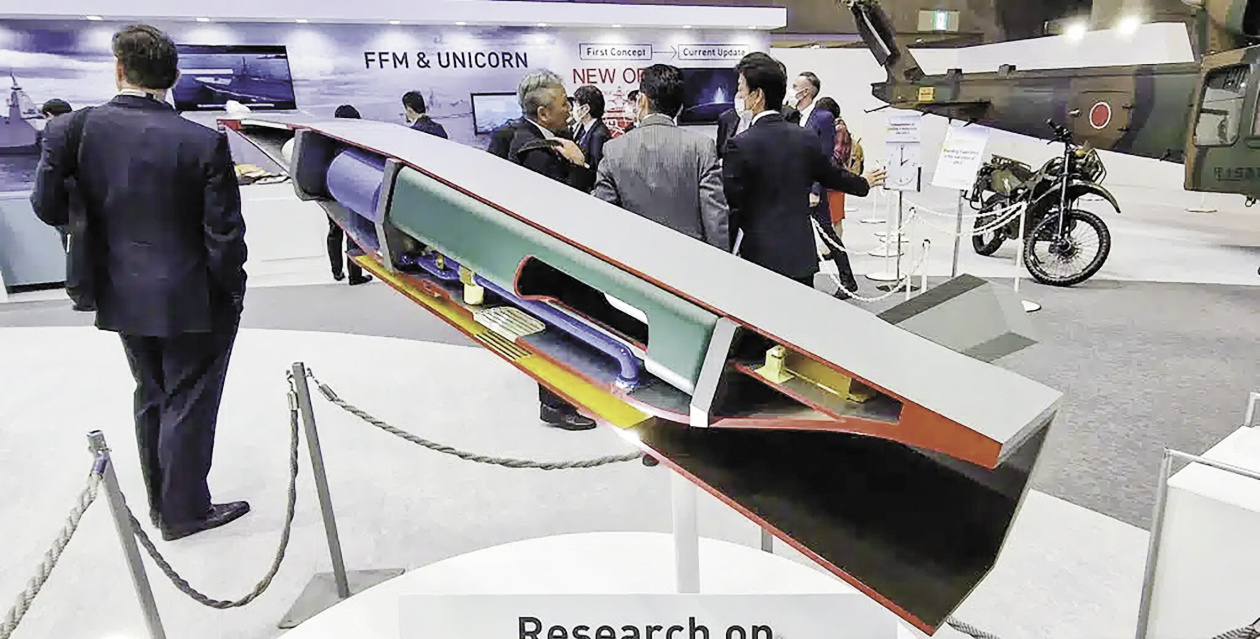
In addition, the Japanese Ministry of Defense is developing another anti-ship missile that is difficult for enemies to intercept due to its design: the hypersonic cruise missile. Unlike the Type 25 high-speed glide bomb, which uses a boost-glide technology route, the new missile being developed by Japan can fly at speeds exceeding Mach 5 and is equipped with a dedicated propulsion system called the "Dual-Mode Supersonic Ramjet Engine (DMSJ)," which combines ramjet and scramjet engine technologies.
Reports indicate that the hypersonic scramjet engine has high engine efficiency over a wide speed range from Mach 5 to Mach 15. At these speeds, the air entering the inlet is compressed and burned at high speed, but this also means that the scramjet engine needs to accelerate the missile to hypersonic speeds to operate. The traditional approach is to use a rocket booster to provide initial speed, but to accelerate the missile to hypersonic speeds requires a large booster rocket, which increases the overall length and size of the missile. ATLA's plan is to integrate the ramjet engine (which operates efficiently in the speed range of Mach 3 to Mach 5) with the scramjet engine, so that the rocket booster only needs to accelerate the missile to supersonic speeds, while the ramjet engine accelerates the missile to hypersonic speeds, after which the scramjet engine is activated for further acceleration.
ATLA claims that this new type of cruise missile can cruise at hypersonic speeds at high altitudes, flying at altitudes outside the interception range of typical medium and low-altitude air defense systems, yet lower than high-altitude air defense systems, while also being able to maneuver and change course quickly, making it difficult for traditional interception methods to respond. Therefore, ATLA refers to this missile as a "game changer."
According to documents released by ATLA, this hypersonic cruise missile will use a composite guidance system of satellite and inertial navigation, and will be equipped with radar and optical sensors to identify and lock onto targets. The missile has all-weather operational capabilities and is expected to carry armor-piercing warheads to destroy the flight deck of enemy aircraft carriers or be equipped with explosively formed penetrators to suppress ground enemy forces during anti-ship missions. Reports indicate that the development of this missile began in 2023, with the preliminary goal of completing development and achieving operational deployment by the 2032 fiscal year. The Ministry of Defense claims that as the technology required for mass production has been basically resolved, Japan's budget for the 2026 fiscal year includes not only 73.2 billion yen for continued research and development but also 30.1 billion yen for procurement and the initiation of mass production preparations.
Military Expansion Ambitions Laid Bare
Chinese experts interviewed by the Global Times stated that the long duration of Japan's domestic long-range missile program indicates Japan's meticulous efforts to break through the constraints of the "Peace Constitution" and develop offensive weapons. Originally, when Japan proposed to obtain the so-called "counterattack capability," it actively purchased large quantities of U.S.-made long-range strike missiles such as the "Tomahawk" cruise missile and the "Joint Air-to-Surface Standoff Missile" to exchange for the U.S. relaxing restrictions on Japan's acquisition of long-range offensive weapons. However, in reality, Japan took the opportunity to develop domestic long-range missiles under the guise of "supplementation." Now, Japan has already operationally deployed brand new subsonic stealth cruise missiles (Type 25 land-based anti-ship missiles) and boost-glide hypersonic missiles (Type 25 high-speed glide bombs), while also developing a new generation of land-attack cruise missiles and hypersonic cruise missiles, indicating that Japan has achieved diversification in the technological development of long-range strike weapons.
However, experts believe that Japan has limited technological accumulation in related fields, and whether these long-range weapons can be developed and mass-produced as scheduled remains uncertain. The Turkish Defense News website also stated that hypersonic cruise missiles need to operate under extreme temperatures and dynamic pressures, making their development very challenging. Therefore, the hypersonic cruise missile being developed by Japan may need to adopt a variable inlet structure that can automatically use different speeds, further increasing the technical complexity.
After Japan announced the deployment of long-range missiles with "counterattack capabilities," Chinese Ministry of Defense spokesperson Zhang Xiaogang responded by stating that Japan's "re-militarization" is accelerating towards a dangerous situation of losing control, which completely deviates from the constraints of the "Peace Constitution" and the principle of "defensive-only," exposing its military expansion ambitions. Japan's "new militarism" poses a threat, and the "evil tiger" unleashed will surely bring disaster to all, also plunging the Japanese people into a deep abyss of catastrophe. The international community should remain highly vigilant about this. It is important to emphasize that as the saying goes, "the higher the magic, the higher the countermeasure." The Chinese military has sufficient capability to counter threats and provocations, making aggressors pay an unbearable price to defend national sovereignty, security, and development interests.
Japan's Ministry of Defense has announced the deployment of Type 25 land-based anti-ship missiles and Type 25 high-speed glide missiles, marking a significant shift in its defense policy. This move is part of a broader plan to enhance Japan's offensive capabilities, with more advanced long-range weapons expected by 2032. The development includes hypersonic cruise missiles, indicating a strategic shift away from Japan's traditional self-defense posture.
- Japan's Ministry of Defense has deployed Type 25 land-based anti-ship missiles and Type 25 high-speed glide missiles.
- Japan plans to develop and deploy more advanced long-range offensive weapons by 2032.
- The shift in Japan's defense policy marks a move away from its traditional self-defense stance.
- Japan's new missile systems include capabilities for long-range strikes and precision targeting.
- The development of hypersonic cruise missiles is also underway.