
Resolute Dragon 26 Tested Island Supply at Ishigaki Port and Airport
 Tanaka Takashi
Resolute Dragon 26 Tests Island Resupply at Ishigaki Port and Airport
The names of Ishigaki Airport and Ishigaki Port appeared in the materials from the Okinawa Defense Bureau of the Ministry of Defense. They are not flashy missile names. However, from June 20 to 30, during the practical training conducted primarily in Kyushu and Okinawa Prefecture with the U.S. Marine Corps, known as Resolute Dragon 26, this aspect is what caught my attention the most.
According to the Ministry of Defense materials, during this training, the Japan Ground Self-Defense Force and the U.S. Marine Corps will conduct joint operations while practicing mutual coordination procedures in accordance with their respective command structures. The Yomiuri Shimbun reported on June 21 that joint training between the Self-Defense Forces and the U.S. military had begun in Kyushu and Okinawa Prefecture. USNI News reported in May that the Japanese portion of Resolute Dragon 26 would overlap with Valiant Shield 2026 in late June.
The Reality Indicated by Ishigaki's Port and Airport
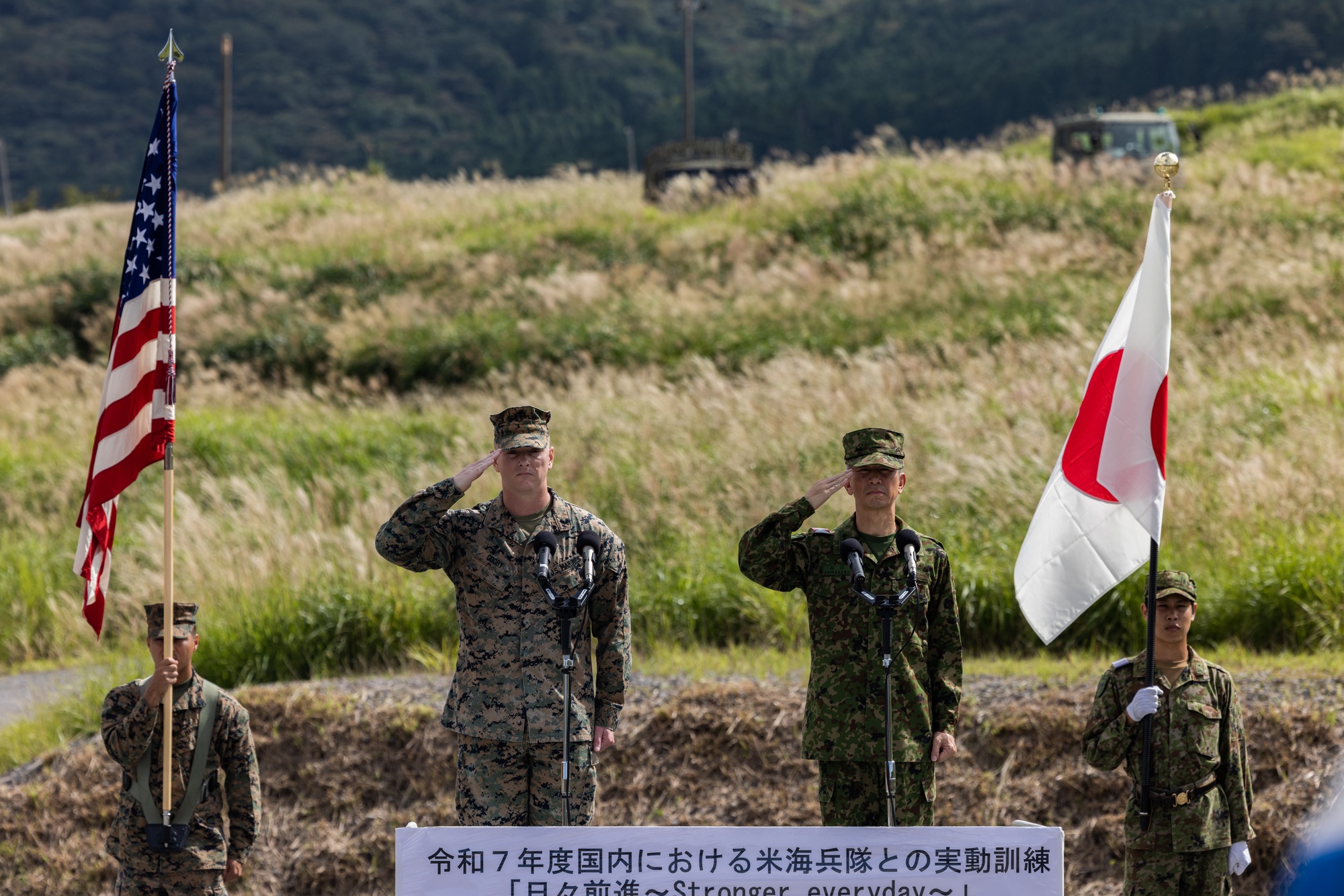
According to the Okinawa Defense Bureau, training for water supply and joint material resupply and transport training by aircraft is planned on Ishigaki Island, with the use of Ishigaki Airport and Ishigaki Port scheduled to transport personnel and equipment via U.S. and Japanese aircraft and U.S. Navy LCU. The period is from June 25 to 29, with movements occurring before and after the training.
This encapsulates the difficulties of defending the Nansei Islands. On a map, one can simply draw a line from Okinawa Island to the Sakishima Islands to outline the defense concept of the first island chain. However, what is actually needed is to determine the order in which to flow water, fuel, ammunition, maintenance parts, communication equipment, vehicles, and medical support through limited runways and quays. During my time in the Maritime Self-Defense Force, supply plans were often treated as dull supplementary materials. However, in actual combat, delays in resupply are almost synonymous with a lack of firepower.
Joint Coordination Center Moves the Alliance from Paper to Practice
According to the summary of the June 9 press conference by the Chief of Staff of the Ground Self-Defense Force, this training will include the establishment of a Japan-U.S. Joint Coordination Center, command organization training, and various actions including island defense operations. This is not merely about the Ground Self-Defense Force and the U.S. Marine Corps moving in the same location. It involves training to finalize details such as which unit receives which information first, who explains the use of civilian ports to local governments, and where priorities for aircraft and vessels are determined.
In recent years, the U.S. Marine Corps has emphasized stand-in forces, expeditionary advanced base operations, and distributed maritime operations. From Japan's perspective, this is a refinement of alliance operations based on the geography of the Nansei Islands. However, if one only looks at the deployment of anti-ship missiles and NMESIS, which were prominent in discussions until yesterday, they may overlook the essence of this training. Missile launchers become combat power only after being unloaded at ports, transported via roads, resupplied, and connected to communication networks.
Overlap with Valiant Shield
As pointed out by USNI News, in late June, the Japanese portions of Resolute Dragon 26 and Valiant Shield 2026 will be closely aligned. If the former is a practical training exercise for island defense centered on the Ground Self-Defense Force and the U.S. Marine Corps, the latter has a broader context of integrated operations. It is about how quickly information from maritime, air, land, cyber, and space can be connected. After the establishment of Japan's Joint Operations Command, the value of such training has increased.
However, it is necessary to separate capability from intent. The ongoing activities of the China Coast Guard and the Chinese Navy in the southwestern region are a backdrop for accelerating Japan-U.S. training. However, simply demonstrating strong intent does not guarantee deterrence. What the adversary observes is not the wording of statements but how many hours it actually takes to complete loading at Ishigaki Port, how well airport operations can coexist with civilian aviation, and whether the Joint Coordination Center can set priorities without confusion.
Local Burden as an Operational Variable
It is noteworthy that the Okinawa Defense Bureau's materials explain that vehicle movements will avoid morning and evening rush hours, be divided into several trips, or be conducted at night or early morning to minimize traffic impact. This is both a public relations consideration and an operational planning constraint.
The ports and airports of the Nansei Islands are not massive bases exclusively for military use. They are narrow arteries that support tourism, logistics, medical services, and the daily lives of residents on remote islands. Given the overlay of military transport, the effectiveness of the Japan-U.S. alliance cannot be separated from the local tolerance limits. Unlike the defense of Hokkaido during the Cold War, the geography of the Nansei Islands directly connects to the narrowness of politics.
What was truly questioned in this training was not whether firepower could be placed on the first island chain, but whether the civilian infrastructure supporting that firepower could be politically maintained in peacetime.
Resolute Dragon 26 may appear to be just one of the annual training exercises. However, the details surrounding Ishigaki Port and Ishigaki Airport indicate that the defense of the southwestern region has already moved beyond the stage of equipment lists and has entered the operational phase, including local governments, transportation, resupply, and command coordination. In my view, the greatest remaining risk here is not the assessment of China's capabilities itself. It is whether Tokyo, Naha, Ishigaki, Yokota, and Hawaii can make political decisions at the same speed in the event of a crisis.
Japan Ground Self-Defense Force and U.S. Marine Corps conducted joint training exercises focused on island supply operations at Ishigaki Airport and Ishigaki Port from June 20 to June 30, 2023. The training included logistics operations for transporting personnel and equipment, highlighting the importance of maintaining civilian infrastructure during military operations. Coordination with local authorities was also emphasized to minimize disruption during the exercises.
- Joint training exercises conducted by Japan Ground Self-Defense Force and U.S. Marine Corps from June 20 to June 30, 2023.
- Ishigaki Airport and Ishigaki Port were used for supply operations.
- Training included water supply and joint logistics operations.
- The exercises are part of a broader strategy for island defense in the southwestern islands of Japan.
- Coordination between military and local authorities was emphasized to minimize civilian disruption.