
Rheinmetall unveils new frigate packed with destroyer firepower
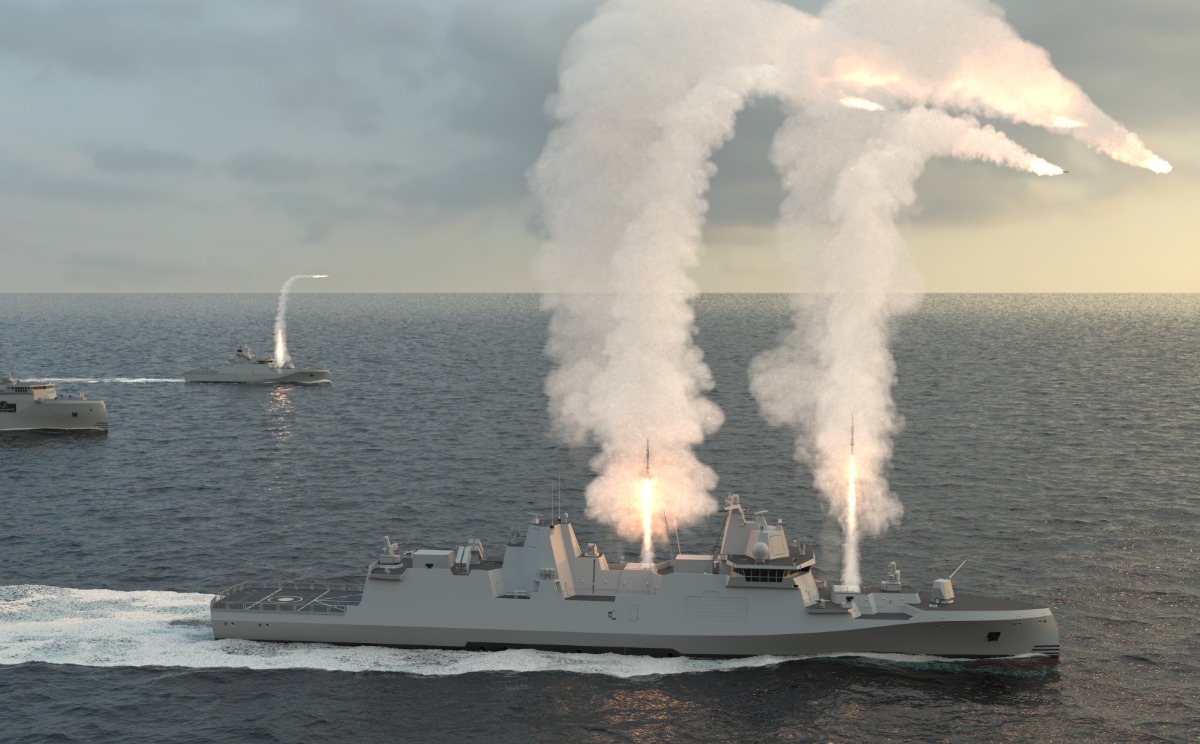
Rheinmetall has unveiled a warship built to outgun vessels twice its size, betting that a mid-sized frigate packed with the same missile defense technology found on America’s largest destroyers can win over navies looking to modernize without breaking their budgets.
Rheinmetall, the German defense manufacturer, revealed the GMF 140, a next-generation guided missile frigate measuring 140 meters (459 ft) in length and displacing more than 6,000 tonnes (6,614 US tons), designed to deliver what the company describes as unmatched capability across the full spectrum of modern naval warfare. The vessel is built to handle four distinct combat missions simultaneously, integrated air and missile defense, ballistic missile defense, anti-submarine warfare, and long-range strike, a combination Rheinmetall says positions the GMF 140 among the most advanced frigates available in its size class anywhere in the world.
Rheinmetall built the ship to integrate the Aegis Combat System, the same radar and missile defense network the U.S. Navy uses aboard its Arleigh Burke-class destroyers and Ticonderoga-class cruisers, vessels considerably larger and more expensive than a frigate this size would normally carry. Aegis fuses radar tracking, threat identification, and missile guidance into a single automated system capable of engaging multiple aircraft, missiles, and other threats simultaneously, technology that has historically been reserved for destroyer and cruiser-class ships rather than the smaller, more affordable frigate category. Rheinmetall also offers the GMF 140 with an alternative combat management system, Lockheed Martin’s CMS330, an open architecture platform the company describes as providing proven operational performance through a scalable, fleet-wide ecosystem that can support integration of European sensor and weapon systems alongside American ones.
The GMF 140 carries 64 Strike-Length Vertical Launch System cells, the missile silos built into a warship’s deck that allow it to fire a wide range of different weapons from the same launch tubes without needing separate, dedicated launchers for each missile type. Rheinmetall says those 64 cells can accommodate the complete family of modern air defense, ballistic missile defense, and land-attack missiles currently in Western naval inventories, giving a single ship the flexibility to swap its weapons loadout depending on the mission rather than being permanently configured for just one type of threat. For radar, the design integrates U.S.-sourced primary sensors specifically selected to detect, track, and engage conventional aircraft, hypersonic weapons, and ballistic missiles, a sensor suite Rheinmetall says provides battlespace awareness and fire control typically found only on significantly larger warships.
Beyond its offensive punch, the GMF 140 is built with a low-signature hull and integrated acoustic management designed to reduce the vessel’s detectability by enemy sonar and radar, paired with hull-mounted and towed sonar systems for hunting submarines. The ship supports embarked helicopters from either American or European manufacturers, along with unmanned systems, giving commanders additional reconnaissance and strike options beyond the ship’s own onboard sensors and weapons. Rheinmetall designed the vessel around what it calls a minimum manned platform, an approach that relies more heavily on automation to reduce crew size compared to older frigate designs, a shift that lowers long-term personnel costs and reduces the number of sailors exposed to risk during combat operations.
Rheinmetall said it intends to offer the GMF 140 as part of a procurement campaign in North America initially, with the company positioning the vessel as particularly well suited to nations currently modernizing their surface fleets in response to increasingly complex security challenges across Europe, the North Atlantic, and the Indo-Pacific. North American navies have genuine modernization needs the GMF 140 could theoretically fill. The Royal Canadian Navy is actively working to replace its aging Halifax-class frigates, which have served since the 1990s, though Canada has already committed to the Type 26-based River-class design for that specific program, meaning any GMF 140 campaign in the region would likely need to target a different opportunity or a supplementary requirement rather than directly displacing an already-selected shipbuilding program.
Rheinmetall’s broader naval portfolio gives the company real credibility entering this competition, even as a comparatively new entrant to the guided missile frigate category specifically. The company already supplies decoy and countermeasure systems, including its Multi Ammunition Softkill System, to the Royal Canadian Navy’s existing Halifax-class fleet, and Rheinmetall Canada maintains an established industrial presence supporting both land and naval weapon systems for Canadian and broader international defense customers, giving the company an existing regional foothold to build on as it pursues North American frigate business.
The GMF 140 enters a crowded field of competing next-generation frigate designs from European shipbuilders, including designs like the GMF-120 that German shipbuilder NVL has separately proposed to Denmark, illustrating how aggressively European naval contractors are currently competing for a wave of frigate replacement programs unfolding simultaneously across NATO and allied navies worldwide. That competitive pressure stems directly from a broader naval modernization wave driven by rising concerns over Russian naval activity in the North Atlantic and Baltic, expanding Chinese naval power in the Indo-Pacific, and the proliferation of hypersonic and ballistic missile threats that older frigate designs were never built to counter.
Content preview only. Full article available at source. View Full Article
Rheinmetall unveiled the GMF 140 frigate, a 140-meter vessel designed for multiple combat missions, including air and missile defense and anti-submarine warfare. The frigate features advanced systems like the Aegis Combat System and 64 vertical launch cells, allowing for a flexible weapons loadout. Rheinmetall plans to target North American navies seeking modernization options.
- Rheinmetall unveiled the GMF 140 frigate, measuring 140 meters and displacing over 6,000 tonnes.
- The frigate is designed for integrated air and missile defense, anti-submarine warfare, and long-range strike.
- It incorporates the Aegis Combat System, typically used on larger U.S. Navy vessels.
- The GMF 140 features 64 Strike-Length Vertical Launch System cells for versatile weapon deployment.
- Rheinmetall aims to market the frigate to North American navies modernizing their fleets.