
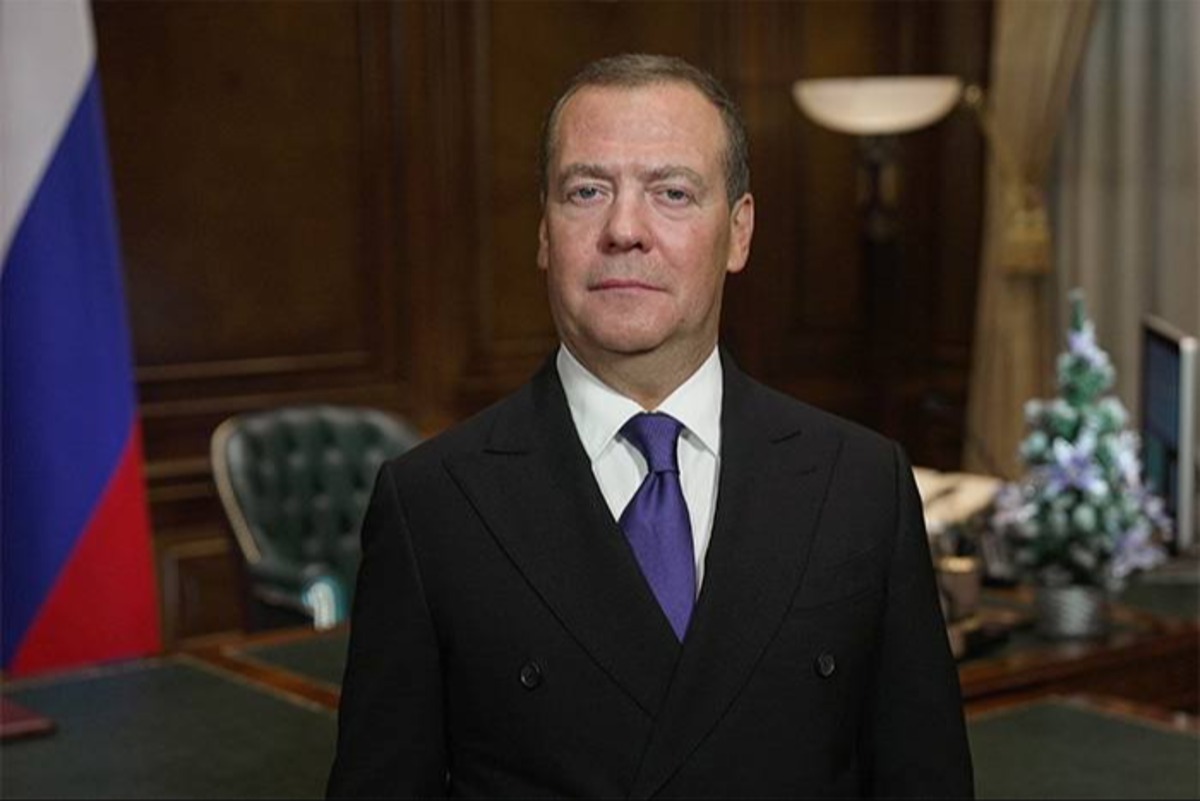
Dmitry Medvedev, deputy chairman of Russia’s Security Council, accused the United States of using diplomatic negotiations with Iran as cover for military action following reported American strikes, according to statements published Saturday on his official Telegram channel.
The remarks represent Moscow’s first high-level political reaction to the escalating confrontation involving Iran, Israel, and the United States.
The statement comes as global powers respond to rapidly developing military exchanges in the Middle East, where U.S. operations against Iranian targets have prompted retaliatory threats and missile activity across the region. Russia’s response highlights growing geopolitical divisions surrounding the legitimacy and intent of the strikes.
“The peacemaker has once again shown his true colours,” Medvedev said in the Telegram post, criticizing Washington’s actions. He further alleged that diplomatic engagement had been used strategically ahead of military operations.
“All negotiations with Iran are a cover operation. No one doubted that. No one really wanted to agree on anything,” Medvedev wrote, referring to prior nuclear-related discussions between the United States and Iran.
Medvedev also compared the historical longevity of the United States and Iran, adding: “The question is who has more patience to wait for the inglorious end of their enemy. The USA is only 249 years old. The Persian Empire was founded more than 2,500 years ago. Let’s see in 100 years…”
Statements from senior political figures often serve as indicators of a country’s diplomatic posture during international crises. Medvedev’s remarks signal Moscow’s alignment with criticism of U.S. military actions while reinforcing longstanding Russian opposition to Western-led intervention without broad international consensus.
Russia’s Security Council functions as a central advisory body on national security and foreign policy issues, and comments from its deputy chairman typically reflect broader strategic messaging rather than personal opinion alone. Public statements released through Telegram have become a common platform for Russian officials to communicate positions during international crises.
The accusation that negotiations served as a “cover operation” reflects a recurring theme in Russian foreign policy messaging, which frequently portrays Western diplomatic initiatives as instruments supporting military objectives. Such claims are part of information and diplomatic competition accompanying modern conflicts, where narrative framing plays a parallel role alongside military developments.
Content preview only. Full article available at source. View Full Article
Dmitry Medvedev, deputy chairman of Russia’s Security Council, condemned U.S. military actions against Iran, accusing the U.S. of using diplomatic negotiations as a cover for military operations. His statements reflect Russia's alignment with criticism of U.S. actions and highlight geopolitical divisions regarding military interventions. Medvedev emphasized the insincerity of U.S. negotiations with Iran, indicating a strategic messaging approach from Moscow.
- Dmitry Medvedev accused the U.S. of using diplomacy as a cover for military action against Iran.
- This is Russia's first high-level political reaction to the U.S.-Iran tensions.
- Medvedev criticized the U.S. for its military operations and claimed negotiations were insincere.
- The remarks highlight growing geopolitical divisions regarding military interventions.
- Public statements from Russian officials are often made via Telegram during crises.