
Russia shows off counter-drone cannon with programmable shells
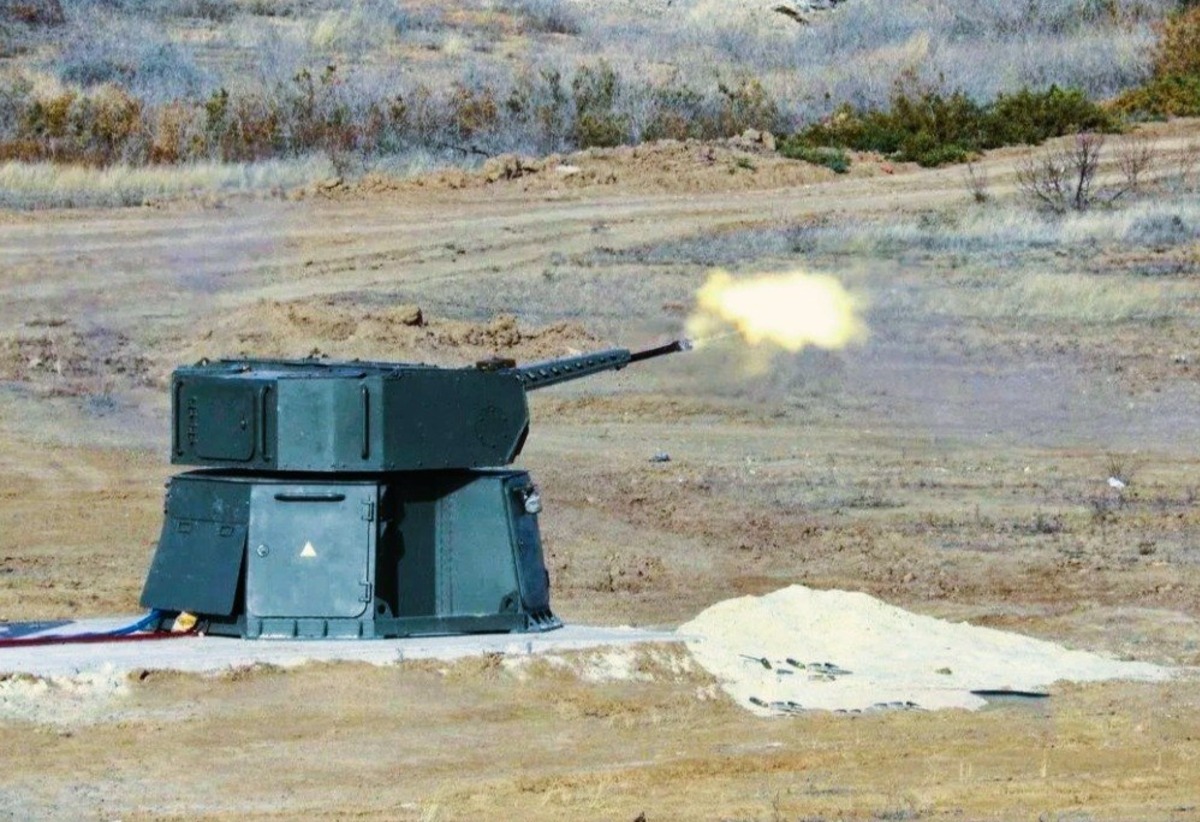
Russia’s state defense conglomerate Rostec unveiled a new short-range air defense system called the ZAK-30 Tsitadel at the First International Security Forum, presenting a 30mm autocannon platform designed to destroy drones using programmable proximity-fuzed shrapnel shells that detonate at a calculated point along the target’s flight path rather than requiring a direct hit.
The system, whose name translates as Citadel, is intended to protect fixed installations from both fixed-wing and multicopter unmanned aircraft around the clock, and Rostec states its performance has already been confirmed in real combat conditions, a claim the company attributes to experience in the ongoing war in Ukraine without providing specific details.
The core technical innovation Rostec is promoting is not the gun itself but the ammunition. Standard cannon rounds against small drones are notoriously inefficient: the target is fast, small, and maneuverable, and achieving a direct hit requires either exceptional accuracy or an enormous volume of fire. The Tsitadel addresses that problem by firing shells with remotely programmable detonators filled with shrapnel. The system’s fire control calculates the optimal detonation point based on the target’s flight trajectory and programs each shell to explode at precisely that location, creating a lethal fragmentation cloud in the drone’s path rather than trying to physically impact the airframe. Rostec says this approach requires significantly fewer rounds per kill than conventional cannon fire, which matters operationally because ammunition consumption directly determines how long a system can sustain combat operations before requiring resupply.
The sensor package supporting that fire control is dual-channel. Tsitadel combines an electro-optical system operating in both visible and infrared wavelengths with a radar, giving it detection and tracking capability in daylight, darkness, and adverse weather conditions. The optical channel’s infrared capability is particularly relevant against small drones that generate minimal radar cross-sections, since heat signatures from motors and electronics can provide a reliable track even when radar returns are weak or ambiguous. The combination of both sensor types feeding a single fire control system means the platform can switch between or fuse data from each channel depending on which provides the cleaner picture at any given moment.
The published specifications place Tsitadel’s detection range at 2,000 meters against fixed-wing unmanned aircraft and 1,000 meters against multicopter-type drones, with an effective engagement range of 1,000 to 1,300 meters against fixed-wing targets. The system carries 250 rounds of ready ammunition and covers a vertical engagement sector from minus 10 to plus 60 degrees, allowing it to engage targets from low-angle approaches through near-vertical descent profiles. The horizontal traverse covers plus or minus 150 degrees from the centerline, meaning the system has a wide but not fully 360-degree coverage arc from a fixed mounting position. For perimeter defense of a static installation, that geometry requires either careful positioning to cover the most likely threat axes or multiple systems deployed to provide overlapping coverage.
Rostec describes the system’s operation from detection to destruction as highly automated, which aligns with the broader direction of Russian air defense development and reflects lessons from Ukraine where the speed of drone attacks has consistently outpaced human reaction times when operators must manually track, classify, and engage each target. The degree of automation in the engagement loop, specifically whether the system can fire without explicit human authorization for each shot, is not specified in the available information, and Rostec’s statement does not clarify whether Tsitadel operates under supervised autonomy or fully autonomous engagement rules.
The system reportedly costs approximately 600 million rubles. At current exchange rates that figure converts to roughly $8 million, though ruble valuations against the dollar have been volatile since 2022 and the real procurement cost in international terms carries significant uncertainty.
Content preview only. Full article available at source. View Full Article
Rostec unveiled the ZAK-30 Tsitadel air defense system in Russia, designed to target drones with programmable proximity-fuzed shrapnel shells. The system features a detection range of 2,000 meters against fixed-wing drones and is intended for automated operation. It carries 250 rounds of ammunition and is aimed at enhancing defense against unmanned aerial vehicles.
- Rostec unveiled the ZAK-30 Tsitadel air defense system at the First International Security Forum.
- The system uses programmable proximity-fuzed shrapnel shells to target drones.
- It has a detection range of 2,000 meters against fixed-wing drones and 1,000 meters against multicopters.
- The system is designed for automated operation and can engage targets in various conditions.
- The estimated cost of the system is approximately 600 million rubles.