
Russian 280 Drones Tested Ukrainian Air Defense — The Rocket Threat Changes the Calculation of Air Warfare
 Dmitri Volkov
Russian 280 Drones Tested Ukrainian Air Defense — The Rocket Threat Changes the Calculation of War in the Air
On the night of October 27, Russia launched 280 drones of various types and two ballistic missiles at Ukraine. Of this number, 69 were jet-powered. By 09:00, the Ukrainian side reported the neutralization of 257 aerial targets, including both missiles and 255 drones; hits were recorded in 25 locations, and debris fell in another 16. At first glance, this appears to be high efficiency of air defense. But military arithmetic tells a different story: Moscow is already testing not just a separate system, but the resilience limit of the entire Ukrainian air defense architecture.
Mass Raid as an Attrition Operation
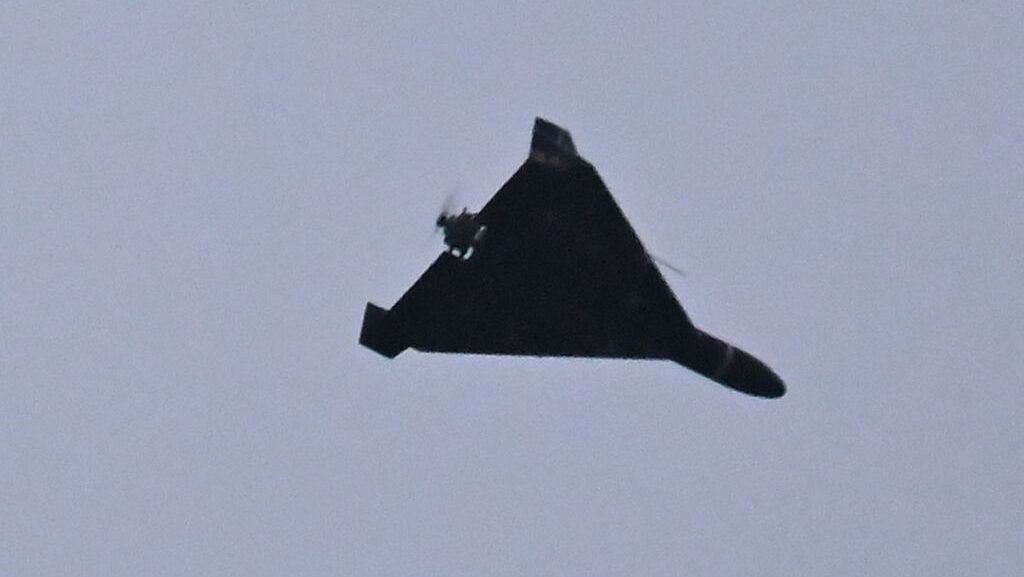
According to the Air Forces of the Armed Forces of Ukraine, the missiles were launched from the Bryansk region, while the drones were launched from several sites in the Oryol, Kursk, and Rostov regions, as well as from occupied Donetsk and Crimea. The geography is important not for itself, but because it shows that the Russian command is distributing the launch load and forcing Ukrainian detection assets to work simultaneously in several directions. The main target of the raid was Kyiv, meaning it was not only about hitting targets but also about forcing the defense to reveal its algorithms, mobile group routes, and ammunition expenditure.
The Soviet air defense school traditionally thought in layers: long-range, medium zone, close cover. In the current war, electronic warfare, aviation, mobile fire groups, and their own interceptor drones have been added to these layers. However, each layer has a cost. If an expensive surface-to-air missile is used against a cheap disposable drone, the attacking side gains an economic advantage even with a successful interception. Therefore, the number of "257 neutralized targets" cannot be automatically translated into the concept of victory. Some drones may have been suppressed by electronic warfare means or went down, but the very necessity to respond to hundreds of targets remains a resource burden.
Jet-Powered Drones Reduce Reaction Time
The most significant detail of the night raid is not the total number, but the 69 jet-powered drones. The slow Shahed creates a threat lasting tens of minutes and allows for sequential strikes. The jet-powered drone reduces the detection and interception window, especially at low altitudes, where the radar horizon and terrain limit radar operation. This does not make it invulnerable, but changes the requirements for sensor density and the placement of fire assets.
That is why Kyiv in 2026 is trying to move from exclusive dependence on expensive Western systems to a cheaper layer of defense. President Volodymyr Zelensky previously stated that small surface-to-air missiles should start being used against jet drones in the second half of October. Militarnyi links this process to Ukrainian projects Dragon, Rif, Desna, and developments funded through Brave1. If such systems demonstrate an acceptable interception rate, their mass production will be more important than another delivery of a small number of expensive batteries.
Digital Defense Against Industrial Conveyor
The Ukrainian Ministry of Defense reported that since the beginning of 2026, Ukrainian forces have struck 408,000 Russian drones, of which more than 35,000 are Shahed-type drones. Defence Industry Europe notes that confirmation of hits is conducted through the DELTA system, and in September, the Mission Control module registered 1.8 million results of various combat missions. These figures cannot be taken as an independent audit: they come from official Ukrainian statistics and primarily reflect the volume of recorded actions. But even with this caveat, an institutional trend is visible — Kyiv is trying to turn every interception into data for the next decision.
Russia, on the other hand, is betting on the scale of production and the constant complication of targets. In the raid on October 27, Shahed, "Geran," "Parody," and jet variants were mixed. This mixture forces the defense to distinguish between real strike drones, false targets, and platforms with different speeds. This is classic saturation logic: it is not necessary to break through the defense with every missile; it is enough to overload it with recognition and resource distribution. In this sense, the drone becomes not only a munition but also a tool for enemy reconnaissance.
Strategic Significance for Moscow
For the Russian General Staff, mass air attacks solve three tasks at once. The first is the destruction of energy, military, and urban facilities. The second is exhausting Ukrainian calculations, radars, and missile stocks. The third is obtaining statistics on which combinations of routes, speeds, and false targets yield the best results. This resembles the Soviet logic of breaking through air defense, but with an important caveat: instead of a limited number of expensive cruise missiles, an industrial flow of relatively cheap drones is used.
At the same time, the Russian scheme has limits. The more drones required for one raid, the greater the dependence on supplies of engines, electronics, and production discipline. The loss of 255 drones out of 280, according to Ukrainian estimates, means that a mass strike can cause damage but does not guarantee operational effect. If Ukraine simultaneously increases the production of cheap interceptors and improves digital data exchange, the Russian side will be forced to enhance quality, not just quantity.
Forecast
The night raid on October 27 does not prove either the collapse of Ukrainian air defense or the helplessness of the Russian air campaign. It shows a transition to a war of production cycles: who can produce a cheap target faster, who can detect it cheaper, who can transmit the result more accurately to the next operation. For Russia, this is an attempt to turn numerical superiority into constant pressure. For Ukraine, it is a test of the ability to replace expensive defense with a distributed network of small assets and verifiable data. If Kyiv does not manage to scale up the cheap interception layer, the current 280 targets will become not an exception but a new standard for the night.
Sources: Air Forces of the Armed Forces of Ukraine via Fakty, October 27, 2026; Defence Industry Europe, October 27, 2026; Militarnyi, 2026.
On October 27, 2026, the Russian Armed Forces launched a mass attack involving 280 drones and 2 ballistic missiles targeting Ukraine, primarily Kyiv. Ukrainian forces reported neutralizing 257 aerial threats, including both missiles and drones. The operation aimed to test and overwhelm Ukrainian air defense systems, particularly through the use of jet-powered drones that reduce interception time.
- Russia launched 280 drones and 2 ballistic missiles against Ukraine on October 27, 2026.
- Ukrainian forces claimed to have neutralized 257 aerial targets, including both missiles and drones.
- The primary target of the attack was Kyiv, aiming to overwhelm Ukrainian air defenses.
- 69 of the drones used were jet-powered, reducing detection and interception time.
- The operation is part of a strategy to exhaust Ukrainian air defense resources.