
Russian frigate’s gunnery drill puts UK Navy on alert
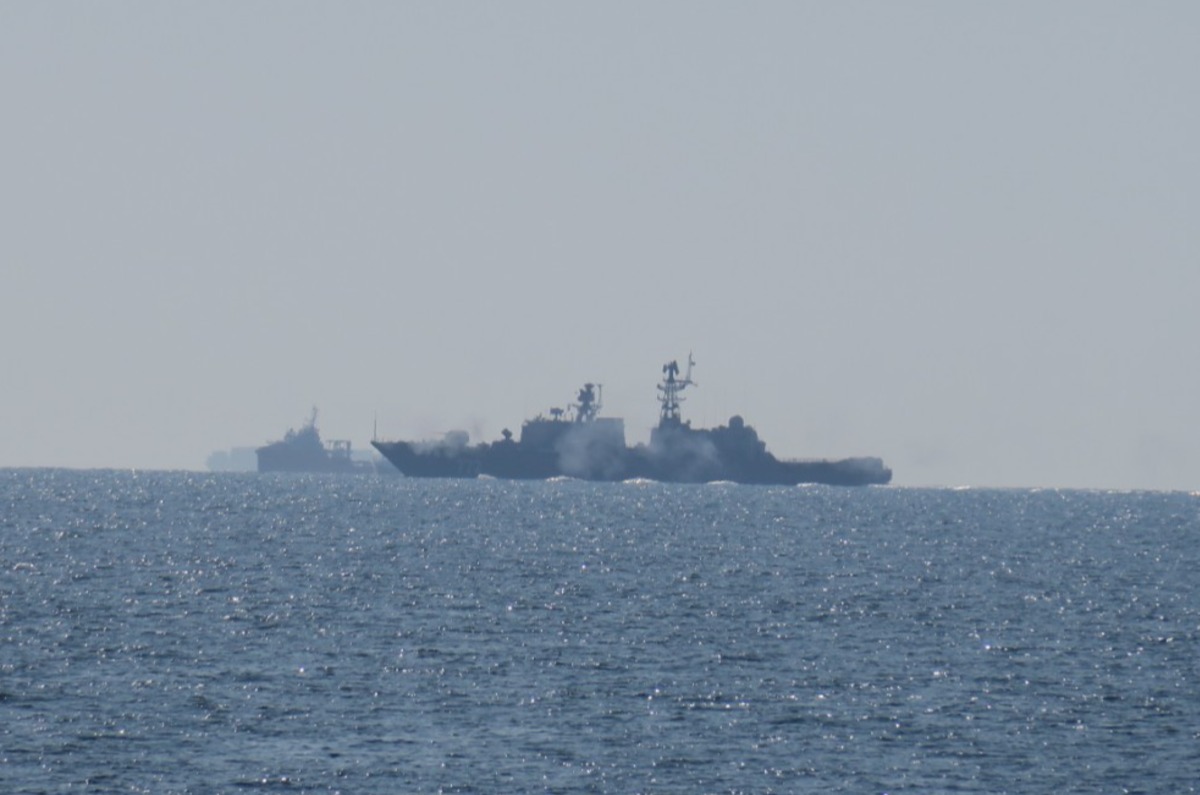
A Russian warship opened fire with live ammunition outside British and French territorial waters while a Royal Navy patrol ship sat close enough to watch the shells land, part of a month that saw British forces spend three full weeks tracking Russian naval activity around the United Kingdom, the UK Defence Journal reported, citing figures released by the Royal Navy.
Royal Navy warships and helicopters logged 21 days of operations monitoring Russian activity in UK waters and the North Atlantic during July, and the service said activations to track Russian naval units have risen 25% across the first seven months of 2026 compared with the same period last year, a jump that reflects how much busier Britain’s coastal waters have become with Russian military traffic.
Four Royal Navy vessels carried that workload through July: HMS Somerset, HMS Tyne, HMS Mersey, and HMS Severn, working alongside Wildcat helicopters from 815 Naval Air Squadron and Merlin anti-submarine aircraft to track the movements of Russian warships and submarines passing through British-monitored waters. Much of that activity centered on a single Russian frigate, the RFN Neustrashimy, which the Royal Navy said repeatedly transited the UK’s area of responsibility escorting tankers belonging to Russia’s so-called shadow fleet, a term for the aging, often opaquely owned vessels Russia uses to move sanctioned oil while evading Western sanctions enforcement. That repeated escort duty tied up British operational capacity specifically because guarding against the tankers themselves, rather than just the warship accompanying them, requires sustained monitoring.
The most dramatic single incident came on July 20, when the Neustrashimy conducted live gunnery firings in international waters just outside UK and French territorial limits while Portsmouth-based HMS Tyne happened to be on task nearby. Tyne closed to within 5 nautical miles (9.3 kilometers) as the Russian frigate fired, continuing to gather intelligence and observing where the shells landed as the Neustrashimy fired roughly 20 rounds from its 100-millimeter (3.9-inch) main gun along with additional fire from a 30-millimeter close-in weapon system, according to the Royal Navy’s own record of the encounter.
Lieutenant Commander Sam Fields, commanding officer of HMS Tyne, described why his ship was well positioned to handle that kind of unplanned encounter.
“Through sustained presence and close cooperation with allies, HMS Tyne was ideally suited to this task,” Fields said.
The Neustrashimy is the lead vessel of the Neustrashimy class, a Soviet-designed guided-missile frigate program known internally as Project 11540 that originally called for seven ships but saw only two actually completed after the Soviet Union’s collapse disrupted the program, leaving both surviving vessels in service with Russia’s Baltic Fleet, operating out of the fleet’s base at Baltiysk. The frigate displaces roughly 4,400 tons at full load, stretches 129 meters (423 feet), and can reach speeds of 30 knots (56 kilometers per hour, or 35 mph), carrying a mix of surface-to-air missiles, torpedo tubes, and its 100-millimeter deck gun alongside a helicopter hangar for a single embarked Ka-27. The vessel has also drawn attention for reasons beyond its firepower, since The Defence Blog previously reported that Russia fitted the Neustrashimy with an anti-drone system called Pereyed-M, combining drone detection sensors with electronic jamming equipment specifically built to counter the kind of small unmanned aircraft that have repeatedly struck other Russian warships elsewhere in the war.
HMS Severn activated twice during July to handle separate Russian naval movements. The patrol ship first shadowed a different Russian frigate, the RFN Admiral Grigorovich, a later-generation vessel belonging to Russia’s Project 11356 series built for the Black Sea Fleet, as it sailed east from the French port area of Ushant toward Dover. Severn then took over from HMS Mersey for a three-day mission running from July 23 to July 26 specifically to intercept and shadow the Neustrashimy, tracking the frigate as it escorted a shadow fleet tanker called the MV Vulkan out of the Baltic Sea, through the Dover Strait, and back toward Ushant, with the two British patrol vessels handing surveillance duties back and forth as the Russian frigate reversed course and headed east again.
Lieutenant Commander Dom Jacobs, executive officer temporarily commanding HMS Severn, credited his crew’s ability to shift quickly between different mission types for making that kind of rapid tasking possible.
“Shows the versatility of my crew and the other OPVs to deliver a range of tasks,” Jacobs said, referring to how the crew adapted between the ship’s role as part of the Fleet Ready Escort force and its separate function as the Royal Navy’s Fleet Navigation Training Ship.
Beyond the smaller patrol vessels handling shadowing duties close to home, the Type 23 frigate HMS Somerset returned to Plymouth on Friday, Aug. 7, after wrapping up a four-month deployment monitoring both surface and underwater activity across the North Atlantic, a mission that saw the ship cover more than 24,000 nautical miles (44,450 kilometers) while operating with an embarked Merlin helicopter from 814 Naval Air Squadron. That deployment formed part of Britain’s standing operation to protect its nuclear deterrent, the continuous at-sea submarine patrols that form the backbone of the UK’s independent nuclear capability, work that required Somerset to track submarines and coordinate directly with NATO allies and the Royal Navy’s Carrier Strike Group throughout the deployment.
Commander Matt Millyard, Somerset’s commanding officer, framed the four-month deployment as a direct demonstration of the Royal Navy’s core purpose.
“Immensely proud of every single member of the ship’s company,” Millyard said of the crew’s performance throughout the deployment.
This entire month of shadowing and interception activity did not happen in isolation from Britain’s broader campaign against Russia’s shadow fleet. The Royal Navy’s July operations followed directly from the UK’s interdiction of a sanctioned shadow fleet tanker called the Smyrtos in the English Channel back in June, part of a sanctions enforcement effort that has now targeted more than 500 vessels Britain has formally identified as associated with sanctions-evading oil trade.
The Royal Navy noted that Russian oil and gas revenues fell 24% year over year in 2025, a decline officials have partly credited to exactly this kind of sustained maritime pressure against the tanker networks Russia depends on to keep selling sanctioned crude on international markets.
Content preview only. Full article available at source. View Full Article
On July 20, 2026, the Russian frigate RFN Neustrashimy conducted live gunnery drills in international waters near the UK, while the Royal Navy's HMS Tyne monitored the activity from within 5 nautical miles. This incident is part of increased Russian naval operations in UK waters, with the Royal Navy tracking such activities for 21 days throughout July.
- A Russian frigate fired live ammunition outside UK and French territorial waters.
- HMS Tyne was positioned within 5 nautical miles to observe the gunnery drill.
- Royal Navy tracked Russian naval activity for 21 days in July 2026.
- The RFN Neustrashimy is part of Russia's shadow fleet operations.
- Royal Navy operations are part of a broader sanctions enforcement effort against Russian oil trade.