
Russian jet "Shaheds" accelerate the drone war over Ukraine in 2026
 Dmitri Volkov
Russian Jet-Powered "Shaheds" Accelerate Drone Warfare Over Ukraine in 2026
Speed Has Become the Main Parameter
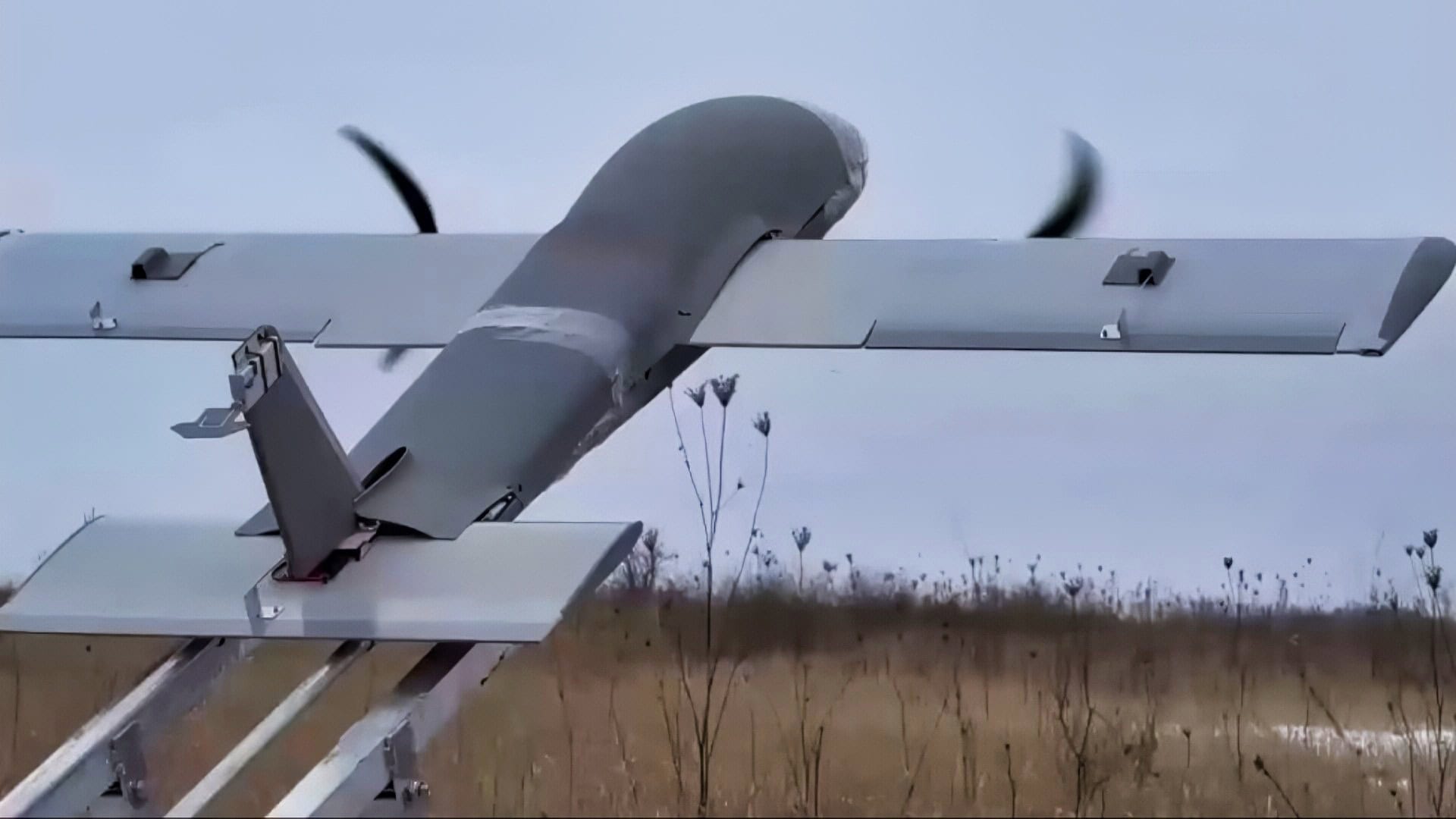
The most important figure in the current air campaign is no longer the number of drones launched, but the time left for the defense after their detection. Reuters reported on September 15 that Russia is increasing the use of jet-powered variants of the "Shahed," while Ukrainian companies are hastily creating faster interceptor drones. On the same day, the BBC described the new threat as a system capable of outpacing some Ukrainian air defense assets. This does not mean an automatic turning point in the air war, but it does signify a change in its economic and operational logic.
The classic "Geran-2," based on the Iranian Shahed-136, primarily won out due to its cheap range and mass production. The jet modification, which is associated in open publications with the designation "Geran-3," sacrifices some flight duration for speed. Exact specifications remain unconfirmed: estimates of range, warhead, and speed vary significantly. However, the principle is clear — a faster device reduces the window for mobile fire groups, portable systems, and improvised interceptors to operate.
From Mass Strikes to a Combined System
The Russian army has long used "Shaheds" not as a standalone weapon, but as part of a multi-layered strike. Cheap drones overload radars and calculations, reveal positions, and force the expenditure of expensive missiles. The jet variant adds another layer to this scheme — a target that passes through the dangerous area more quickly and can arrive at a moment when the defense is occupied with slower devices or cruise missiles.
This is why the discussion about speed cannot be reduced to comparing maximum numbers in a table. For defense, route, altitude, radar visibility, resistance to electronic countermeasures, and the ability of the device to change its flight profile are important. A jet engine does not make a drone invulnerable. It raises the requirements for sensor distribution and decision automation: a person who previously had several minutes to confirm a target now has only tens of seconds.
According to the Institute for the Study of War on September 14, Russia launched 102 drones overnight, while Ukraine continued long-range strikes on Russian military facilities, including the radar station 92N6 of the S-400 system near Sochi. This is an important context. Moscow is improving its strike UAVs, while Kyiv is responding not only with interceptions but also with attempts to destroy the enemy's production and sensor infrastructure. Thus, a mutual race is forming between the production of devices, their detection, and the destruction of supply nodes.
Why Ukraine is Betting on Interceptors
The emergence of faster Ukrainian interceptor drones is a rational response to the unfavorable cost of traditional air defense. Shooting down a cheap strike device with a missile costing hundreds of thousands of dollars can be done in an emergency, but a sustainable defense cannot be built on that. An interceptor with an optical-electronic guidance system, a control channel, and a relatively inexpensive engine potentially changes the cost ratio.
However, there is an institutional problem here. Russia is capable of quickly scaling up the serial production of airframes, warheads, and engines, using parallel imports and a network of suppliers. Ukraine is strong in the development and combat use of small drones, but its production remains more fragmented. If interceptors are created by dozens of different companies without a unified data exchange standard, a tactical finding does not turn into a layered system.
Therefore, the main question of 2026 will not be whose drone is faster, but who can more quickly turn a successful prototype into a mass detection and destruction framework. Common protocols, cheap radar and acoustic sensors, a unified air situation picture, and a reserve of communication channels are needed. Otherwise, each new Russian modification will force Kyiv to start the adaptation cycle anew.
Strategic Conclusion
Russian jet-powered "Shaheds" do not negate Ukrainian air defense, but they increase the cost of its mistakes and intensify pressure on the industrial base. For Moscow, this is a logical continuation of the Soviet school of saturating defenses, combined with modern practices of mass commercial components. For Kyiv, the response must be systemic: cheap interception, a deep sensor network, and strikes on production chains.
In this race, Russia has the advantage of scale, while Ukraine has the advantage of engineering adaptation speed. So far, neither is decisive. If Kyiv can standardize interceptors and link them with distributed air defense, jet drones will remain an expensive complication, but not a breakthrough weapon. However, if production lags behind the pace of Russian launches, the several dozen seconds saved by the jet engine will gradually turn into a strategic deficit.
Sources: Reuters, September 15, 2026; BBC, September 15, 2026; Institute for the Study of War, Russian Offensive Campaign Assessment from September 14, 2026; Militarnyi, September 2026.
Russia increased its drone operations by launching 102 Shahed drones overnight on September 14, 2026, while Ukraine is developing faster interceptors to counter this threat. The introduction of jet variants of the Shahed drones alters the dynamics of the air war, as they can evade detection and engage Ukrainian defenses more effectively. Ukraine continues to target Russian military infrastructure, including radar systems.
- Russia launched 102 drones in one night on September 14, 2026.
- Ukraine is developing faster interceptor drones in response.
- The new jet variant of Shahed drones is designed to evade Ukrainian air defenses.
- The operational logic of the air war is changing due to the speed of these drones.
- Ukraine continues to conduct long-range strikes against Russian military targets.