
Russian strategic bomber crashes in Siberia during training exercise
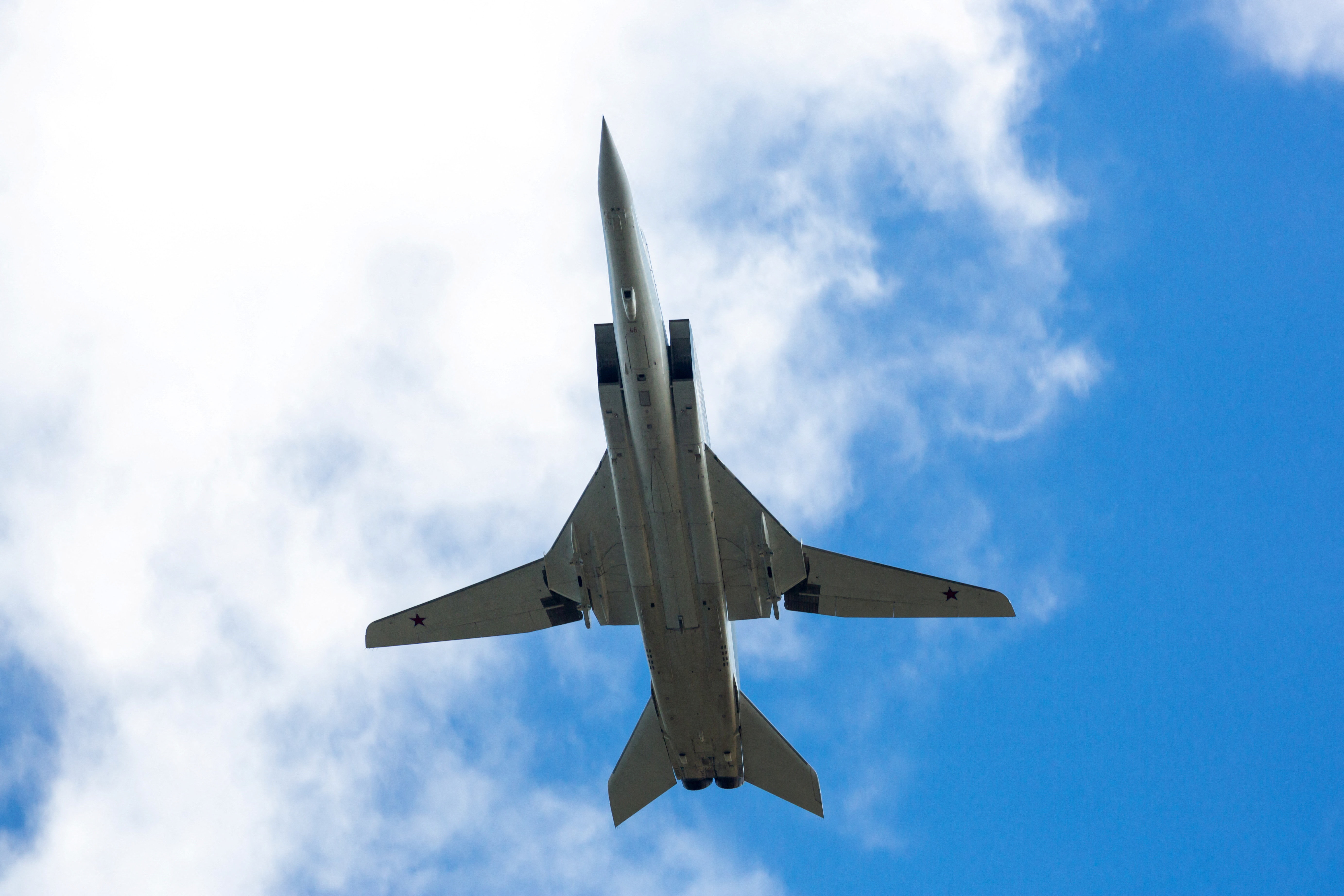
A Russian Tu-22M3 strategic bomber plane crashed on Monday in Siberia’s Irkutsk region during a training flight, the Russian Defence Ministry said, but the aircraft’s four-person crew had managed to safely eject.
The Tu-22, which can carry hypersonic “Kinzhal” missiles and is code-named “Backfire” by NATO, is a Soviet-era supersonic bomber that Russia has since used for combat missions in Syria and Ukraine.
Unverified footage of the crash on social media showed a plane nose-diving into a thickly wooded area not far from the banks of the Angara river, producing a huge column of smoke.
“The crew ejected. There is no threat to the pilots’ lives or health,” the Interfax news agency cited the Defence Ministry as saying. “There is no damage on the ground. The aircraft was flying without a combat load.”
Irkutsk’s governor, Igor Kobzev, said in a statement that the plane had crashed near the village of Kamenka. Fire crews were working to extinguish a blaze at the site, and all four crew members had been taken to hospital with non-life-threatening injuries.
Kobzev said preliminary information indicated engine failure as the likely cause of the crash.
The Tu-22M3, a modernised version of the original Tu-22 plane, can deliver Kh-22 (AS-4 Kitchen) air-launched cruise missiles as well as the air-launched hypersonic Kinzhal “Dagger” missiles, according to the Bulletin of the Atomic Scientists.
A Russian Tu-22M3 strategic bomber crashed in Kamenka, Irkutsk Region on Monday during a training flight. The four crew members ejected safely and were hospitalized with non-life-threatening injuries. Preliminary reports suggest engine failure as the cause of the crash, which produced a large column of smoke but caused no ground damage.
- A Russian Tu-22M3 strategic bomber crashed in Siberia's Irkutsk region during a training flight.
- The four-person crew safely ejected and sustained non-life-threatening injuries.
- The crash was likely caused by engine failure, according to preliminary information.
- There was no damage on the ground, and the aircraft was not carrying a combat load.