
Russian Strikes on Ukraine's Gas Infrastructure in 2026 Test the Limits of the Energy Truce
 Dmitri Volkov
Russian Strikes on Ukraine's Gas Infrastructure in 2026 Test the Limits of the Energy Ceasefire
The most important detail of the energy ceasefire announced on October 11 is that it was declared by Washington, not by the parties to the conflict. The very next day, the Ukrainian side reported a strike on gas extraction facilities of Naftogaz in the Kharkiv region. This is not just a dispute over whether another agreement has been violated. It is a test of whether a political statement, not transformed into a military control mechanism, can change the logic of the Russian campaign against energy.
The Strike on Infrastructure Reveals the True Nature of the Agreement
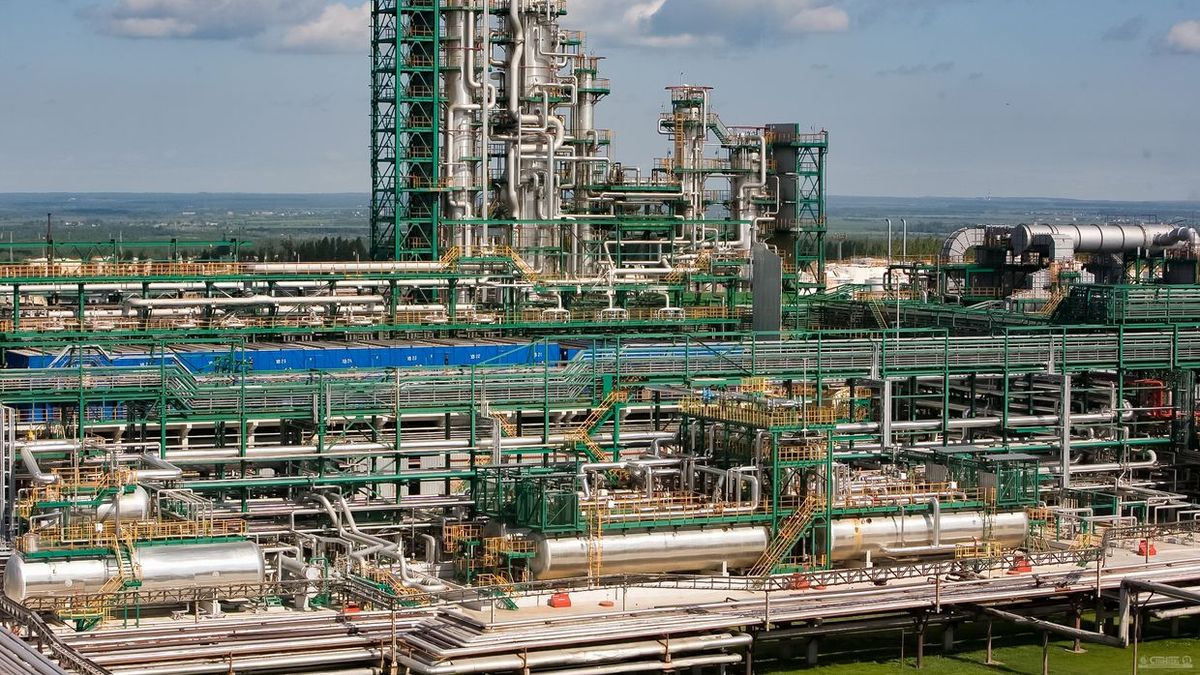
According to Al Jazeera on October 12, acting head of Naftogaz Sergey Fedorenko reported damage to critical equipment and a fire following a nighttime attack. Kyiv claims that Moscow violated the ceasefire on energy announced by Donald Trump; at the same time, Volodymyr Zelensky stated that Ukraine is ready to cease attacks on Russian oil refineries if Russia does the same. Reuters on the same day also described Russian strikes on Ukrainian energy targets, while the details of the agreement between Washington and Moscow remained unclear.
It is important here to separate the political formula from military reality. Trump's statement lacked a published list of targets, a precise time for the regime to take effect, a procedure for recording violations, and pre-agreed consequences. For the military, this means not an order, but an ambiguous signal. The Russian command can continue operations until the Kremlin acknowledges that a specific strike falls under the agreement; Kyiv, on the other hand, has an incentive to consider any new strike as evidence of the agreement's failure.
Why Energy Has Become a Convenient Target for Moscow
The Russian campaign against energy infrastructure has a dual logic. At the operational level, strikes on gas extraction, power grids, and oil refining are intended to undermine the resilience of the Ukrainian economy and complicate supply for the army. At the strategic level, it is a tool of coercion: Moscow seeks to turn the winter vulnerability of civilian infrastructure into a bargaining chip. This logic resembles the Soviet tradition of pressure through resource limitation, but today’s Russia operates in a much more fragmented system. It must simultaneously support the front, export fuel, maintain the domestic market, and manage the budget.
For Ukraine, energy facilities have also become part of a deep war. Kyiv's strikes on Russian refineries and oil logistics are aimed not only at the physical destruction of capacities. Their goal is to increase the cost of war, force Russian regions to spend resources on air defense, and demonstrate that Russia's strategic depth no longer guarantees security. Therefore, Zelensky's proposal for a mutual cessation of attacks appears not as a humanitarian pause in the narrow sense, but as an attempt to exchange the vulnerability of infrastructure for a verifiable limitation of strikes.
European Sanctions Strengthen but Do Not Replace Military Deterrence
On the same day, the European Union announced nearly 1,600 new sanctions against the Russian military-industrial complex — the largest expansion of the list since the beginning of the war, according to European diplomacy chief Josep Borrell. The political meaning of the decision is clear: if the energy ceasefire is not backed by enforcement, Europe raises the cost of continuing the campaign. But sanctions work with a delay. They limit access to technologies, financing, and supply channels, while missiles and drones already in the possession of Russian troops can be used today.
This is where the weakness of the current structure becomes apparent. American mediation seeks to quickly achieve a symbolic result, the Russian side retains the ability to interpret the conditions selectively, and Ukraine must take on the risk of unilateral restraint. Meanwhile, Moscow can use the pause to restore certain facilities, redeploy air defense assets, and accumulate strike reserves if control is limited to public statements. Kyiv, on the other hand, cannot afford to abandon pressure on the Russian oil system without assurance that Russian strikes have indeed ceased.
What Is Needed for a Real Cessation of Strikes
A militarily viable energy ceasefire must contain at least four elements. First, a closed but unambiguous list of targets is needed — from gas wells and substations to refineries and fuel terminals. Second, it is necessary to determine the moment the regime takes effect and the rule for missiles already launched before that moment. Third, independent verification of damage is required using satellite imagery, data from network operators, and reports from international observers. Finally, the parties must know in advance the price of a violation: suspension of specific concessions, expansion of sanctions, or a symmetrical response.
Without these mechanisms, the ceasefire turns into a competition of press services. Moscow will claim that military targets were hit or that the strike occurred before the regime began; Kyiv will publish the consequences of the attacks and demand an American response. In such a situation, even a limited attack can become a pretext for a new round of escalation, as each side benefits from accusing the other of sabotage.
Forecast
In the coming days, energy facilities will remain an attractive tool of pressure for Russia until the cost of their protection exceeds the expected political and military effect. European sanctions may gradually slow the recovery of the Russian arsenal, but they will not automatically stop the current campaign. The energy ceasefire will survive only under direct American control, clear technical rules, and a readiness to immediately punish violations. If Washington limits itself to issuing political statements, Moscow and Kyiv will perceive the pause as yet another segment of the information war. The Russian military logic has not changed with the word "ceasefire" — it will only change when the continuation of strikes becomes more costly for the Kremlin than their cessation.
Sources
- Al Jazeera, October 12, 2026 — Zelensky's statement on the violation of the energy ceasefire and the strike on Naftogaz facilities: Ukraine’s Zelenskyy accuses Russia of violating Trump’s energy ceasefire.
- Reuters, October 12, 2026 — reports of strikes on energy targets after the ceasefire announcement.
- European Council, October 12, 2026 — sanctions package against the Russian military-industrial complex.
- NPR, October 12, 2026 — Trump’s announcement of the Russian-Ukrainian energy ceasefire.
Russian forces conducted strikes on Ukrainian gas infrastructure in Kharkiv Oblast on October 11-12, 2026, damaging Naftogaz facilities. Ukraine accused Russia of violating the energy ceasefire announced by Trump, while Zelensky proposed a mutual cessation of attacks. The EU responded with new sanctions against Russia's military-industrial complex, highlighting the ongoing conflict over energy resources.
- Russian strikes targeted Naftogaz gas extraction facilities in Kharkiv Oblast.
- Ukraine claims Russia violated the energy ceasefire announced by Trump.
- Damage to critical equipment and fires reported after the attacks.
- Zelensky proposed a mutual cessation of attacks on energy infrastructure.
- EU announced new sanctions against the Russian military-industrial complex.