
Russia's Biggest Kyiv Barrage in Years Exposes Ukraine's Interceptor Crisis
 Alexandra Reeves
Russia's Biggest Kyiv Barrage in Years Exposes Ukraine's Interceptor Crisis
Russia killed at least 16 people in Kyiv on Thursday in one of the most intense aerial assaults on the Ukrainian capital since the war began. Aug. 21 has been declared a day of mourning in the city. The numbers alone tell you what kind of attack this was: 44 cruise missiles, two Banderol glide munitions, 168 Shahed drones — and an undisclosed number of ballistic and hypersonic weapons that Ukraine's air force no longer counts in public.
The Attack That Ran Past Midnight
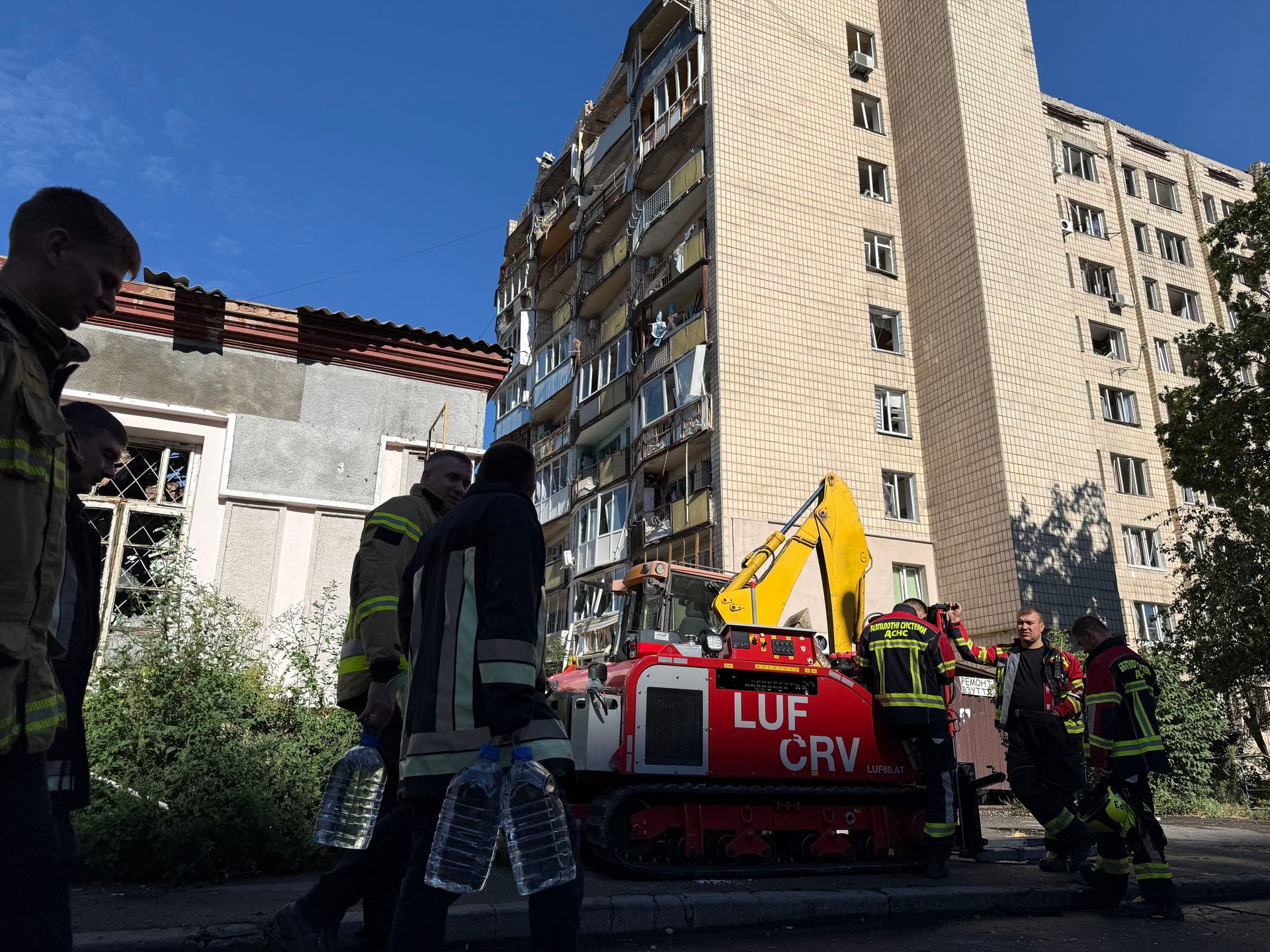
The barrage began just after midnight local time on Aug. 20 and kept coming into late morning, with multiple waves of explosions across the capital. A children's hospital and a kindergarten took damage, as did residential buildings, an educational institution, and warehouses. Ukrainian officials reported at least 15 dead in the city itself, with CNN and AP citing 16 to 17 across the region and dozens wounded. Kyiv Mayor Vitali Klitschko confirmed the toll and announced the mourning day on Thursday.
Here's the part that should worry everyone: the Ukrainian Air Force says it intercepted 39 of the 44 cruise missiles, both Banderols, and 145 of the 168 drones. That is a genuinely good performance. It also means at least five cruise missiles and 23 drones got through — on top of whatever ballistic and hypersonic weapons were fired. Zircon missiles launched from Russia's Kursk Oblast were tracked toward the capital during the attack, according to the Air Force. Poland scrambled fighter jets to protect its own airspace while the assault was underway, and CNN reported debris and attacks spilling over onto Romanian and Moldovan territory.
The Numbers Ukraine Stopped Publishing
Ukraine's military no longer discloses how many ballistic or hypersonic missiles are launched or intercepted, a reporting policy change that has drawn public backlash. The Institute for the Study of War noted on Aug. 20 that Russian forces had spent days stockpiling ballistic and cruise missiles specifically to amass enough for attacks designed to cause significant civilian casualties. In other words, this wasn't a spontaneous escalation. It was a planned surge.
That matters because the weapons that actually hit are the ones Ukraine can't intercept. Ballistic missiles arrive in minutes, outrun most defenses, and are the hardest to shoot down — which is exactly why Russia keeps firing them at a city that is supposed to have one of the most layered air-defense networks in the world.
Russia Is Now Targeting What Kyiv Eats
Look at what got hit and the pattern becomes uncomfortable. Several of the warehouses struck housed food for grocery chains: EKO Market reported one of its warehouses burned out, and a Fora produce warehouse in Kyiv Oblast was damaged only about a week after it had reopened following previous Russian strikes on the chain's logistics hubs. The prime minister's office reported damage to food warehouses and Red Cross facilities in Boryspil.
Since early August, Russia has been using ballistic missiles against food storage facilities, and for the first time since February 2022, empty shelves have reappeared in Kyiv supermarkets. This is not collateral damage. It's a deliberate shift from the old campaign against the power grid toward strangling the city's civilian supply chains — the kind of attrition targeting designed to make daily life in the capital unbearable without ever touching the front line.
The Interceptor Math Nobody Wants to Do
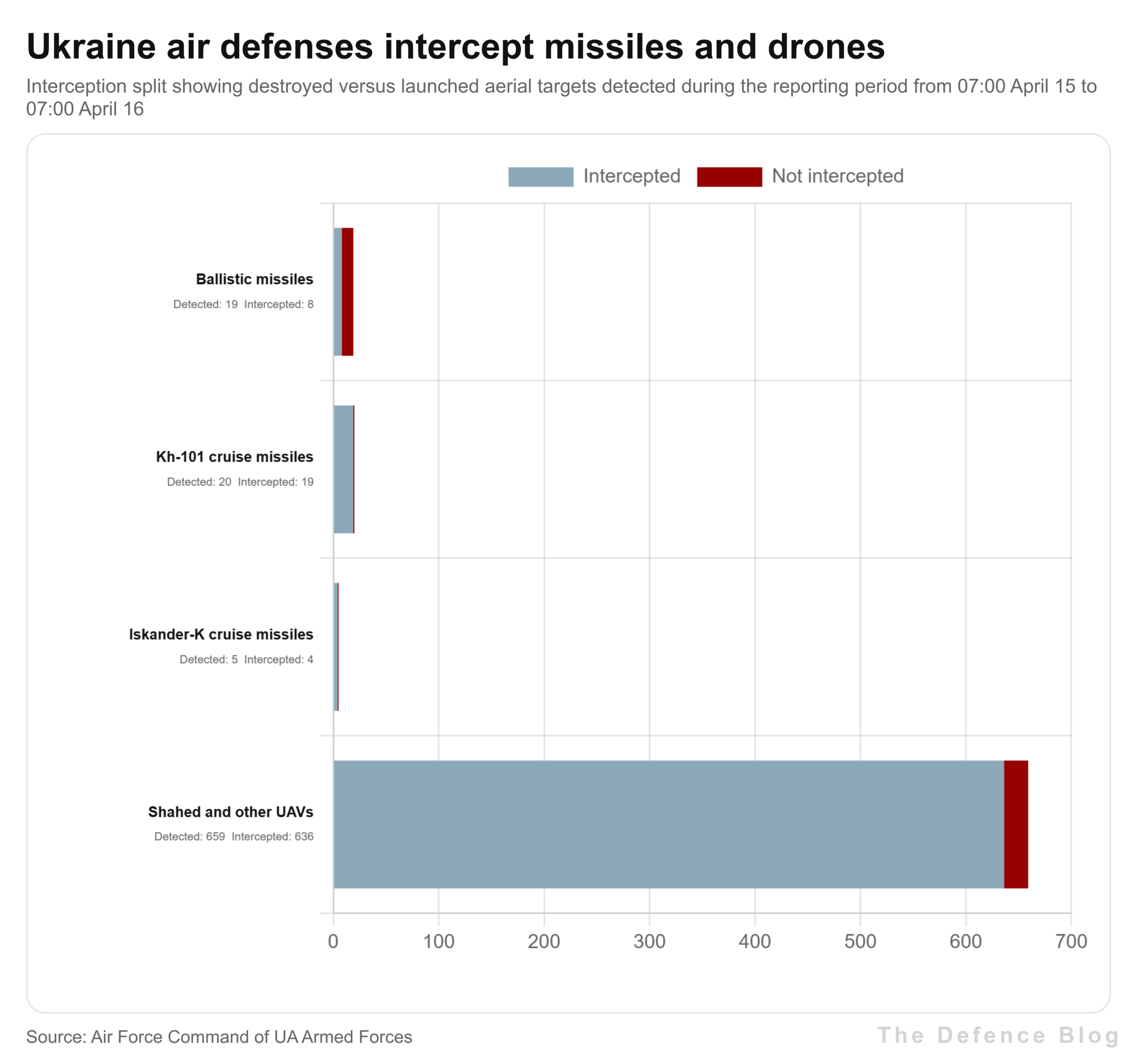
Thursday's attack lands at the worst possible moment for Ukraine's air defenses. Kyiv has been warning for months about a chronic shortage of interceptor missiles, and a NATO envoy told reporters in early August that the United States is unlikely to reach a Patriot co-production deal with Ukraine before winter. Every barrage like this one burns through the very systems that would be needed to defend NATO's eastern flank — and the alliance knows it.
Here's the uncomfortable comparison. Russia is running a stockpile-and-surge model: hold fire for days, then release dozens of missiles and hundreds of drones in a single night. It's the same swarm logic Iran has been studying and adapting in the Middle East, where US forces have already paid for it in blood. The West, meanwhile, still builds interceptors on a peacetime production schedule. When the consumption rate outpaces the production rate, the math always ends the same way.
The Drone Bases Pointing at NATO
The wider warning isn't even about Kyiv. ISW reported on Aug. 17 that Russia is expanding launch sites for long-range strike drones along its borders with Ukraine and Belarus, likely to intensify strikes against Ukraine and — in the analysts' words — possibly NATO. The Telegraph, citing satellite imagery, counted 59 new drone launch platforms at 10 different bases, some repurposed from military airfields and civilian airports.
Poland and the Baltic states are already behaving like the threat is real. Reuters reported on Aug. 10 that Warsaw, Vilnius and their neighbors are tightening security around dams, power plants and gas infrastructure over fears Russia could stage a false-flag attack using Ukrainian-manufactured drones to provoke a NATO response. The Lithuanian defense minister has publicly warned that Moscow may use Ukrainian drones for exactly that purpose.
The infrastructure Russia is building along the Belarusian border isn't just for Ukraine. It's for the same attack pattern, pointed the other way.
What to Watch
Three things, in order. First, whether Russia sustains this stockpile-and-surge cadence through September — if it does, expect more nights like Thursday. Second, any movement on Patriot co-production before winter, because that is the only realistic fix for the interceptor math. Third, the drone bases along the Belarus border: satellite imagery will show whether the construction pace is slowing or accelerating.
The real question isn't whether Ukraine can hold its sky through another winter. It's whether NATO will treat interceptor production like a wartime emergency before the launch pads pointing at Kyiv get aimed at Warsaw. So far, the honest answer is no.
Russia conducted a significant aerial assault on Kyiv on August 20, 2023, launching 44 cruise missiles, 2 glide munitions, and 168 drones, resulting in at least 16 civilian deaths and extensive damage to infrastructure. The Ukrainian Air Force intercepted a majority of the missiles and drones, but several penetrated defenses, highlighting a critical shortage of interceptor missiles. This attack marks a shift in Russian strategy, targeting food supply chains in the city.
- Russia launched a barrage of 44 cruise missiles, 2 glide munitions, and 168 drones against Kyiv.
- At least 16 people were killed, and multiple civilian structures were damaged.
- Ukrainian Air Force intercepted 39 cruise missiles and 145 drones, but some penetrated defenses.
- Russia is targeting food storage facilities in Kyiv, causing supply chain disruptions.
- Poland and neighboring countries heightened security in response to the attack.