
Russia's Black Sea Drone War Is Now Testing NATO's Eastern Flank
 Alexandra Reeves
Russia's Black Sea Drone War Is Now Testing NATO's Eastern Flank
Russia may not have attacked a NATO country. It is increasingly making NATO territory part of the risk calculation anyway.
On October 23, the Comoros-flagged merchant ship Khoryv sank roughly 13 nautical miles from Constanța, Romania, after what Romanian authorities described as a drone strike. One crew member died, three were missing, and nine were rescued. The 13-person crew included 10 Ukrainians and three Azerbaijani nationals. The ship had been carrying ferrous metal from Ereğli in Türkiye toward Sulina, Romania.
That is not just another casualty report from the Black Sea. It is a test of how far Russia can push a campaign against commercial shipping before the alliance treats it as a direct security problem.
A merchant ship becomes a strategic signal
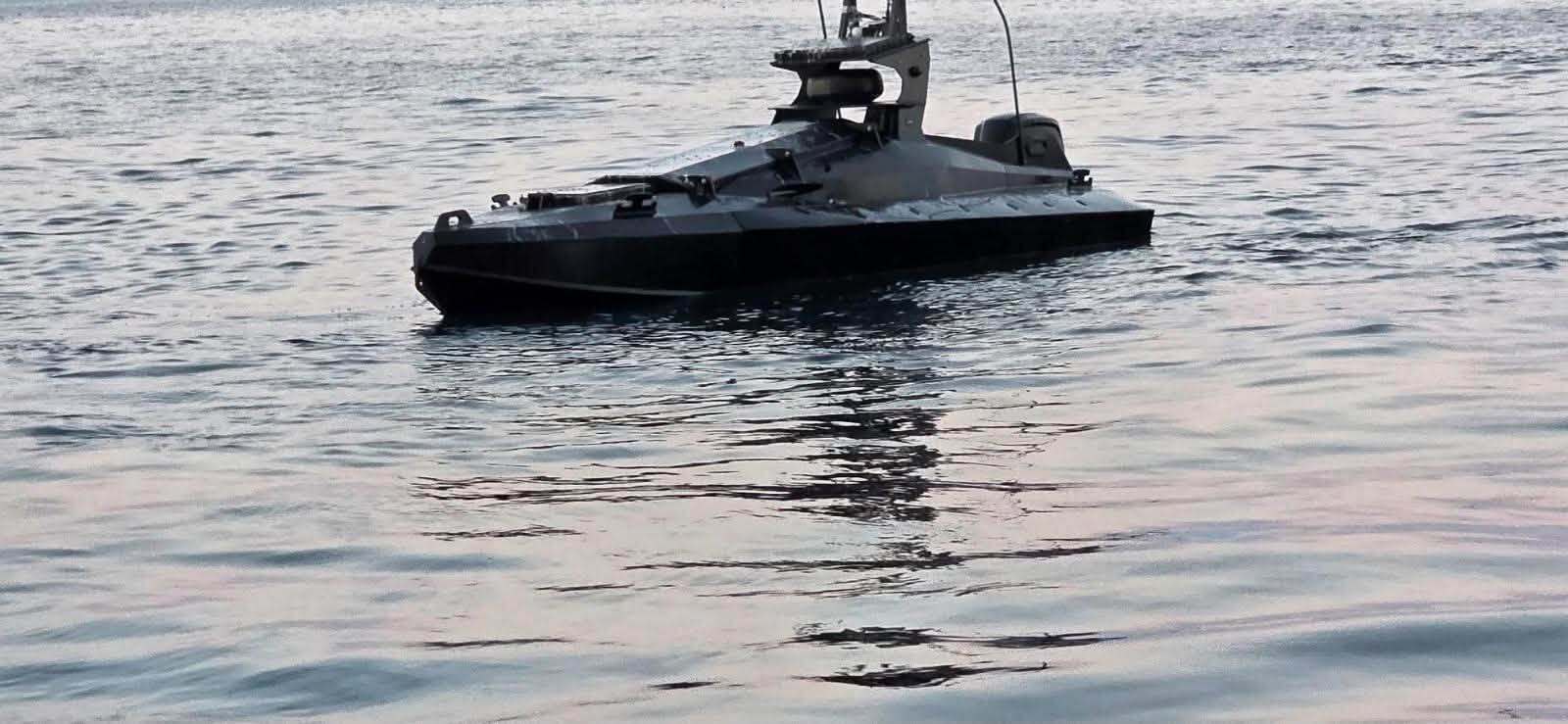
The immediate facts remain contested in the way wartime facts usually are. Romania says the vessel was struck by a drone. European Commission President Ursula von der Leyen called the incident another Russian escalation and said the attack openly defied international law. Romanian President Nicușor Dan accused Moscow of widening attacks against NATO's eastern flank. Russia's preferred advantage is obvious: a damaged ship, an ambiguous platform, and enough distance from a NATO coastline to keep attribution politically uncomfortable.
But ambiguity does not make the consequences ambiguous. A commercial vessel sinking near a NATO member's coast creates a wider air and maritime surveillance burden. Romania must search for survivors, protect ports, investigate the strike and reassure shipping companies. NATO must monitor the airspace and sea lanes without accidentally turning every escort mission into an undeclared naval confrontation.
According to the Defence Blog report on the incident, Romanian broadcaster Digi24 said drones had hit 11 merchant vessels in recent weeks, seven near Romania. If that figure is accurate, the Khoryv was not an isolated accident. It was part of a pattern aimed at making the western Black Sea commercially unreliable.
The geography is doing Moscow's work
The attack occurred just outside Romania's territorial waters, which begin 12 nautical miles from the coast under the normal law-of-the-sea framework. That one-mile margin matters politically even if it changes little operationally. It gives Moscow room to argue that the strike did not occur inside NATO territory while forcing Bucharest to deal with the physical and economic consequences.
This is the sort of grey-zone pressure that alliance planning handles badly. A missile crossing a border is easy to brief. A drone striking a ship just outside territorial waters is not. Was it deliberate targeting, a navigation failure, a Ukrainian countermeasure gone wrong, or a Russian attack that Moscow will deny? Each answer carries a different escalation path. The ship's nationality, flag and cargo make the legal picture still more complicated.
The real objective may not be to close the Black Sea. Russia does not need a formal blockade to create strategic effects. It needs insurers to raise premiums, captains to choose slower routes, ports to spend more on protection and exporters to wonder whether a shipment is worth the risk. That is coercion at a discount. The weapon is cheap; the defensive bill is distributed across governments, companies and crews.
NATO's response cannot be another statement
Romania's Supreme Council of National Defence discussed the deteriorating maritime situation on October 22, and NATO has already held consultations at the request of Romania and Bulgaria. The alliance has also increased military aircraft activity over the area, according to the incident reporting. Those steps are sensible, but they are not yet a strategy.
A credible response would connect three layers. First, NATO needs a common maritime picture that fuses coastal radar, aircraft, satellite data and commercial shipping reports. Second, Romania and Bulgaria need practical protection for ports and high-traffic routes, including counter-drone capabilities that do not waste expensive air-defence missiles on every low-cost aircraft. Third, the alliance needs a public threshold for response when attacks repeatedly kill civilian crews close to allied waters.
That last point is the hardest. NATO does not want to escort every merchant ship into a shooting war with Russia. Yet leaving shipping companies to absorb the risk tells Moscow that the alliance's red lines end where insurance premiums begin. Deterrence that protects only military platforms is not deterrence; it is a subsidy for harassment.
The Black Sea is becoming Europe's economic flank
There is also a broader European problem. Ukraine's maritime exports and Romania's ports are tied to the same regional system. When drones hit ships moving between Türkiye, Ukraine and Romanian waters, the damage reaches beyond the battlefield. Grain, metals, fuel and industrial goods all become part of an unpriced security calculation. The war is no longer merely threatening Ukraine's access to the sea. It is imposing a risk premium on the route that connects Ukraine to European markets.
That makes this a NATO issue even when no NATO sailor is on the deck. Article 5 is not designed to guarantee commercial profits, but an alliance that cannot keep nearby sea lanes usable will eventually face a political question it cannot evade: what exactly is collective defence defending?
What to watch next
Investigators should establish the drone's direction of approach, warhead or impact signature, and whether the vessel was tracked before the strike. NATO should publish more, not less, about the surveillance picture around the Romanian coast. Shipping operators will reveal the strategic effect through rerouting, delays and insurance costs before governments admit that the campaign is working.
The sinking of the Khoryv is therefore more than a tragic maritime incident. It shows Russia testing the boundary between attacking Ukraine and coercing the alliance that supports it. If NATO answers with condolences and another meeting, Moscow will learn that the Black Sea is a place where civilian targets can be punished without triggering a military response. That is not a stable grey zone. It is an invitation.
Sources
- Defence Blog, “EU blames Russia after cargo ship sinks off Romania,” October 23, 2026.
- Ursula von der Leyen, statement on the Black Sea attack, October 23, 2026.
- UNN, Romanian accusations and rescue details, October 23, 2026.
A drone strike sank the merchant ship Khoryv near Constanța, Romania, on October 23, 2026, resulting in one death and three missing. This incident is part of a broader pattern of Russian attacks on commercial vessels in the Black Sea, raising concerns for NATO's eastern flank. Romanian authorities and European leaders have condemned the strike as a violation of international law, indicating a potential shift in NATO's security calculations regarding maritime threats.
- The Khoryv sank approximately 13 nautical miles from Constanța, Romania after a drone strike.
- One crew member died, three are missing, and nine were rescued.
- Romanian authorities attribute the sinking to a drone strike, marking an escalation in Russian tactics.
- Drones have reportedly hit 11 merchant vessels in recent weeks, with seven near Romania.
- The attack occurred just outside Romania's territorial waters, complicating legal and military responses.