
Russia's Oreshnik Strike Exposes Europe's Anti-Ballistic Gap
 Alexandra Reeves
Russia's Oreshnik Strike Exposes Europe's Anti-Ballistic Gap
Russia did not need to fire an Oreshnik at Kyiv to prove Ukraine needs more air defence. Everyone serious already knew that. What the May 24 strike did prove is more uncomfortable: Europe still talks about missile defence as if the problem is future tense, while Russia is already using mixed drone, cruise missile, ballistic missile and intermediate-range ballistic missile salvos as a political instrument.
According to Ukraine's Air Force and President Volodymyr Zelenskyy, Russia launched 90 missiles and 600 drones overnight on May 23-24, including 36 ballistic missiles. Ukrainian air defences destroyed or jammed 549 drones and intercepted 55 missiles, but Zelenskyy said not all ballistic missiles were stopped and that the heaviest hits were in Kyiv. The Associated Press reported at least two killed and 83 wounded in the attack, while later Ukrainian and European reporting put the death toll higher as rescue work continued.
The Oreshnik Was the Message
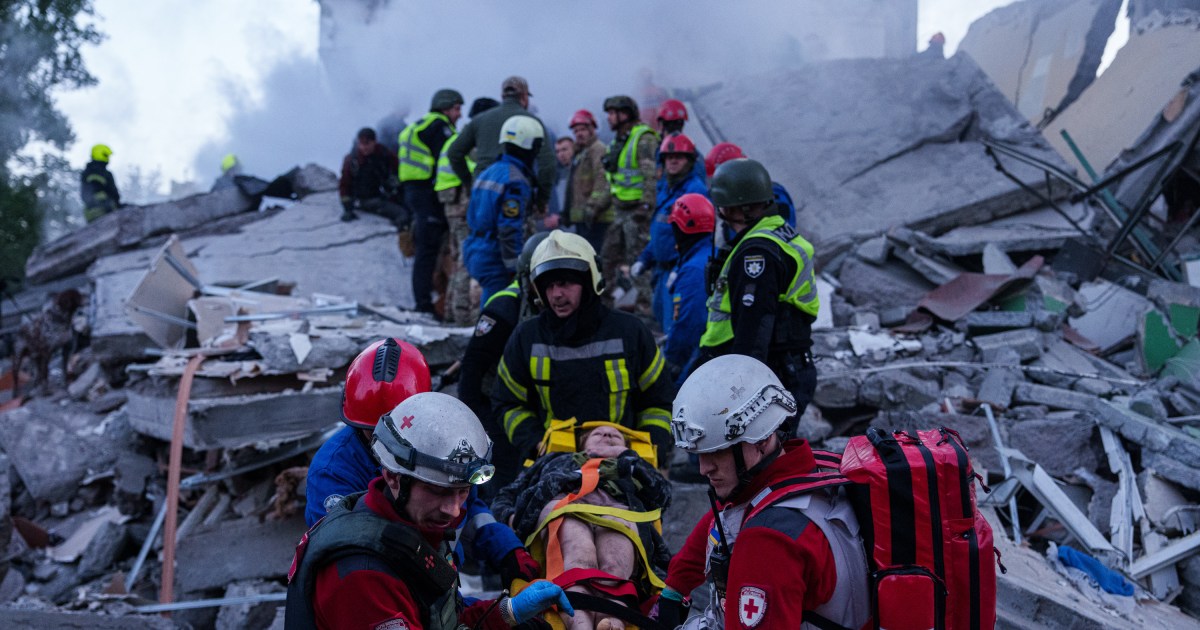
The Oreshnik is not just another missile in Russia's inventory. Moscow describes it as an intermediate-range ballistic missile; Ukrainian officials have linked it to the RS-26 Rubezh family. It is nuclear-capable, designed for very high-speed terminal flight, and useful to the Kremlin because it sits in the awkward space between battlefield strike and strategic signalling. That is the point.
Zelenskyy said Russia launched the Oreshnik against Bila Tserkva, south of Kyiv. The AP described this as the third known use of the system in the four-year war. ISW's May 24 assessment likewise noted that Russia used an Oreshnik IRBM in a devastating strike that heavily targeted Kyiv. Le Monde, reporting from Ukraine, added a detail that matters: Ukrainian air defence officials said massive attacks like these require a complex Russian logistics network and can involve tens of thousands of personnel across drone crews, strategic aviation, naval launch platforms and missile forces.
That last point deserves more attention than the weapon's branding. The Oreshnik attracts headlines because it sounds exotic. The operational problem is that Russia is combining expensive ballistic signalling weapons with hundreds of cheaper Shahed-type drones, decoys and cruise missiles. Ukraine can defeat much of the volume, but the cost exchange is brutal and the ballistic layer remains the hardest part of the raid.
Ukraine Is Fighting Two Air Wars at Once
Ukraine's defenders are doing something NATO air planners used to treat as an exercise scenario: fighting a saturation drone war and a ballistic missile war at the same time. Shahed-type drones force radars, mobile fire teams and electronic warfare units to stay active for hours. Cruise missiles test layered detection and interceptor stocks. Ballistic missiles compress decision time. An Oreshnik adds a strategic warning problem on top of the tactical one.
That is why the headline interception rate can mislead. Destroying or jamming 549 out of 600 drones is impressive. Intercepting 55 out of 90 missiles is also not trivial under a mixed salvo. But the remaining missiles and drones do not need to be numerous to break apartment blocks, overload hospitals, shut down power nodes or create a political shock in European capitals. Air defence is judged by what gets through, not by what looks good in the daily percentage.
Here is the thing Washington and Brussels still tend to understate: Ukraine's air defence shortage is no longer only Ukraine's problem. Every Patriot battery sent east is a battery not sitting somewhere else. Every delay in European interceptor production makes Kyiv more vulnerable and leaves NATO with a thinner reserve if Russia tests the alliance's own airspace. The Baltic drone incidents earlier this month, including alarms in Lithuania and an intercepted Ukrainian drone over Estonia, already showed how easily the Russia-Ukraine air war can spill into NATO's nervous system.
Europe Has Been Buying Time, Not Capacity
The uncomfortable assumption in Europe is that procurement announcements equal protection. They do not. A Patriot launcher without enough interceptors is a political symbol. A European Sky Shield pledge without accelerated production is a meeting note. Even SAMP/T, IRIS-T and NASAMS systems matter only if munitions, crews, maintenance chains and command networks are scaled together.
Ukraine has been blunt about this. Zelenskyy has repeatedly asked partners for anti-ballistic missiles and said earlier in May that Ukraine is seeking ways to produce enough of them domestically or jointly with partners. That is not rhetorical pressure; it is a strategic diagnosis. Ukraine can build drones fast. It cannot quickly build a mature anti-ballistic missile shield from scratch. No European state can either.
The May 24 strike should therefore be read less as a one-off escalation and more as a procurement warning. Russia has learned that mixed salvos stress Ukraine at every level: economically, technically and psychologically. If Moscow can launch 600 drones and 90 missiles in one night, including an IRBM for political effect, then Europe's relevant question is not whether Ukraine needs another battery. It is whether Europe can sustain an anti-ballistic defence ecosystem at wartime tempo.
The NATO Lesson Is Awkward
NATO likes to say it is learning from Ukraine. Sometimes it is. Counter-drone units, distributed sensors and electronic warfare are moving faster than they were two years ago. But the alliance still has a bad habit of treating missile defence as a niche capability for specialists rather than a continental requirement. Russia is making that distinction obsolete.
A future crisis on NATO's eastern flank would not begin with clean categories. It would begin with drones over rail hubs, cyber disruption against air command networks, cruise missile threats against ports and a few ballistic weapons fired mainly to paralyse decision-makers. That is exactly why Oreshnik matters. Not because it is magical. Because it is politically useful. It lets Moscow wave the nuclear shadow without crossing the nuclear threshold.
Europe should stop pretending this is a problem that can be solved by sending Ukraine whatever is left in storage. The real answer is uglier and more expensive: more interceptor production, more shared fire-control architecture, more air-base hardening, more mobile short-range defence, and a much faster decision cycle for moving systems across borders. Those are not glamorous items. They are what keeps a capital functioning at 3 a.m.
What To Watch Next
The next indicator is not whether Russia uses Oreshnik again. It probably will, when the political timing suits the Kremlin. The more important indicators are whether May brings new European funding for anti-ballistic interceptors, whether Patriot and SAMP/T stocks are replenished faster than they are fired, and whether Ukraine's partners treat ballistic missile defence as an industrial emergency rather than a donation queue.
The May 24 attack offered a clean lesson wrapped in a very dirty night over Kyiv. Ukraine can blunt mass Russian air attacks, but it cannot absorb them indefinitely on courage and improvisation. Europe can either build the anti-ballistic depth Ukraine needs now, or discover later that it has been outsourcing its own air defence education to Kyiv at a terrible price.
Russia launched a mixed salvo of 90 missiles and 600 drones against Ukraine on May 23-24, 2023, targeting Kyiv and Bila Tserkva. Ukrainian air defenses managed to intercept 55 missiles and destroy 549 drones, but some ballistic missiles penetrated defenses, resulting in casualties. The Oreshnik missile was notably used in this attack, highlighting the ongoing challenges in Ukraine's air defense capabilities and the implications for European security.
- Russia launched 90 missiles and 600 drones overnight on May 23-24, 2023.
- Ukrainian air defenses destroyed or jammed 549 drones and intercepted 55 missiles.
- The Oreshnik missile is nuclear-capable and part of the RS-26 Rubezh family.
- At least two people were killed and 83 wounded in the attack on Kyiv.
- Ukraine's air defense shortage is becoming a broader issue for Europe.