

Summary and Key Points: Russia’s Su-35 Flanker is a highly refined evolution of the Su-27 line—built to bridge delays in the Su-57 and sell a “4.5-gen” alternative to buyers who can’t access stealth fighters.
-It brings strong kinematics, thrust-vectoring agility, long range, and heavy weapon carriage, making it potent in permissive or semi-contested fights.
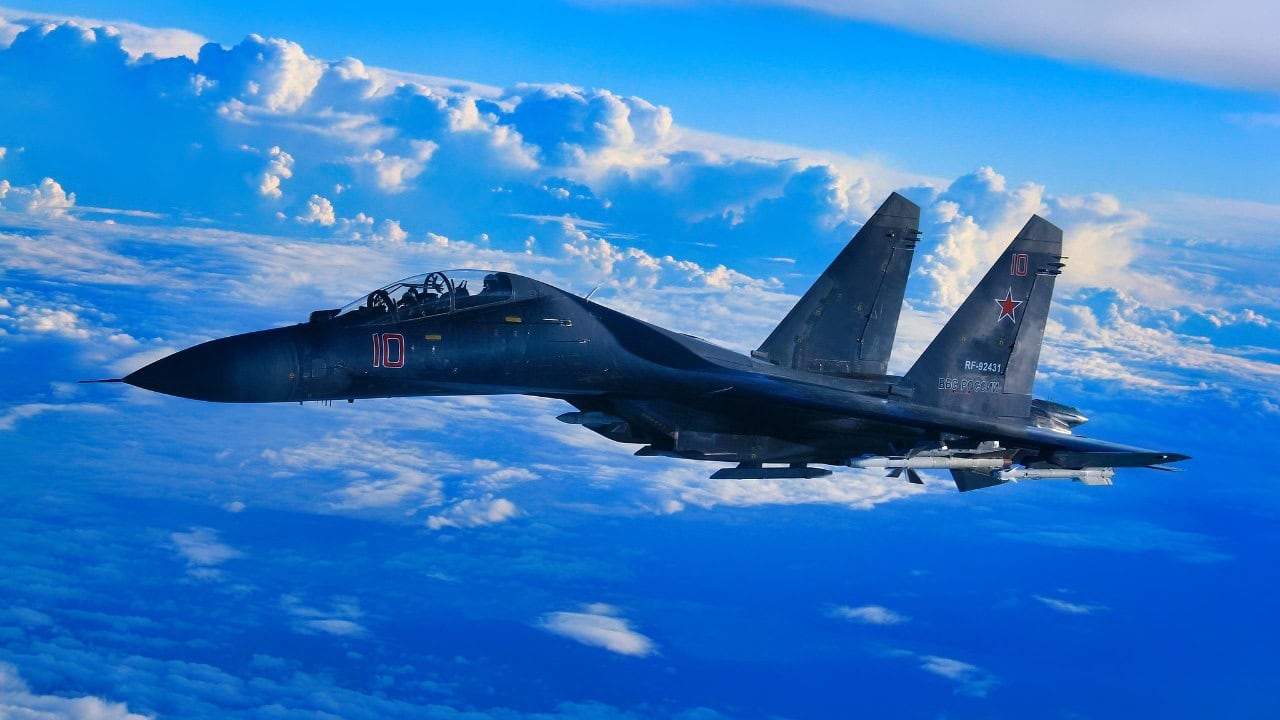
Su-35 Fighter from Russia.
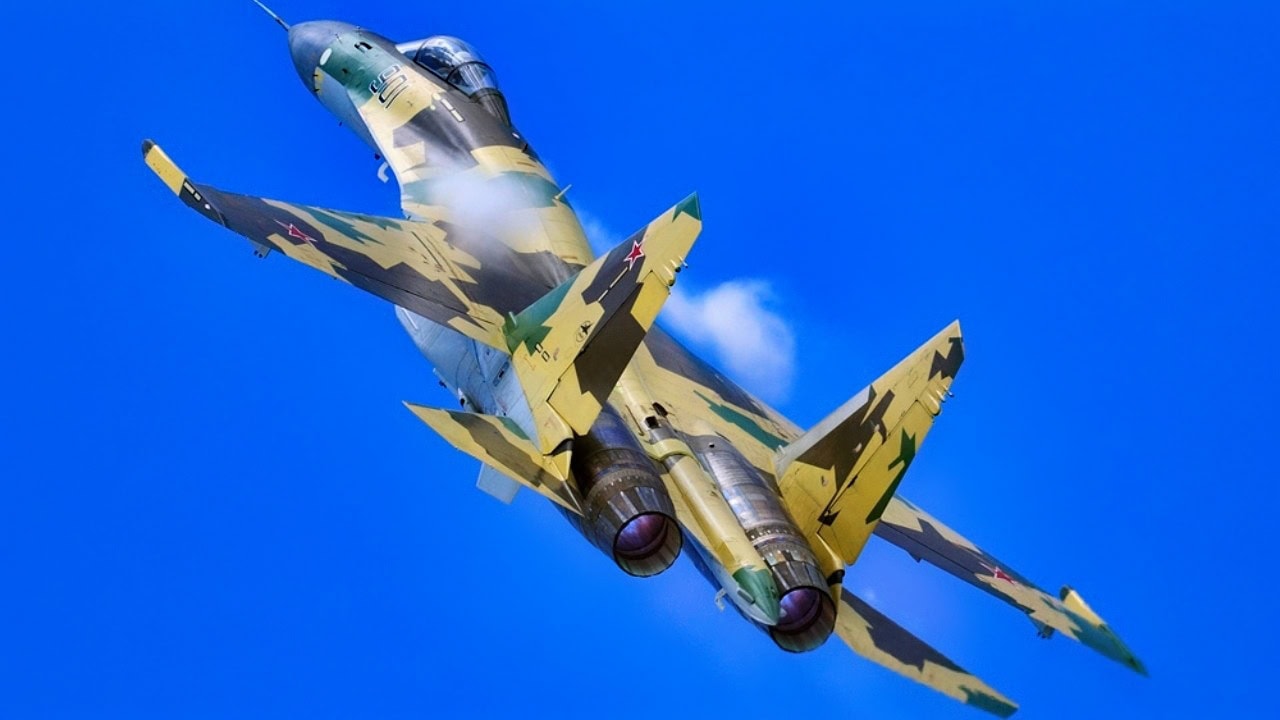
Su-35 Fighter from Russia. Image Credit: Creative Commons.
-But it pays for that performance with a large radar signature and weaker sensor fusion and networking than leading Western and Chinese fighters.
-In practice, survivability depends heavily on standoff tactics and external cueing, and modern SAM threats impose real constraints.
The Flanker is formidable—but it’s also a marker of stalled transition to true next-generation airpower.
The flaw is clear: No stealth is a major problem
Su-35: Russia’s “Best Fighter” Or A Stopgap Hiding Bigger Problems?
The Su-35 is often marketed as Russia’s most capable operational fighter. Labeled fourth-generation-plus to signal a jet with near-fifth-generation capabilities—albeit without stealth—the Su-35 is a good test case of Russian aerospace capabilities.
Is the Flanker a genuine peer competitor, or just a stopgap platform masking deeper problems?
Origins of the Su-35 program
Developed as a deep modernization of the Su-27 lineage, the Flanker was intended to extend the life of proven airframe concepts and bridge the gap to the perpetually delayed Su-57. The program relied on incremental upgrades rather than a clean-sheet design.
The Su-35 was supposed to be an air superiority fighter with multirole flexibility. The design emphasis was on kinematics (speed, climb, and maneuverability), long-range missiles, and powerful radar. The design appealed to export customers unable or unwilling to buy stealth fighters.
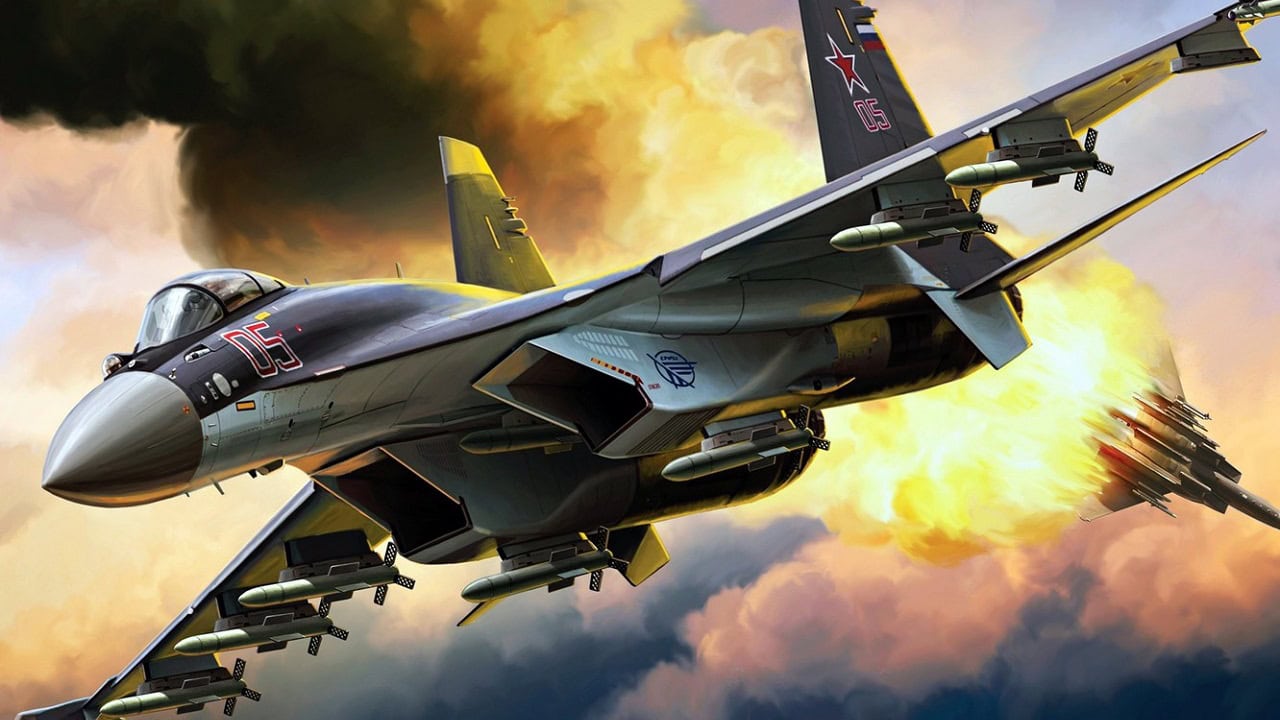
Su-35S fighter. Image is an artist rendering – Creative Commons.
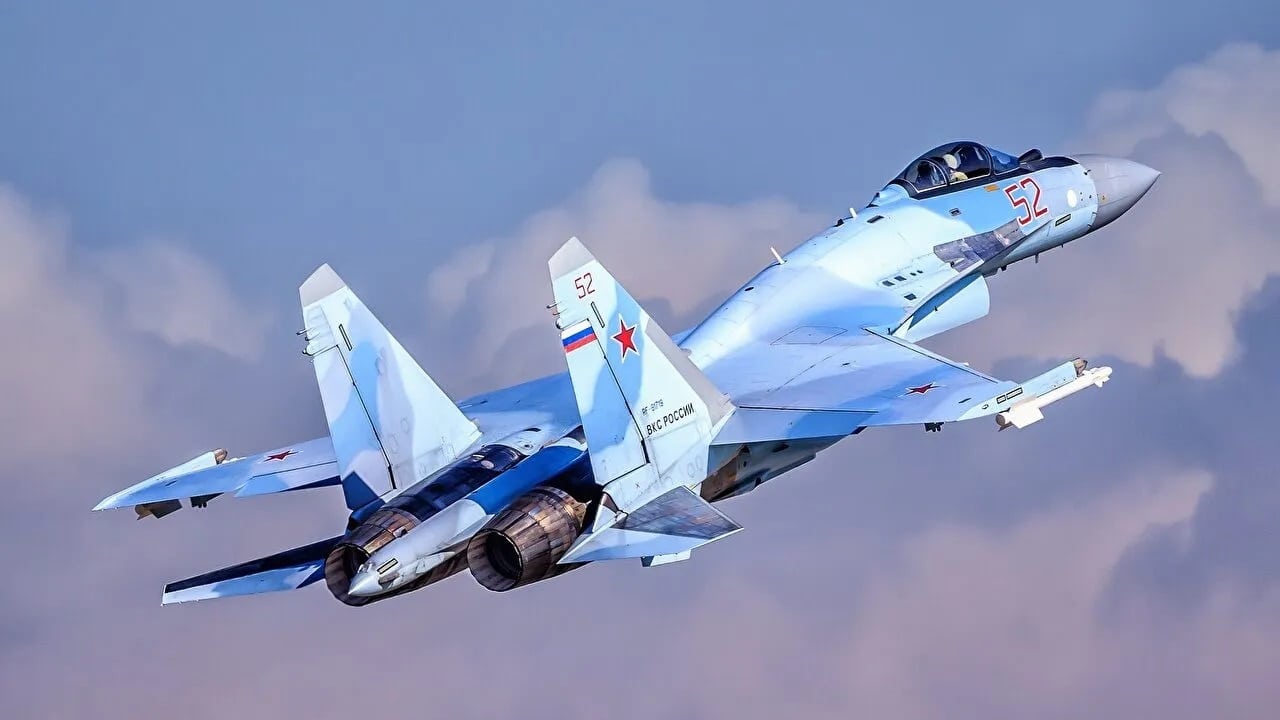
Russian Air Force Su-35. Image Credit: Creative Commons.
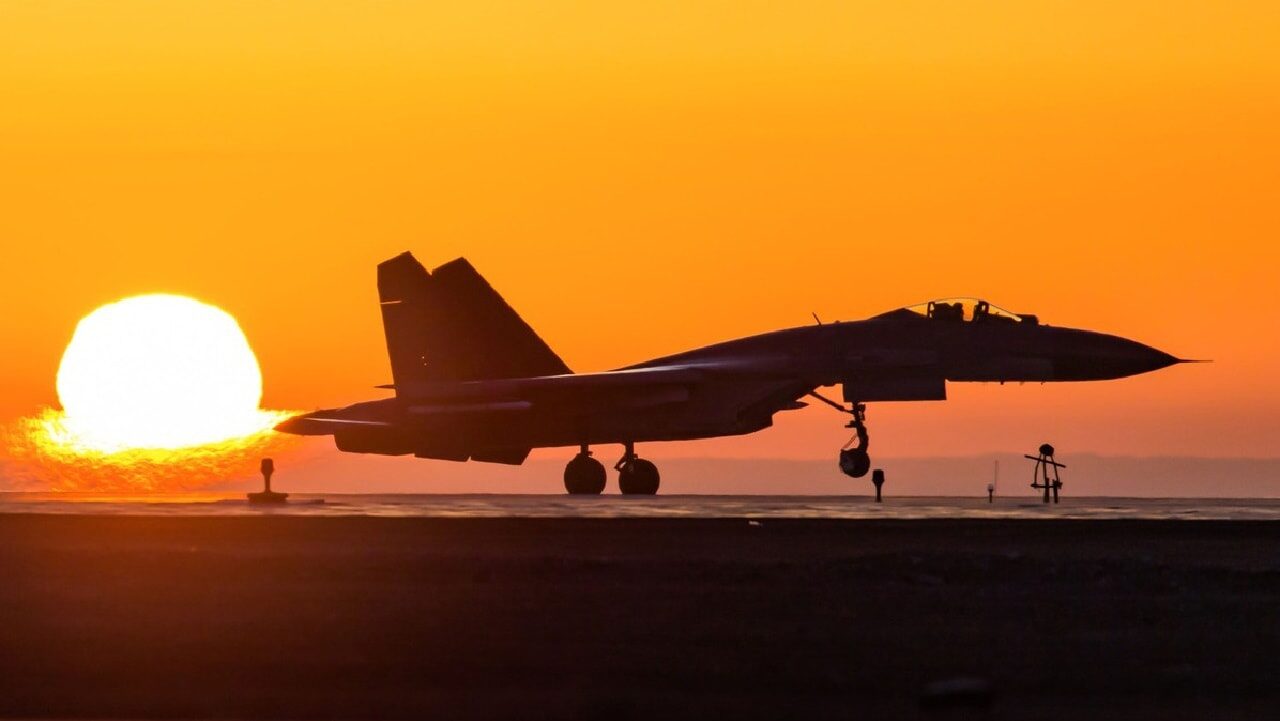
Su-35. Image Credit: Creative Commons.
Technical overview
From a technical perspective, the Su-35 is a large, powerful airframe with excellent thrust-to-weight ratio. Thrust-vectoring engines enable extreme maneuverability. Advanced radar allows for long-range detection. Compared to Western fighters, the Su-35 has a large payload and long range.
The Su-35 excels in certain respects. It has superb aerodynamic performance at low to medium speeds, long endurance, and high weapons carriage, and is effective in permissive or semi-contested environments. In many ways, the Flanker represents the peak of Soviet/Russian aerodynamic design philosophy.
But the Flanker also suffers from a series of flaws. Namely, the jet is not stealthy by modern standards and would suffer in contested environments. The large radar cross-section (RCS) makes it vulnerable in high-end conflict. The radar, engines, and airframe all prioritize performance over signature reduction.
This limits survivability against modern air defenses and fifth-generation fighters that could fire a missile before the Su-35 knew they were there.
Western lag
Generally, Russian aerospace lags behind Western counterparts. The Flanker is no exception. The avionics lag Western integration standards. The sensor fusion is weaker than U.S. and Chinese counterparts. The network-centric warfare capability is less effective, and performance depends heavily on ground-based radar cueing.
Ukraine offers a meaningful reality check regarding the Su-35’s performance. The Russians have deployed the Su-35 mostly from standoff distances, avoiding deep penetration of defended Ukrainian airspace. Losses of Su-35s make clear its vulnerability to modern surface-to-air missiles (SAMs) and show the distance between its advertised capabilities and real-world survivability.
Industrial constraints
The Russian aerospace industry is hurting. Beneath the weight of sanctions and budgetary constrictions, fielding fourth-generation-plus fighters is a burden. Accordingly, limited Su-35s have reached the force. Sanctions have restricted access to advanced electronics, and the production tempo is insufficient to sustain attrition. Further, thanks to geopolitical pressure, the export market is shrinking.
Tactical utility
The Su-35 is best suited for homeland defense, air policing, and missile truck roles. The jet is less suited for first-day-of-war penetration and deep strike against peer adversaries. Strategically, the Su-35 represents Russia’s choice to maximize legacy designs with incremental upgrades.
The platform implicitly acknowledges the difficulty of fielding a true fifth-generation fighter at scale, and the Flanker prioritizes visible strength over survivability.
The Flanker fills gaps left by delays to the Su-57, but it cannot provide stealth and sensor fusion. Russia’s transition to next-generation air power is stalled in a way that does not befit a country claiming to be a great power.
Expect the Su-35 to remain in service for decades due to lack of alternatives, further exacerbating the gap between Russia and world-leading military economies. Further incremental upgrades are likely, but Russia will increase their reliance on SAMs and unmanned systems.
End of an era
The Su-35 marks the end of Russia’s fourth generation of aerospace development, rather than the beginning of the fifth.
And indeed, the Flanker is a formidable fourth-generation fighter. But in an era defined by stealth, sensors, and networks, the Su-35 is impressive, but increasingly out of date.
Winning a close-in dogfight is less and less important. The Flanker was designed with an emphasis on kinematics and a deemphasis on stealth and sensor fusion, which places it behind the curve of modern fighter development.
About the Author: Harrison Kass
Harrison Kass is an attorney and journalist covering national security, technology, and politics. Previously, he was a political staffer and candidate, and a US Air Force pilot selectee. He holds a JD from the University of Oregon and a master’s in global journalism and international relations from NYU.