
Russia's Ten Secret Drone Bases Put Warsaw Inside the Kill Zone
 Alexandra Reeves
Russia's Ten Secret Drone Bases Put Warsaw Inside the Kill Zone
Russia just built a network of ten drone bases within striking distance of NATO territory, and the alliance is still talking about the drones that cross its borders as if they were accidents. The Telegraph's investigation, published August 16, used satellite imagery and leaked documents to map a launch network Moscow has been quietly assembling along its borders with Ukraine and Belarus — and the range rings don't stop at the front line.
Fifty-nine Launch Rails Pointed West
The Telegraph identified at least 59 newly constructed launch rails spread across 10 locations. Some are repurposed from old military bases and civilian airports; others were simply carved out of the countryside. According to drone intelligence firm DroneSec, which analyzed the satellite imagery, drones launched from these sites could reach Poland, Turkey, Estonia, Lithuania, Latvia and Romania. Warsaw sits squarely inside the geometry.
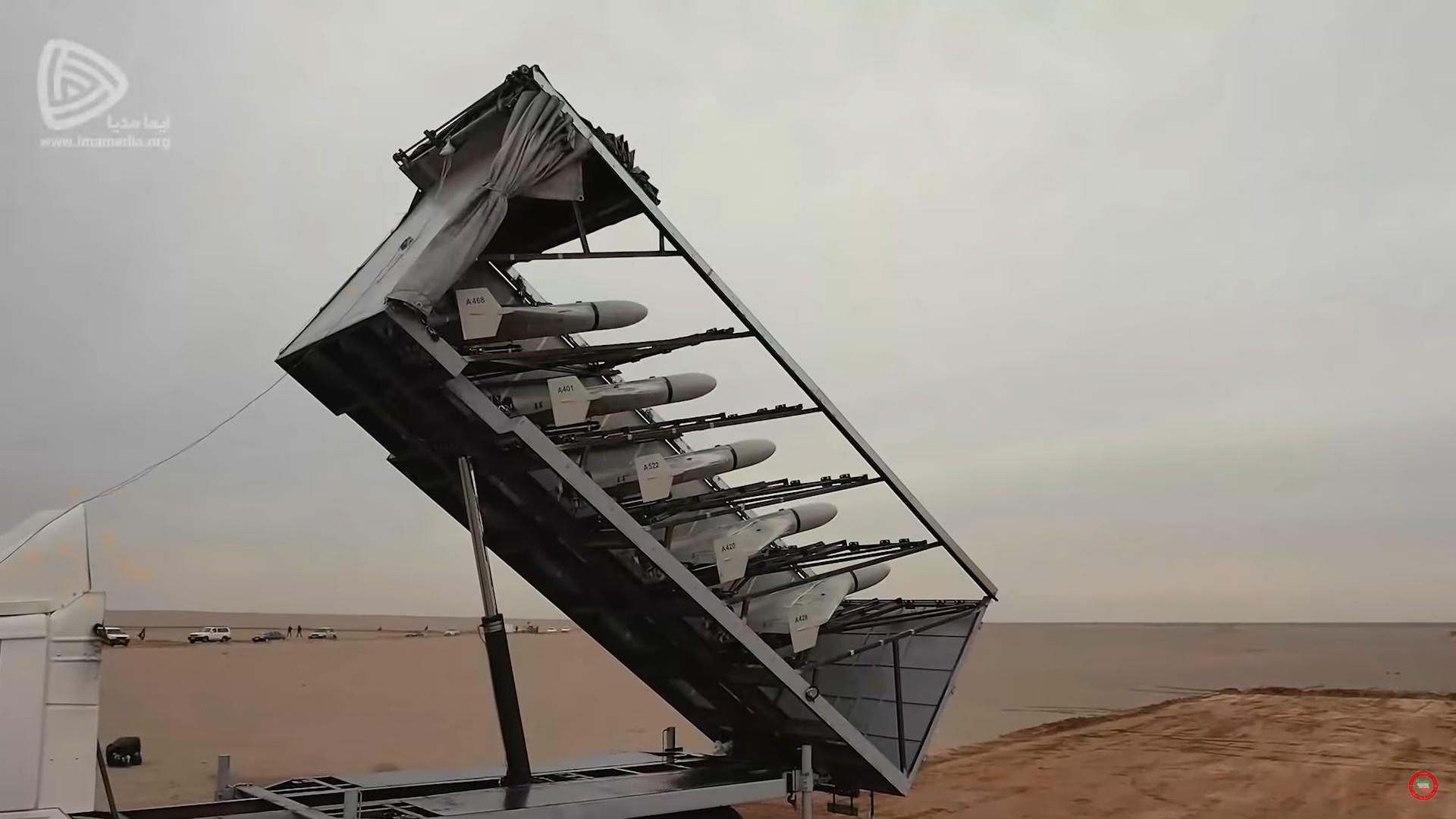
The scale is the story. One base alone has storage capacity for more than 1,000 long-range drones at a time, and construction of additional launch rails is underway at several key sites. This is not a field expedient. It is pre-positioned strike infrastructure, built to feed a sustained campaign rather than a single raid.
The Jets Change the Math
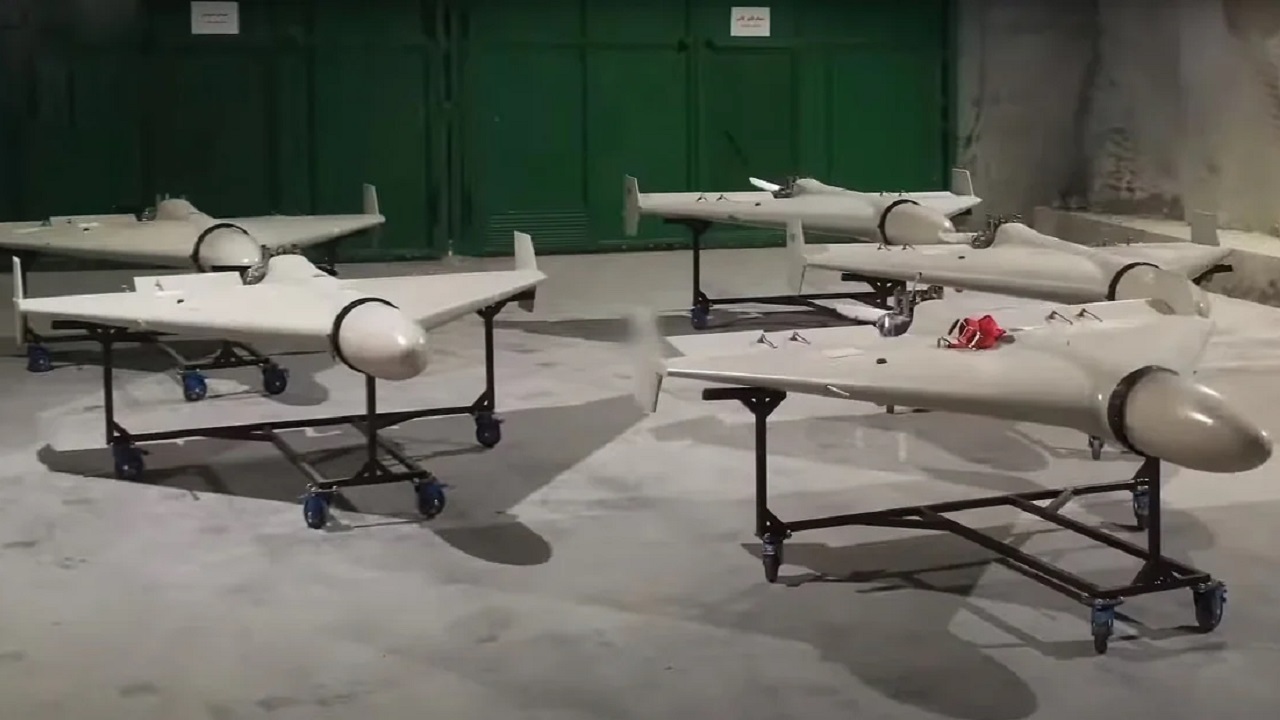
The bases are being built for Russia's next-generation strike drones — the Geran-4 and Geran-5. These aren't the propeller-driven Shaheds that have buzzed Ukrainian cities since 2022. The Geran-4 carries a 50-kilogram warhead out to roughly 850 kilometers at cruising speeds of 350-500 km/h. The Geran-5 pushes the range to around 1,000 kilometers with a 90-kilogram payload. Ukraine's Air Force told the Kyiv Independent that Russian use of jet-powered drones increased fivefold in July compared with June — because jets are harder to intercept than prop drones and reach their targets faster.
Ukraine's Defence Intelligence put Russian production at about 3,000 Geran-4/5 drones per month, built at the Alabuga special economic zone in Tatarstan, with satellite imagery showing large-scale construction there since May. Russia has even halted production of the older Geran-3 to concentrate on the new models. Seven of the ten identified bases were already used in recent attacks on Kyiv, according to open-source tracking data. The network works. It just isn't pointed at Ukraine exclusively anymore.
NATO Is Shooting Down Symptoms
On August 16, a Spanish F-18 flying NATO air policing shot down a drone that crossed from Moldova into Romanian airspace near the Ukrainian border at 5:01 a.m., debris falling in an unpopulated area of Galati region. Last month Romania shot down a drone for the first time since 2022. Days before that, Italian jets under the same mission shot down a drone entering Latvian airspace. A Russian Shahed struck a residential building in Romania in May, injuring two people. Another crossed into Moldova during July's attacks.
"(Russia) would lose a lot, much more than what they could gain just by touching Poland or the Baltic states." — Admiral Giuseppe Cavo Dragone, chair of NATO's Military Committee
That's the official line, and it may even be true. But it is also beside the point. German army chief Christian Freuding calls it "NATO-agreed intelligence" that Moscow could be ready to invade a member state as early as 2029. Fine. The launch rails are the 2026 problem, and nobody in Brussels has a doctrine for intercepting a thousand drones at once.
The Cost Asymmetry Nobody Wants to Price
Here's the uncomfortable math. Russia is manufacturing roughly 3,000 jet-powered strike drones a month at a unit cost that is a rounding error next to a Patriot interceptor — and Ukraine's Patriot shortage already let three out of four Russian ballistic missiles through in July. NATO's eastern flank faces the same economic logic: intercepting drones with multimillion-dollar missiles is a losing trade, and the alliance has yet to say what it will do when the launch rails near Belarus go active in volume. Air policing can shoot down strays all day; it is not a strategy for absorbing a production line.
The deeper problem is framing. Every incident gets reported as "spillover" — an accident of geography, a drone that wandered. What the Telegraph mapped is the opposite of spillover. It is deliberate, expandable infrastructure placed where it can reach alliance territory without triggering a single Article 5 conversation. Moscow has spent years watching NATO respond to symptoms, and it has built accordingly.
The Question Nobody Is Asking
The alliance keeps asking when Russia might attack, and Moscow keeps answering by pouring concrete and laying rails. The answer to the question isn't 2029. It's already in the satellite imagery, sitting in storage bays built for a thousand drones. The real test isn't whether NATO can shoot down one drone over Romania — it already did. The test is what happens when ten bases, fifty-nine rails and a three-thousand-a-month production line decide to stop testing the perimeter.
Russia constructed ten drone bases capable of launching attacks on NATO territory, with at least 59 launch rails identified. The bases support the deployment of next-generation drones, including the Geran-4 and Geran-5, with production rates reaching 3,000 units per month. This infrastructure poses a significant threat to countries like Poland and Romania, as it enables sustained military operations beyond Ukraine.
- Russia has built ten drone bases within striking distance of NATO territory.
- At least 59 launch rails have been identified across these bases.
- Russia is producing approximately 3,000 jet-powered strike drones per month.
- The Geran-4 and Geran-5 drones have significant ranges and payload capacities.
- Seven of the ten bases were used in recent attacks on Kyiv.