
Russia's Ukraine NATO Veto Is the Real 2026 Peace Test
 Alexandra Reeves
Russia's Ukraine NATO Veto Is the Real 2026 Peace Test
Russia has just restated the condition that makes the current Ukraine diplomacy so dangerous: Moscow does not merely want a ceasefire. It wants a veto over Ukraine's strategic future. On November 17, Russian Deputy Foreign Minister Sergei Ryabkov said Ukrainian membership in NATO was absolutely unacceptable. That was not a fresh negotiating position. It was a reminder that the Kremlin's definition of peace still includes limits on the alliance itself.
The veto is the point
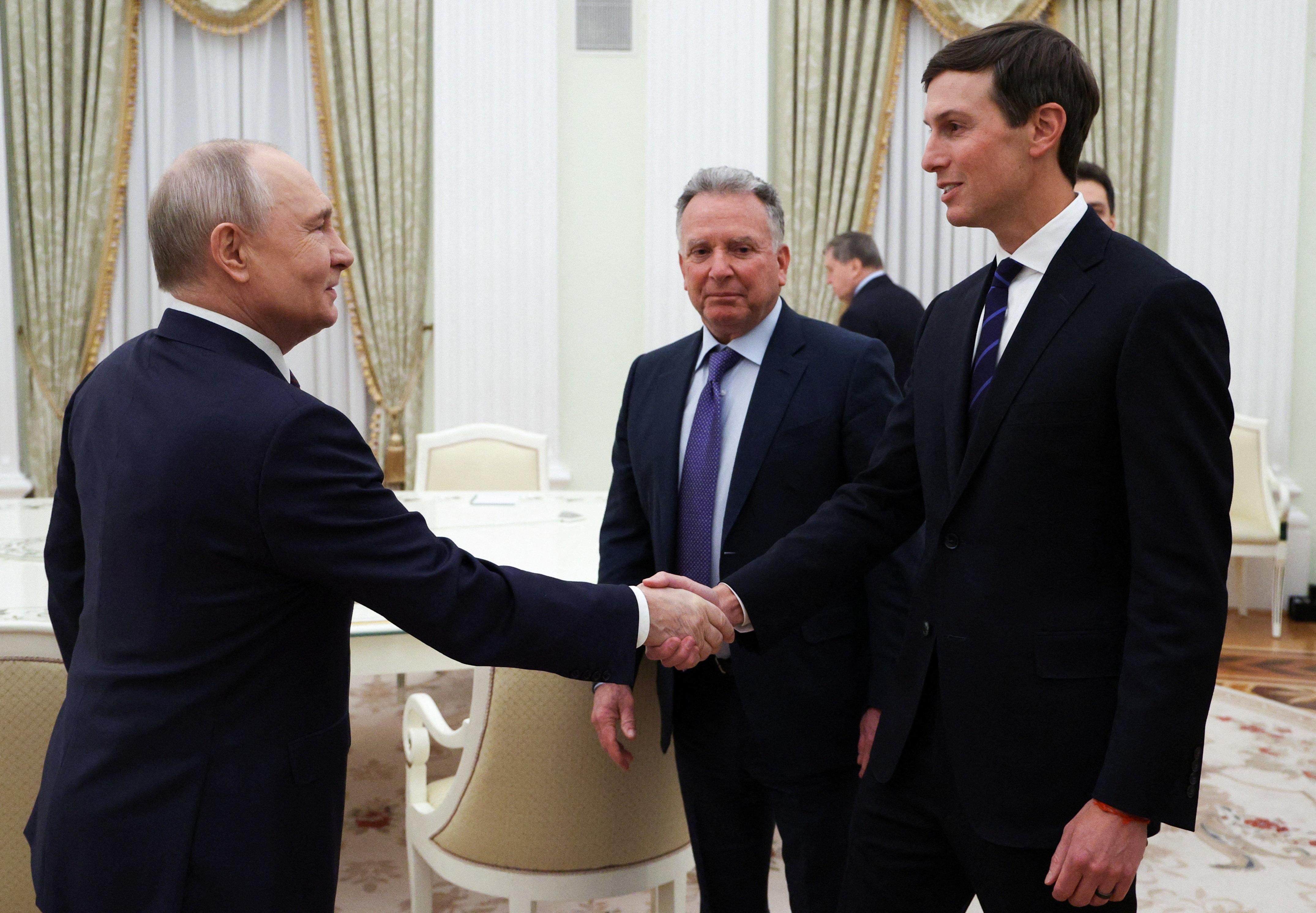
Several reports this week have placed NATO membership at the centre of a possible bargain. The Hill, CBS News and The Guardian reported that Ukrainian President Volodymyr Zelenskyy said Washington had floated an idea in which Ukraine could exchange territory for a path into NATO. Other reporting, including Scripps News, described Russia's price more broadly as a rollback of NATO's military presence toward the alliance's 1997 boundaries.
Those are not equivalent demands, and that distinction matters. Ukraine joining NATO after surrendering territory would be a decision about Ukraine's borders and future defence. Russia demanding a rollback to 1997 is a demand about the security architecture of every state that joined the alliance after the Cold War. The first is a brutal bargain for Kyiv. The second is a treaty revision imposed on Europe.
That is why Ryabkov's statement should not be treated as routine Russian messaging. It narrows the space for a settlement while telling European governments exactly what Moscow expects them to trade. The Kremlin is not simply asking whether Ukraine will be protected. It is asking whether Russia gets to decide which countries may be protected by NATO.
Why the proposed bargain is strategically unstable
The attraction of a NATO-for-territory formula is obvious from Washington's perspective. It appears to convert an open-ended war into a bounded transaction: Ukraine gives up land, NATO gives a security guarantee, and Russia is expected to accept the result. But alliances do not work like escrow accounts. A guarantee is credible only if its members are prepared to fight for it, and the territory surrendered in the bargain would become the first test of whether the guarantee means what it says.
There is a second problem. If Russia can obtain a NATO exclusion zone by invading Ukraine, every eastern member will draw the same lesson: deterrence is strongest before a crisis and negotiable after one. That is precisely the incentive structure NATO has spent two decades trying to eliminate. A settlement that rewards the demand for strategic demarcation could freeze the war while preserving the logic that caused it.
Ukraine also has a practical reason to distrust the formula. Membership would not automatically restore the military balance on the ground. NATO's collective-defence commitment would protect the territory covered by the treaty, but it would not erase mines, destroyed infrastructure or Russia's ability to threaten Ukraine from outside the border. The details of the accession line, the timing of the guarantee and the rules for responding to grey-zone attacks would matter more than the headline.
Europe is no longer a spectator
Kyiv's public insistence that France, Germany, Britain, Italy, Poland, the European Union and NATO representatives should participate in negotiations is more than a diplomatic courtesy. It is an attempt to prevent a bilateral U.S.-Russia deal from defining Europe's military risk without European signatures.
The instinct is correct. Europe will provide much of the money, ammunition, training and postwar force needed to make any settlement durable. It will also live closest to the consequences if Russia interprets a ceasefire as an operational pause. Yet European participation creates its own tension: European governments may agree that Ukraine needs security, but they are not equally willing to make an Article 5-style promise or deploy troops to enforce it.
That gap is where Moscow will work. Russia does not need to split every European capital. It only needs to persuade enough governments that the cost of defending Ukraine is higher than the cost of accepting a Russian veto. The current argument over NATO membership is therefore also an argument over whether Europe is capable of making a common decision under pressure.
The signal versus the noise
It would be a mistake to call every public statement evidence that a final peace plan exists. The reporting remains contested, and Moscow's rejection may be designed to raise the price of any future negotiation rather than close the door permanently. The Kremlin has repeatedly used maximalist demands as a starting position.
But the core signal is real. Russia is trying to move the discussion from “how can Ukraine be defended?” to “who is allowed to defend Ukraine?” That is a much larger question than the status of Donbas. It reaches into NATO force posture, the credibility of extended deterrence and the sovereignty of countries that joined the alliance after 1997.
What to watch next
- Whether Washington publicly clarifies the reported territory-for-membership idea or leaves Kyiv to carry the political cost.
- Whether European governments define a concrete security guarantee rather than repeating support for Ukraine in general terms.
- Whether Russia links its NATO demand to a formal negotiating document, military deployments or another round of pressure on the alliance's eastern flank.
- Whether Kyiv can secure a phased guarantee that protects its remaining territory without turning accession into an undefined promise.
The short answer is that Russia's veto is not a peace plan. It is a test of whether the West sees Ukraine's security as a Ukrainian issue, a European issue or a bargaining chip. If Washington and European capitals accept Moscow's right to draw NATO's map, the war may end on paper while the alliance's post-Cold War order ends in practice. The uncomfortable question for 2026 is not whether Ukraine can enter NATO. It is whether NATO can refuse to let Russia decide who else may.
Sources: Al Arabiya English, November 17, 2026; Scripps News, November 16, 2026; The Hill, CBS News and The Guardian reporting on Zelenskyy's account of a proposed territory-for-NATO discussion, November 15, 2026; Institute for the Study of War, Russian Offensive Campaign Assessment, November 14, 2026; Office of the President of Ukraine, statement on European and NATO participation in negotiations, November 16, 2026.
Russia reiterated its demand for a veto over Ukraine's NATO membership on November 17, 2026, stating that Ukrainian membership is unacceptable. Ukrainian President Zelenskyy indicated a potential deal involving territory exchange for NATO membership. The Kremlin's demands could reshape NATO's security framework and influence European negotiations regarding Ukraine's defense.
- Russia demands a veto over Ukraine's NATO membership.
- Ukrainian President Zelenskyy mentioned a potential territory-for-NATO membership deal.
- Russia's demands include a rollback of NATO's military presence to 1997 boundaries.
- European governments are urged to participate in negotiations to avoid a U.S.-Russia bilateral deal.
- Russia's stance could redefine NATO's security architecture.