
Two F-15EX Fighters Reach Japan in 2026 and Expose the U.S. Basing Problem
 Marcus Chen
Two F-15EX Fighters Reach Japan in 2026 and Expose the U.S. Basing Problem
Two F-15EX Eagle IIs landed at Kadena Air Base on November 15, becoming the first permanently assigned examples of the type at an American base outside the United States. The headline is about a fighter delivery. The operational story is about whether the United States can keep useful combat power alive inside the first island chain.
The Delivery Is Small but Not Symbolic
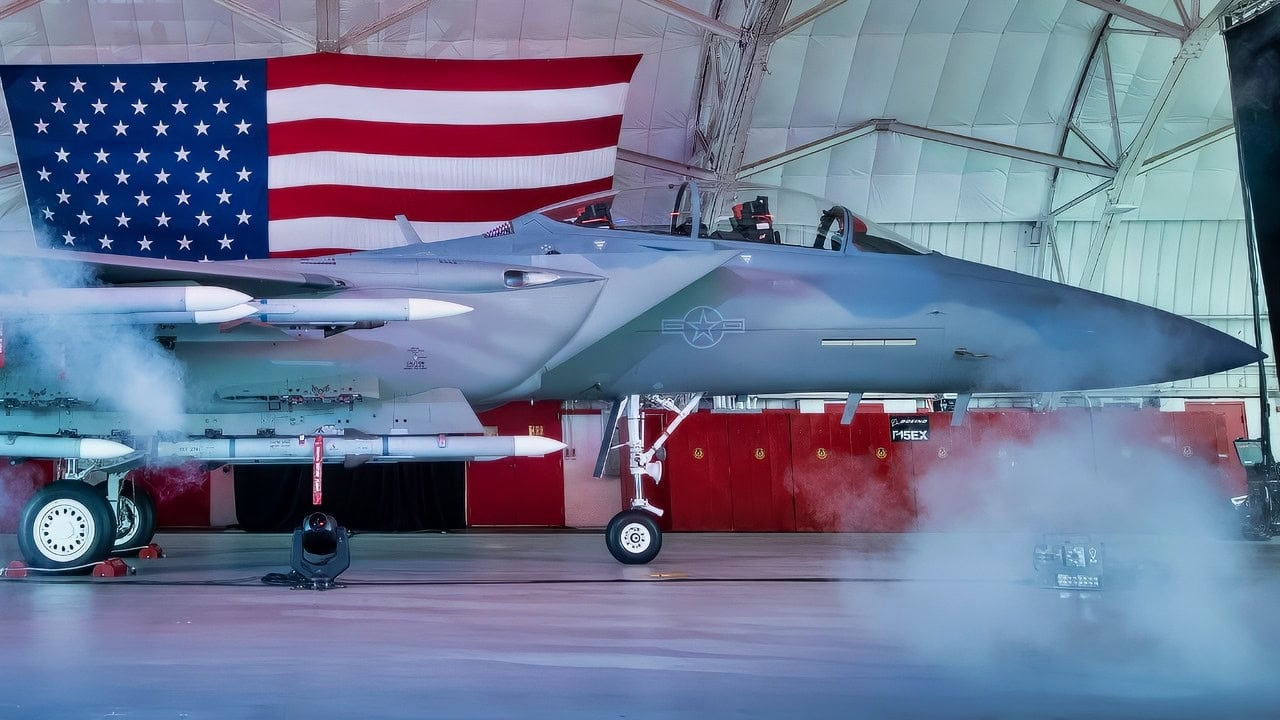
The U.S. Air Force describes Kadena as the first overseas installation to receive combat-coded F-15EXs and only the second Air Force location to field the aircraft, after the Oregon Air National Guard’s 142nd Wing. The 44th and 67th Fighter Squadrons are scheduled to operate the new jets. This is the first permanent replacement for the F-15C/D force that began leaving Okinawa in 2022 after more than four decades of service.
That distinction matters. Rotational F-15s, F-16s and F-22s kept the runway occupied during the transition, but rotations are not the same as a trained, locally sustained squadron. Permanent aircraft bring maintainers, tactics, spare parts and command relationships with them. In a crisis, those details are the difference between a sortie and a photograph.
Why the F-15EX Fits Kadena
The F-15EX is not a stealth fighter. It is a large, twin-engine, fourth-generation-plus aircraft built around radar power, electronic warfare upgrades and weapons volume. Boeing and Air Force descriptions emphasize its open mission systems architecture, modernized avionics and ability to carry a substantially heavier weapons load than the legacy Eagle. It is intended to complement, not replace, F-35s and other low-observable aircraft.
- Role: long-range counterair, air defense and missile-truck missions.
- Strength: payload and sensor capacity, especially when linked to offboard targeting.
- Limitation: its non-stealth profile makes it dependent on dispersal, fighter escorts, electronic warfare and runway resilience.
At Kadena, that combination is useful. The base sits close enough to Taiwan and the East China Sea to matter, but close enough to China’s missile forces to be threatened on the opening day of a conflict. An F-15EX can carry weapons and sensors that a smaller fighter cannot, yet it cannot assume that a hardened hangar and a long runway equal survivability.
The Math of Forward Airpower
Defense News reported that the Air Force wants to expand the planned F-15EX fleet from 129 to 267 aircraft and recently awarded Boeing a $2.38 billion contract for 22 jets. That is a serious production decision. It also exposes a timing problem: the Pacific needs combat power now, while the fleet and its sustainment system are still growing.
Two aircraft are a deployment signal, not a combat package. Even a full squadron would need tankers, munitions, maintenance equipment, runway repair teams, command-and-control nodes and alternate operating locations. The aircraft’s range and payload are valuable only if the sortie-generation chain survives Chinese ballistic and cruise-missile attacks. Every additional day of operations consumes engines, tires, weapons and trained crews that cannot be replaced from a spreadsheet.
Anyone who has served on a destroyer recognizes the pattern. The platform receives the public attention; the logistics train decides how long it remains relevant. Kadena’s F-15EX arrival starts the integration process. It does not finish it.
Japan Gains a Better Air-Defense Partner
The deployment still improves the U.S.-Japan military relationship. The F-15EX’s advanced electronic warfare systems and weapons capacity should make it a useful partner for the Japan Air Self-Defense Force, particularly when Japanese fighters provide local awareness and U.S. aircraft bring additional sensors, weapons and command links. Bilateral training can also turn a new aircraft into a shared operating concept rather than a U.S. asset sitting behind a national fence.
But Japan will judge the move by persistence, not ceremony. Tokyo has watched U.S. force posture shift between permanent basing and rotational presence for years. A credible deterrent requires aircraft on alert, crews that know the local airspace, enough munitions to sustain sorties and a plan for operating when Kadena’s main runway is damaged. The F-15EX is an answer to the first question. It is not, by itself, an answer to the other three.
China Will See the Vulnerability
Beijing is unlikely to interpret two aircraft as a sudden change in the regional balance. It will see a more useful target set. A permanent F-15EX presence creates predictable requirements for fuel, weapons storage, maintenance shelters and communications. Those fixed elements can be mapped, watched and held at risk even when the fighters are airborne.
The U.S. response should therefore be measured in sortie options, not aircraft announcements. The Air Force needs rapid runway repair, hardened and dispersed maintenance, pre-positioned munitions and an operating concept that moves F-15EXs between Okinawa, mainland Japan and other Pacific sites. The aircraft’s value rises sharply when China cannot know where the next launch will come from.
The Delivery Is a Beginning, Not Deterrence
The first two F-15EXs at Kadena are a sensible modernization step. They replace an aging fighter fleet with a platform that carries more weapons, connects better to modern networks and gives U.S. commanders another way to generate airpower near Taiwan and the East China Sea.
But the Pacific basing problem remains. Permanent aircraft are easy to count; resilient combat power is harder. Until the Air Force proves that Kadena can keep generating sorties after the first missile salvo, this deployment is an important investment in deterrence—not deterrence itself.
Sources
Two F-15EX Fighters arrived at Kadena Air Base in Japan on November 15, 2026, marking their first permanent assignment outside the United States. This deployment aims to enhance U.S. combat capabilities in the Pacific and strengthen military cooperation with Japan. The F-15EXs will be operated by the 44th and 67th Fighter Squadrons, replacing older F-15C/D models.
- Two F-15EX Fighters landed at Kadena Air Base on November 15, 2026.
- This marks the first permanent assignment of F-15EXs outside the U.S.
- The F-15EX is intended to enhance U.S. combat power in the Pacific region.
- The U.S. Air Force plans to expand the F-15EX fleet significantly.
- The deployment improves U.S.-Japan military relations.