
Saudi-American Civil Nuclear Agreement Reaches Congress in 2026, Tying It to Israel Reveals the Cost of New Deterrence in the Gulf
 Ahmed Al-Rashid
A Saudi-American Civil Nuclear Agreement Reaches Congress in 2026, Linking It to Israel Reveals the Cost of New Deterrence in the Gulf
On August 26, 2026, the White House sent the civil nuclear agreement with Saudi Arabia to Congress, but the political message that accompanied the step was clearer than the legal text itself: Washington says that the path to the reactor also passes through the gate of recognizing Israel. From a military perspective, this is not just an energy deal, but a complete repricing of the protective relationship between the United States and Riyadh after a year marked by the Iran War, a strategic defense agreement, and the accelerated Saudi pursuit of a broader deterrent umbrella beyond just batteries and missiles.
The news appears technical on the surface: civil nuclear cooperation, a review in Congress, and non-proliferation guarantees. But any military personnel who have served in the region know that the nuclear file in the Middle East does not remain purely civil for long in political calculations. Saudi Arabia is not just asking for electricity or water desalination or economic diversification; it is asking for status, a margin of decision, and a message to Iran that the Kingdom wants to be seen as a power with long-term strategic infrastructure, not as a customer that buys weapons and then waits for the American umbrella in every crisis.
What Has Actually Changed
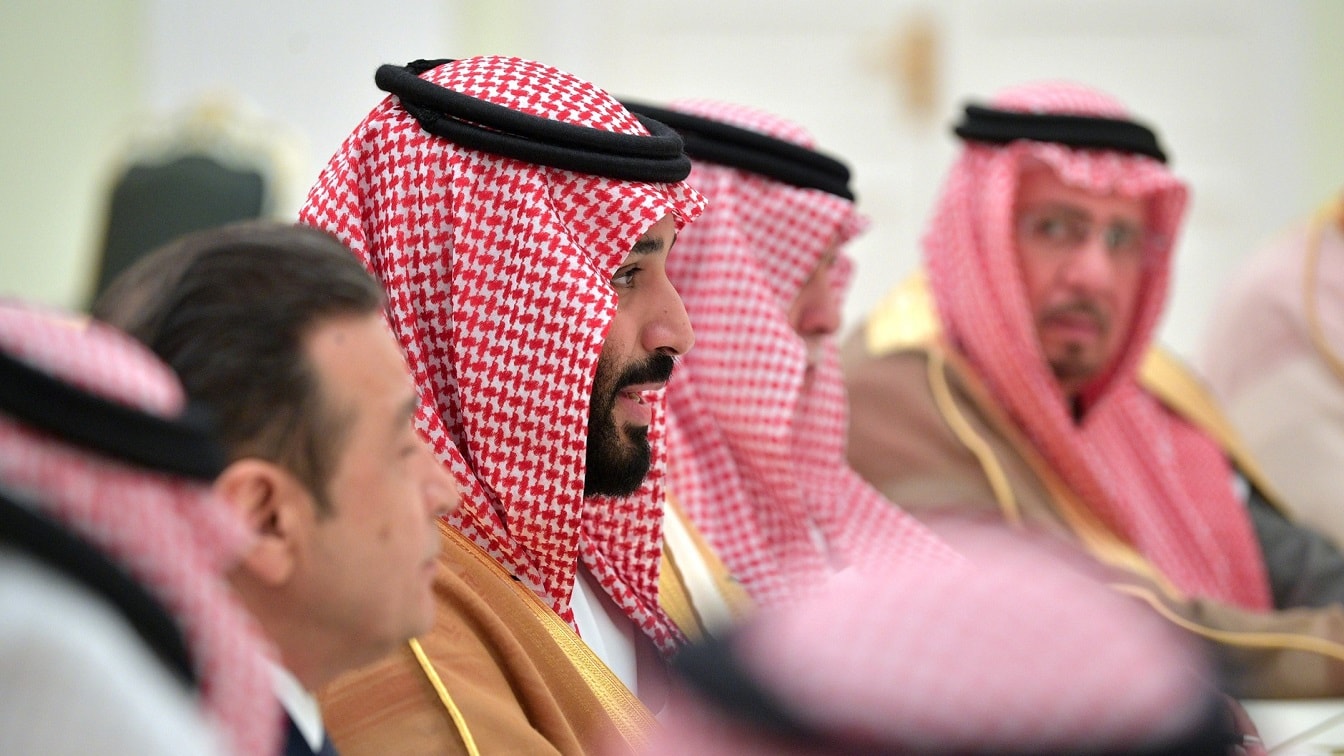
The actual significance of this step is that it moves the file from the stage of political understandings to the stage of American institutional testing. The White House had announced in November 2025 the completion of negotiations on a framework for civil nuclear cooperation with Saudi Arabia as part of a broader partnership that included defense, critical minerals, and artificial intelligence, confirming that cooperation would be conducted according to strong non-proliferation standards. What is new now is that the administration has decided to push the file to Congress at a moment of extreme regional sensitivity, then added the condition of normalization with Israel as part of the political price of the deal.
This linkage is not a side detail. Washington wants to turn the reactor into a tool of regional engineering, not just a commercial contract. In other words, the American administration is trying to combine three tracks into one deal: solidifying Saudi Arabia within the American strategic system, expanding the network of regional recognition of Israel, and preventing China or others from entering the Saudi nuclear file through the door that Washington had previously left half-open.
Why It Matters to Riyadh More Than Electricity
For years, Saudi Arabia has been acting on the logic that its security can no longer be measured by the number of aircraft alone. After the Aramco attacks, then years of war in Yemen, and the turmoil accompanying the Iran War, a harsh lesson has been ingrained in Riyadh: owning platforms does not always mean having the independence to use them, nor does it guarantee sufficient protection in times of testing. Here, what I always refer to as the triangle of capability emerges: equipment, training, and institution. The Gulf excels in purchasing the first element, is slowly improving in the second, but still faces obstacles in the third.
The civil nuclear program enters this triangle from a different angle. It is not an F-35 fighter or a THAAD system, but it builds a layer of knowledge, infrastructure, personnel, and regulatory approvals that give the state long-term strategic weight. Saudi Arabia wants to say that it is not just buying deterrence, but building pillars of sovereign power that can last for decades. In my estimation, this is the real reason behind its insistence on the file, even when it becomes politically costly.
The Israeli Condition Reveals the Limits of the Deal
Here the dilemma begins. Washington presents the agreement as a strategic prize, but at the same time ties it to a condition that everyone knows is highly sensitive within Saudi Arabia and in the broader Arab environment. The American administration is treating normalization as part of the post-war engineering with Iran, while Riyadh views the nuclear file as a right due to its security importance and the ceiling of its commitments to Washington, not as a gift fully conditioned on another path.
If Saudi Arabia accepts the full linkage, it gains a heavy advantage in technology and American guarantees, but pays a high political and regional price. If it rejects the linkage, it risks delaying the program or exposing it to repeated American bargaining, and may reopen the door to international alternatives that Washington is trying to close. This is the essence of the crisis: the United States wants clear strategic loyalty, while Saudi Arabia wants a partnership that recognizes its ambitions without swallowing all its political margins.
The Impact on the Balance of Power with Iran
Iran will immediately read the step as more than an energy project. Even if the agreement remains entirely civil, the mere establishment of a Saudi nuclear structure under American auspices will be understood in Tehran as part of a new deterrent balance in the Gulf. The difference here is that Saudi Arabia is not seeking to match Iran through missiles and proxies alone, but through a deeper strategic institution, linked to America, and legally and technically fortified.
However, in practical terms, the direct impact should not be exaggerated. The reactor does not intercept a missile, does not secure a maritime passage, and does not prevent an attack from the Houthis or militias. What it does is change the layer of time in the regional balance. It is an investment in influence, status, and future options, not a quick solution to today's threats. This is a point that many politicians miss when they confuse symbolism with operational capability.
What the Deal Means for the American Umbrella
The White House is also selling the agreement as a means to prevent adversaries from filling the vacuum. This is partially true. When Washington links nuclear energy to defense, critical minerals, and artificial intelligence, it is building a package of mutual dependency that makes decoupling more costly for both sides. But the irony is that this very package reinforces Saudi Arabia's continued reliance on the United States, even at the moment when Riyadh is trying to expand its strategic independence.
Here the irony known to anyone who has long observed the Gulf emerges: the closer Saudi Arabia gets to advanced power tools, the more it needs the partner that sets the conditions on their use or on its political path. Owning technology does not equal liberation from politics. In fact, it sometimes complicates it further.
Conclusion
Sending the civil nuclear agreement to Congress is not the end of the road but the beginning of a more difficult phase. The deal seems to be a significant gain for Riyadh as it elevates it to a new level of partnership with Washington, but it also reveals that the door to advanced technology does not open freely in the Middle East. From both military and political perspectives, Saudi Arabia is trying to buy space for independence within the American umbrella itself. And this is the paradox that will continue to pursue it: the closer it gets to heavy sovereign tools, the more it finds that the path to them passes through more conditions, not through fewer.
The U.S. sent a civil nuclear agreement with Saudi Arabia to Congress on August 26, 2026, linking it to the recognition of Israel. This agreement aims to enhance Saudi Arabia's strategic capabilities and prevent other powers from entering the Saudi nuclear sector. It reflects a significant shift in U.S.-Saudi relations following regional conflicts, particularly with Iran.
- The U.S. sent a civil nuclear agreement with Saudi Arabia to Congress on August 26, 2026.
- The agreement is linked to the recognition of Israel as a political condition.
- Saudi Arabia seeks to enhance its strategic capabilities beyond just energy needs.
- The U.S. aims to prevent other powers, like China, from entering the Saudi nuclear sector.
- The agreement reflects a shift in U.S.-Saudi relations post-Iran conflict.