
Saudi Arabia and Egypt in 2026: Transforming Defense Support into a Real Test for Red Sea Security
 Ahmed Al-Rashid
Saudi Arabia and Egypt in 2026: Transforming Defense Support into a Real Test for Red Sea Security
On October 18, 2026, Egyptian President Abdel Fattah el-Sisi announced that Cairo is prepared to provide military defense support to Saudi Arabia if Riyadh requests it, while the Egyptian parliament was preparing to discuss authorizing the armed forces to assist in protecting the kingdom from Houthi attacks. Just two days later, reports emerged of continued missile and drone launches, damaging Saudi facilities and airports, with casualties and injuries to over two hundred people in the recent waves of attacks. This is not a fleeting diplomatic maneuver; it is a sign that the war that began on the outskirts of Yemen has transformed into an air defense and maritime security crisis that concerns both Egypt and Saudi Arabia.
From Political Statement to Military Commitment
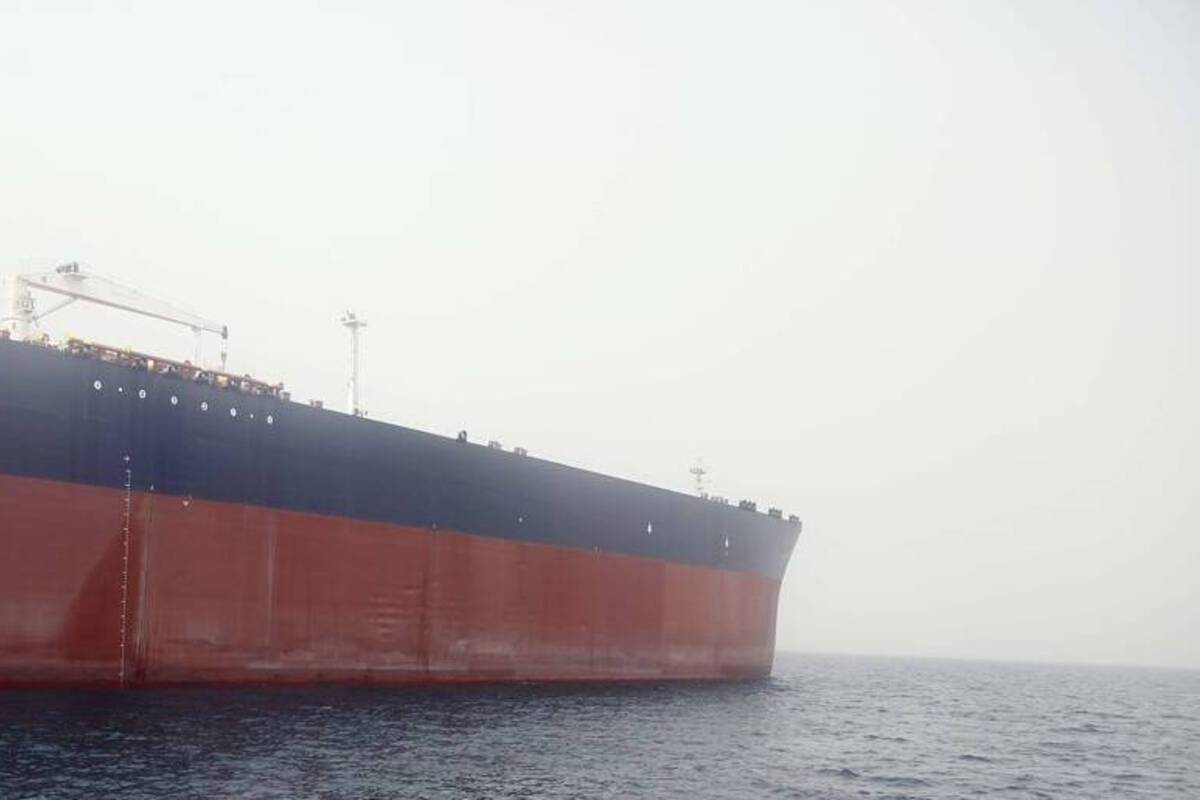
The key phrase in the Egyptian position is the word "defensive." Cairo is not declaring an entry into an open war in Yemen, nor is it offering to send an occupying force to the western coast, but it is considering the possibility of securing Saudi airspace and vital facilities if the attacks exceed Riyadh's capacity to contain them. This distinction is important both militarily and politically. Defending a base, airport, or maritime corridor can be presented as protection for shared Arab security, while ground operations against the Houthis would remind Egyptians of the costs of previous intervention in Yemen.
However, defense is not a neutral act. Deploying early warning aircraft, air defense batteries, or port protection units means participation in the Saudi targeting network, making any Egyptian base in the Red Sea a potential target. Practically, the Egyptian commitment may start with a limited request and then expand with each new missile. Here lies the problem known to any military personnel who have served in the region: the mission is not defined by the wording of the statement, but by the adversary when they choose the location of the next strike.
Why Riyadh Needs Cairo Now
Saudi Arabia has spent billions of dollars on Patriot and THAAD systems, fighter jets, and radars, but possessing the systems does not equate to having a comprehensive defensive capability. True capability relies on three pillars: equipment, training, and institutions. Radars can detect a target, and missiles can intercept it, but the outcome depends on the quality of integration between sensors and command centers, the number of ready crews, and the ability to protect airports and facilities simultaneously.
The Houthi attacks are pressing on this triangle from its weakest point. Cheap drones and mobile missiles do not only impose a technical battle on Saudi Arabia, but also require monitoring a wide area of borders, cities, oil facilities, and ports. Shooting down a single target does not prevent the next wave, and air defense does not address launch platforms nor guarantee the continuity of trade movement. Recent weeks have proven that Riyadh possesses an expensive shield, but it does not yet have complete immunity.
Egypt cannot fill this gap alone, but it provides Saudi Arabia with geographical and political depth. Cairo controls the northern entrance to the Red Sea, possesses significant naval expertise and military institutions, and its presence sends a message that the threat to navigation is not limited to the Gulf alone. However, the Egyptian value will be greater in leadership, monitoring, and port protection than in launching a wide ground attack.
The Red Sea is the Center of Gravity
The Houthis are trying to turn geography into a pressure tool. A strike on a Saudi airport or port does not only measure the number of missiles intercepted; it measures the state's ability to keep airports, ports, and supply chains open. If shipping companies are forced to change their routes, the cost of war shifts from the Yemeni front to the global economy, and every country bordering the Red Sea becomes concerned with preventing collapse.
This explains Cairo's interest. The security of the Suez Canal does not begin at its northern entrance, but starts from the ability of the countries bordering the Red Sea to prevent it from becoming a zone of permanent threat. It also explains Riyadh's concern that the attacks could turn into a slow economic siege. Missiles do not need to destroy a facility to succeed; sometimes it is enough to make insurance, transport, and operations more costly than usual.
The Political Limits of Egyptian Intervention
It would be a mistake to read the Egyptian position as an open-ended combat alliance. Egypt faces economic constraints, popular pressure, and complex calculations with Iran, the United States, and Gulf states. Sending limited defensive units is fundamentally different from opening a Yemeni front. Moreover, Cairo would not want to bear sole responsibility for a Saudi decision to shift from defense to offense.
Therefore, the Egyptian military will likely demand a clear mandate, a specific mission, and narrow rules of engagement. Support may focus on training, information sharing, maritime domain protection, and securing facilities, rather than accompanying Saudi forces deep into Yemen. This type of cooperation is less sensational in headlines, but more sustainable. Sending ground troops into a mountainous environment controlled by an experienced armed group would be a completely different decision.
The Message to Washington and Tehran
For the United States, the Egyptian move proves that Arab allies are no longer willing to rely solely on the American umbrella, but they do not yet have an independent alternative. Washington is required to provide information, munitions, and spare parts, while Riyadh and Cairo are trying to demonstrate Arab capability to shoulder part of the burden. This is not military independence, but diversification of reliance.
Iran and the Houthis will see Egypt's potential entry as an expansion of the front, and they may respond by intensifying pressure on Egyptian ships or interests. This complicates deterrence: if Cairo does not respond, the threat may seem empty; if it responds forcefully, the mission of protecting Saudi Arabia could turn into a new regional war.
Conclusion
The problem is not the absence of Saudi weapons, but the gap between purchasing weapons and building a system capable of operating under pressure. Egyptian support may give Riyadh time and space, but it will not solve the dilemma of reliance on external support nor the problem of Houthi launch platforms. Practically, the Red Sea places Cairo in front of a difficult choice: to protect shared Arab security without sinking into the war in Yemen. This paradox will remain as long as Saudi Arabia seeks military independence while needing, with every escalation, a new partner to utilize what it has purchased.
Sources
- Reuters, October 18, 2026, Egypt's statement of readiness to support Saudi Arabia against Houthi attacks.
- Reuters, October 19, 2026, Background on the Egyptian move and the possibility of parliamentary authorization for the armed forces.
- Reuters, October 21, 2026, Analysis of the escalation of attacks on Saudi Arabia and air defense challenges.
- Institute for the Study of War and Critical Threats Project, Iran Update on October 18, 2026.
Egypt announced its readiness to provide military defensive support to Saudi Arabia in October 2026 amid ongoing Houthi attacks causing casualties and damage to Saudi facilities. The Egyptian parliament is discussing military authorization for potential operations, emphasizing a defensive posture rather than offensive engagement. This development highlights the regional security dynamics in the Red Sea area.
- Egypt is ready to provide military support to Saudi Arabia if requested.
- Houthi attacks have resulted in casualties and damage to Saudi facilities.
- The Egyptian parliament is discussing military authorization for operations in Saudi Arabia.
- Egypt's involvement is framed as defensive, not offensive, in nature.
- The situation reflects a broader regional security concern involving the Red Sea.