
Saudi Arabia Begins Implementing the Mecca Defense Agreement After Houthi Attacks and Air Independence Test
 Ahmed Al-Rashid
Saudi Arabia Begins Activating the Defensive Mecca Agreement After Houthi Attacks and Air Independence Test
【Riyadh】On September 19, 2026, sirens sounded in Riyadh for the first time since the escalation of Houthi attacks, while Saudi authorities announced the interception of a ballistic missile targeting the capital. Reports indicated smoke and flames rising near fuel tanks next to King Khalid Airport. Days later, Britain revealed it would send a RAF Voyager air refueling aircraft from Akrotiri base in Cyprus to help Saudi fighters stay airborne longer. This is not just symbolic assistance; it is the first practical indication that the Mecca Agreement for mutual defense between Saudi Arabia, Turkey, and Pakistan is facing its real test, and that Riyadh still needs an external support network to translate platform superiority into sustainable combat capability.
From the Attack on Riyadh to Activating the Agreement
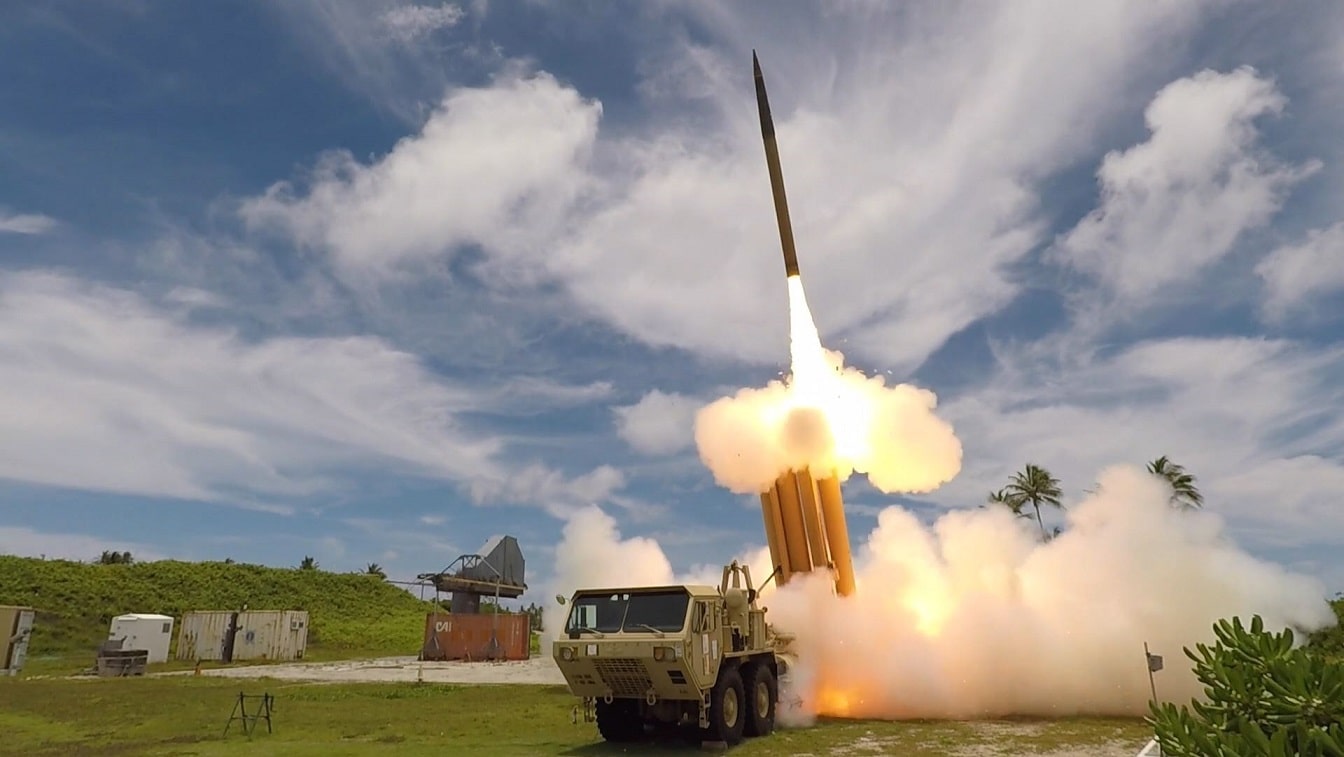
Reports from September 26 discuss the commencement of the Mecca Agreement, which brought together Saudi Arabia, Turkey, and Pakistan within a new defensive framework. This coincided with urgent military communications and Turkish statements confirming that the agreement does not target Iran or Israel and is expandable within the Islamic world. However, the test did not begin in the conference hall. The Houthis, who recently took control of coastal sites near Bab al-Mandab, announced the launch of ballistic and cruise missiles and drones at Riyadh and Aramco facilities in Yanbu. Riyadh claims it intercepted the missile, while damage to fuel tanks and reports of flight disruptions remain under observation.
The confirmed facts here must be separated from propaganda. The Houthis' claim of hitting sensitive targets does not equate to independent evidence, and the Saudi interception announcement does not prove that the air defense network has closed off all threats. However, the convergence of alerts, the disruption at the airport, and the continued attacks on the cities of Jizan, Taif, Farasan, and Yanbu demonstrate that the adversary can impose operational and political costs even when it fails to achieve a significant hit.
One Aircraft Reveals a Complete Gap
London announced that a single Voyager aircraft will carry out air refueling missions for weeks, with a specific defensive mission that includes keeping Saudi fighters in the air and intercepting drones and missiles. From a military perspective, the value of refueling lies not in the aircraft itself but in the distance and time it adds to the mission. A fighter jet taking off from a distant base, conducting a patrol, and returning to base cannot efficiently cover a vast area of western Saudi Arabia without air tankers, battle management, and a sufficient stock of intercept missiles.
However, sending a single British tanker also illustrates the limits of support. This is not a British air umbrella, nor the establishment of a joint command, nor a guarantee that Europe will enter the war if it expands. It is limited assistance to reduce pressure on the Saudi Air Force. Some coverage has described it as more of a political signal than an operational solution. This assessment is harsh but partially correct. In modern warfare, an advanced fighter is not enough if the pilot needs fuel, if the air situation picture is incomplete, and if an interception consumes an expensive missile against a cheap drone.
The Houthis Attack the Supply Chain, Not a Single Point
The most significant danger is that the battle is not just about intercepting a missile over Riyadh. Houthi control of sites near Bab al-Mandab and pressure on the port of Mocha and the island of Perim place Saudi exports through the Red Sea under continuous threat. The International Organization for Migration has reported the displacement of more than 104,000 people due to the recent wave of fighting, while other estimates have indicated larger numbers as displacement continues. The BBC reported that the G7 has called on Iran to stop arming the Houthis and warned that the attacks threaten global energy and trade security.
This is where the Houthi threat differs from a conventional air attack. A missile intercepted by a Patriot or another system solves an immediate problem, but it does not reopen the shipping route, protect oil tankers, or prevent new drones from being launched from mobile sites. Practically, the Saudi response needs continuous reconnaissance, precise strike capabilities, protection for ports and facilities, and maritime and aerial coordination extending from the Yemeni border to the Red Sea. Purchasing more platforms alone does not address this chain.
Testing Triad Capability
In my view, the Mecca Agreement will be measured by three elements, not by the number of signing countries: equipment, training, and institutions. Saudi Arabia has modern fighters, air defenses, and extensive sensor networks. Turkey has practical experience in operating drones, electronic warfare, and building local production chains, while Pakistan provides human expertise in aviation and air defense, as well as political weight that no single Gulf state possesses. However, bringing these elements together on paper does not automatically produce unified command, common rules of engagement, or a unified stockpile of munitions.
The political dilemma is more challenging. Riyadh wants to demonstrate that it is building defensive independence, yet at a critical moment, it requested a British fuel tanker, awaits a clearer American stance, and needs intelligence and warning networks that cannot be produced quickly. This is not a specific Saudi flaw; all armies need partners. The problem begins when external reliance is presented as complete independence. Any military officer who has served in the region knows that owning the aircraft is much easier than having the system that enables it to fight for days and weeks.
Regional Implications
If the Mecca Agreement evolves into an operational mechanism, it could expand Saudi options and grant Ankara and Islamabad a greater presence in Gulf and Red Sea security. However, it may also raise Iran's suspicions, make Yemen a theater for broader competition, and pose a clear question to Turkey and Pakistan: Will they provide only political support, or will they participate in protecting airspace, facilities, and energy when faced with repeated attacks? Assurances that the agreement does not target anyone do not change adversaries' calculations if aircraft, officers, and communication networks begin to work together.
The problem revealed by the September attacks is not that Saudi Arabia lacks weaponry, but that regional defense remains distributed between national purchases, external guarantees, and agreements that have not been tested by war. The Voyager may give fighters extra time, and the Mecca Agreement may add political depth, but the conflict will be decided by who can maintain the cycle of reconnaissance, interception, strike, and supply under pressure. Riyadh will remain caught between a declared desire for independence and an operational reality that relies on allies; this is the gap that another signature cannot close.
Sources
Saudi Arabia activated the Mecca defense agreement on September 19, 2026, in response to Houthi missile attacks targeting Riyadh. A British Voyager tanker was deployed to assist Saudi fighter jets in maintaining air operations. Houthi forces launched multiple attacks on Saudi cities and oil facilities, prompting concerns over regional security and the impact on global energy supplies.
- Saudi Arabia activated the Mecca defense agreement after Houthi attacks.
- A British Voyager tanker was sent to support Saudi fighter jets.
- Houthi forces launched ballistic missiles and drones targeting Riyadh and Aramco facilities.
- Over 104,000 people have been displaced due to recent fighting in Yemen.
- The G7 called on Iran to stop arming the Houthis, warning of threats to global energy security.