
Saudi Arabia Faces Houthi Missiles in 2026 and the Air Defense Gap is Bigger than the THAAD Deal
 Ahmed Al-Rashid
Saudi Arabia Faces Houthi Missiles in 2026 and the Air Defense Gap is Greater than the THAAD Deal
【Riyadh, October 15, 2026】 Houthi attacks on King Khalid International Airport in Riyadh on October 8, 10, and 11 killed at least 16 people, including 12 in the most severe strike, and injured 309 others. On October 13, another attack hit an administrative building at Aramco's headquarters in Dhahran. These numbers do not mean that Saudi air defense has collapsed, but they prove that possessing Patriot and THAAD does not equate to having a network capable of protecting a kingdom that spans approximately 2.15 million square kilometers.
The Problem is Not Just the Missile
According to a report by The Media Line, Saudi forces intercepted a large number of weapons, but some reached their targets. It is believed that the recent attack combined drones launched before cruise missiles and ballistic missiles. This method does not require a magical system; it is enough to force the operations room to deal with different targets in a short time, at varying speeds, altitudes, and trajectories.
The ballistic missile descends rapidly from a high altitude, while a cruise missile flies close to the ground and may not appear on radar until late. Drones, on the other hand, are slow, cheap, and small, and can be used to saturate sensors or force interceptors to fire expensive missiles. Here, the defender faces a harsh economic equation: a low-cost weapon imposes the consumption of ammunition that may cost hundreds of thousands of dollars or more.
THAAD and Patriot Do Not Cover the Entire Desert
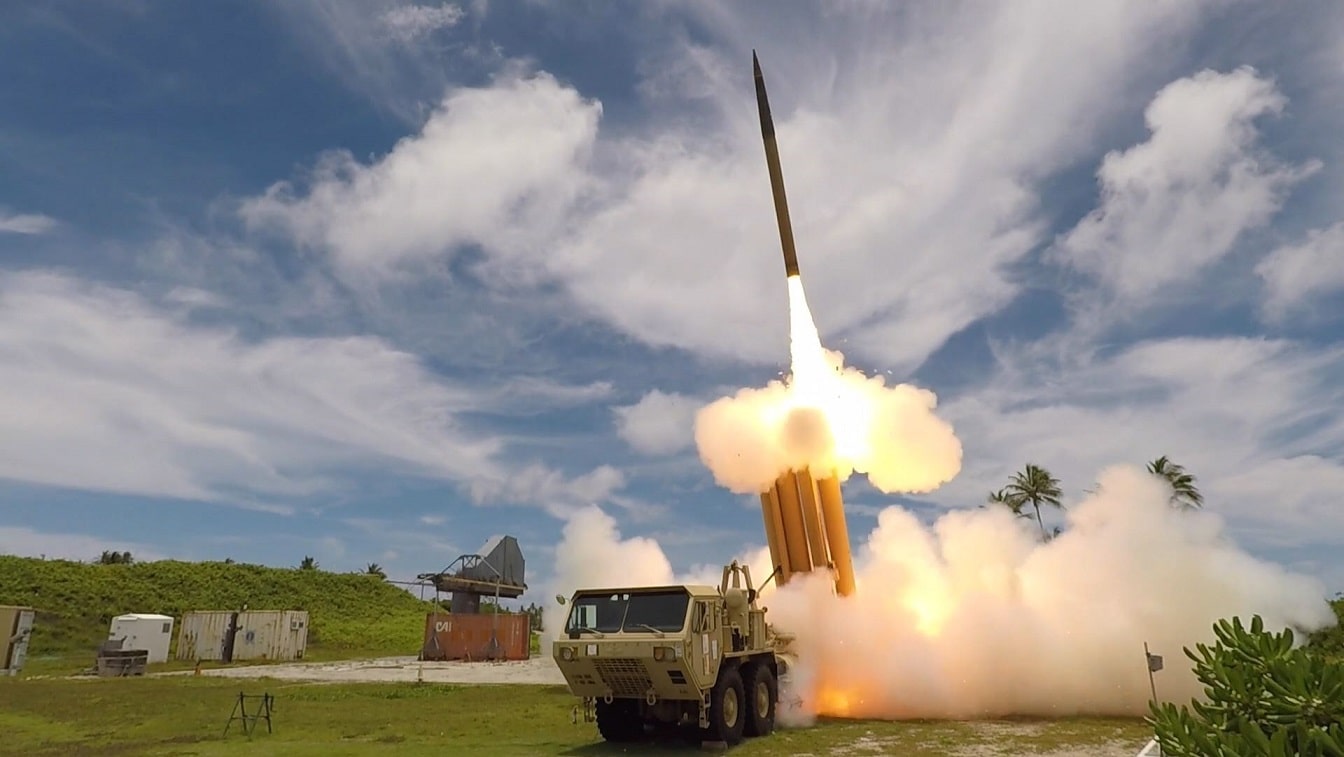
The first Saudi THAAD battery entered service in July 2025, marking an important addition for intercepting ballistic missiles at high altitudes. The Patriot remains a central element in defending critical points. However, the two systems do not address all threats in the same way, nor can they alone create a continuous umbrella over airports, oil facilities, bases, cities, and ports.
The geographical problem is critical. Saudi Arabia's area is about 78 times larger than the combined area of Israel and the West Bank. Israel can concentrate its sensors and batteries around a relatively small area, while Riyadh needs to distribute resources over vast distances, protecting dispersed targets that do not all carry the same military value. Practically, it is not possible to purchase enough batteries to guard every facility, and the radar that protects a city does not necessarily cover a distant oil station or airport.
The attacks on the Abqaiq and Khurais facilities in September 2019 demonstrated that the direction of the threat and radar coordination represent a problem independent of the number of missiles in storage. Approaching from the north, the terrain, the curvature of the earth, and low altitude are all factors that create gaps. Researchers at the Center for Strategic and International Studies have recommended improving the linkage between radars, command centers, and missiles before merely purchasing new batteries.
Can Israel Fill the Gap?
Israel has accumulated operational experience in integrating different defensive layers. The Iron Dome can protect a specific site from short-range missiles and some drones, but its range does not make it a solution for defending the entire kingdom. David's Sling is suitable for cruise missiles and some ballistic missiles and drones, while Arrow 2 and Arrow 3 are primarily designed to deal with higher-range ballistic threats. The SPYDER and Barak MX systems offer mobile options for protecting airports and oil facilities, while Iron Beam may reduce the cost of engaging some short-range targets, with dust, fog, and distance remaining real constraints in the Saudi environment.
However, purchasing an Israeli system does not automatically buy the Israeli way of working. Radar, communications, rules of engagement, training, and maintenance must be integrated into a single Saudi network. If each battery continues to operate as a separate island, the state will add new equipment to the same problem. Therefore, sharing early warning data through the U.S. Central Command may be more realistic than deploying Israeli personnel or openly selling batteries, especially since Riyadh has not normalized its relations with Israel.
Politics Precedes Contracts
Emirati cooperation provides an important precedent. Abu Dhabi acquired Israeli systems after the Abraham Accords, and the U.S. ambassador to Israel confirmed in May that Iron Dome batteries and Israeli personnel helped defend the Emirates during the 2026 war, with some details of the equipment remaining publicly unconfirmed. As for Saudi Arabia, it will calculate the cost of any cooperation with Israel based on its relationship with the Arab street, the Palestinians, and its regional partners. Therefore, sharing data through an American channel will be less sensitive than the image of an Israeli battery at Riyadh Airport.
The paradox is that the kingdom has the money to purchase additional defensive layers, but it cannot buy geography or time. Successful defense requires early detection, unified command, available munitions, trained crews, and the ability to use guns or energy weapons against cheap drones. These are the sides of the capability triangle that go beyond equipment alone.
Military Judgment
In my opinion, the recent attacks do not prove that THAAD or Patriot are useless, but rather that missile defense is not a single wall. If radar gaps are not closed, sensors are not linked, and protection priorities are not defined, the kingdom will continue to intercept part of the threat while paying a human and economic price for the part that slips through. Israel can provide technology, expertise, and intelligence, and the United States can provide the command and warning network, but the political decision in Riyadh will remain between its need for cooperation and its desire to prove independence. As any military officer who has served in the region knows, possessing the weapon is the easiest part of war; the hardest part is for the entire institution to function before the missile arrives.
Sources
- The Media Line, Houthi Attacks on Riyadh and the Possibility of Israeli Assistance, October 14, 2026
- Center for Strategic and International Studies, The Missile War in Yemen
- Royal United Services Institute, Air Defense Analyses and the Depletion of Interception Missiles
- Saudi Press Agency, Announcement of the Operation of the First THAAD Battery
Houthi forces launched missile attacks on Saudi Arabia, killing at least 16 and injuring 309 between October 8 and 11, 2026. The attacks targeted King Khalid International Airport and an Aramco facility in Dhahran. Despite the presence of Patriot and THAAD systems, the vast geography of Saudi Arabia poses significant challenges for effective air defense.
- Houthi attacks killed at least 16 people and injured 309 others in Saudi Arabia.
- The attacks targeted King Khalid International Airport and an Aramco facility in Dhahran.
- Saudi air defense systems like Patriot and THAAD are not sufficient to cover the vast area of Saudi Arabia.
- The report highlights the challenges of defending against diverse missile threats and the need for improved radar and command integration.
- Israel's defense systems are mentioned as potential models for Saudi Arabia, but political considerations complicate cooperation.