
Saudi Arabia set to buy over 10,000 guided bomb kits
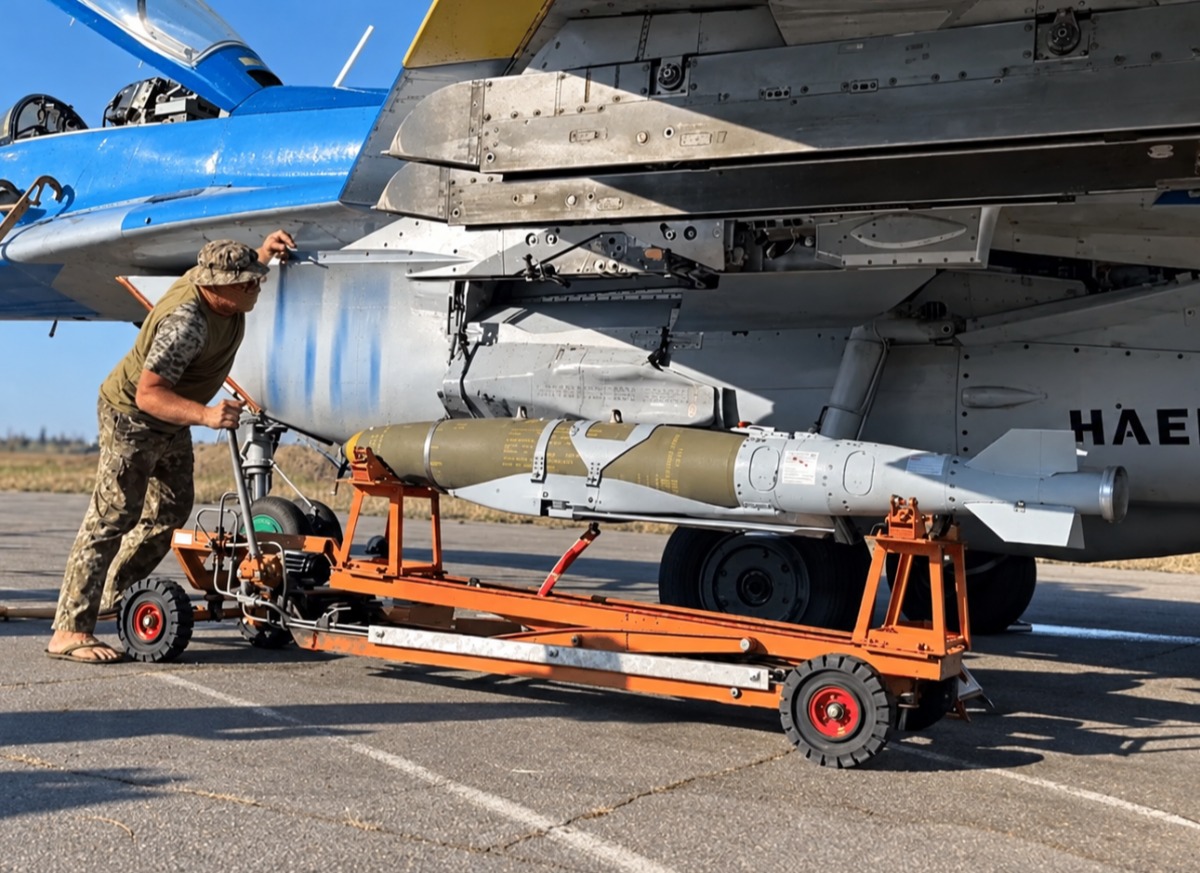
The U.S. State Department has approved a possible $5 billion sale of Joint Direct Attack Munition kits to Saudi Arabia, notifying Congress on September 4 of a deal covering more than 10,000 guidance kits and bombs.
It is one of the largest single munitions packages Washington has cleared for a foreign buyer in years, and it centers on a weapon whose sales to Saudi Arabia have drawn political controversy in the past.
The request covers 5,004 KMU-572 and 5,000 KMU-556 guidance kits, the hardware that turns an ordinary “dumb” bomb into a GPS-guided precision weapon, along with 5,004 BLU-111 500-pound bombs and 5,000 BLU-117 2,000-pound bombs to attach them to. The package also includes fuzes, target detectors, spare parts and years of contractor support. Boeing, based in Arlington, Virginia, would be the sole contractor.
What Saudi Arabia is actually buying is the extended-range version of JDAM, known as JDAM-ER. The standard JDAM kit, in service since the late 1990s, straps a GPS-guided tail fin and steering system onto an unguided bomb, letting it hit within about 40 feet of a target instead of missing by hundreds. The ER variant adds a pop-out wing that unfolds after release, more than tripling the weapon’s glide range from roughly 15 miles to over 45 miles. Developed jointly by Boeing and the Australian government, the wing kit doesn’t add meaningful weight or bulk, so it can be bolted onto any aircraft already cleared to carry a standard JDAM, from F-15s to B-52s. The extra range matters operationally because it lets a pilot release the weapon farther from a target’s air defenses rather than flying directly overhead.
Saudi Arabia has bought JDAM kits from the United States for more than a decade, and those purchases have not always been routine. During the Saudi-led military campaign against Houthi forces in Yemen, which began in 2015, reports of Saudi airstrikes killing civilians using U.S.-supplied JDAM kits drew sustained criticism from human rights groups and members of Congress. The Obama administration froze a sale of precision-guidance systems to Saudi Arabia in December 2016 over those concerns, and the following year a bipartisan Senate resolution attempting to block a $500 million bomb sale to Riyadh failed by a narrow 53-47 vote after senators debated the war’s civilian toll on the floor. Yemen’s civil war has been under a broadly held ceasefire since 2022, and this new notification does not mention Yemen or reference any conditions tied to that history.
As with all Foreign Military Sales notifications, the State Department framed the deal in standard terms: it would support U.S. policy goals by strengthening a Major non-NATO Ally, improve Saudi Arabia’s ability to defend its own territory and operate alongside American and other Gulf forces, and would not shift the region’s military balance. The department said it isn’t aware of any offset agreement, an arrangement where a contractor invests in the buyer’s domestic industry in exchange for the deal, and that any such arrangement would be negotiated separately between Boeing and Saudi Arabia. Officials also said the sale would not require any additional U.S. personnel in Saudi Arabia and would not hurt American military readiness.
Congressional notification triggers a review period during which lawmakers can object, but it does not guarantee the sale goes through as proposed, or on this timeline. Past Saudi arms packages have been delayed, scaled back or, in at least one case, formally paused after congressional pushback. Nothing in the current notification indicates a specific timeline for delivery if the sale is finalized.
Content preview only. Full article available at source. View Full Article
The U.S. State Department approved a $5 billion sale of over 10,000 Joint Direct Attack Munition kits to Saudi Arabia on September 4. This package includes guidance kits and bombs, with Boeing as the sole contractor. The sale, which has drawn political controversy due to past civilian casualties in Yemen, aims to enhance Saudi Arabia's defense capabilities without altering the regional military balance.
- U.S. State Department approved a $5 billion sale of JDAM kits to Saudi Arabia.
- The deal includes over 10,000 guidance kits and bombs.
- Boeing will be the sole contractor for the sale.
- The JDAM-ER variant increases the weapon's glide range significantly.
- The sale is politically controversial due to past civilian casualties in Yemen.