
Seamless Connection: The Transformation Path of a New Type of Security Force
Fighting, in a sense, is about support. Being in a certain unit of the Rocket Force at the forefront of support for victory, we aim to seamlessly link support elements with combat power, driving profound changes in the operational support field.
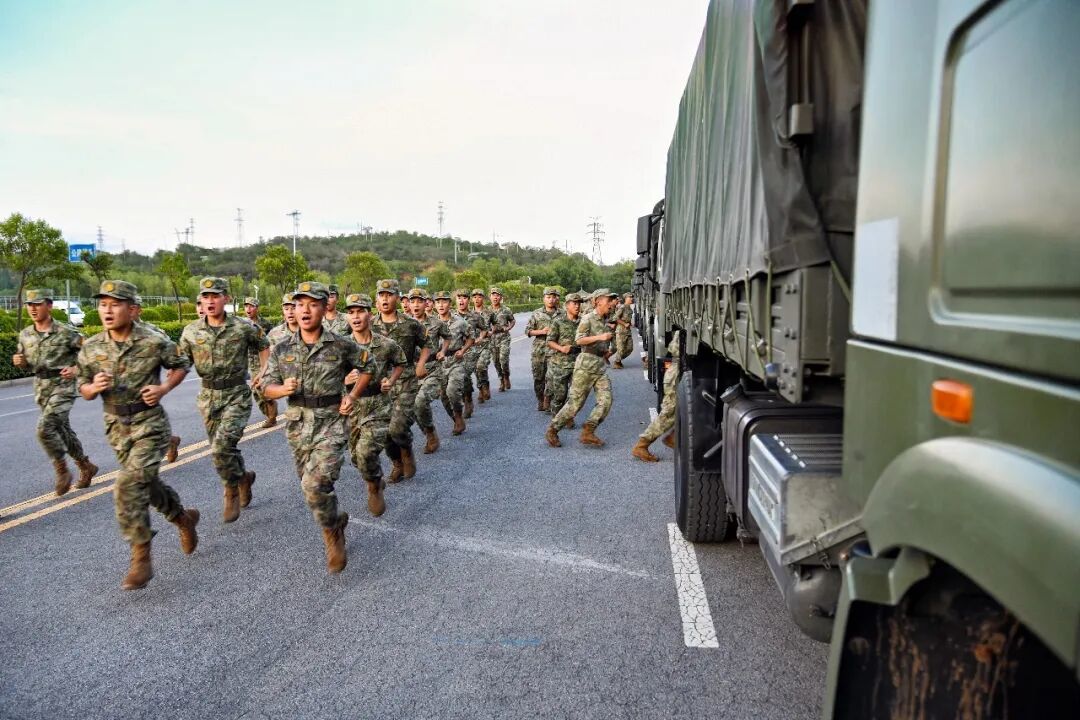
As the tide of strengthening the military surges, this brand-new force has emerged. At the beginning of its formation, the unit's party committee focused on functional positioning, insisting on advancing reorganization and training in tandem, and synchronizing exercises and capability enhancement.
How to achieve a responsive and efficient battlefield support system, and to leverage the new effectiveness of operational support under the new system, has no ready-made experience to draw from; the only way to seek answers is through bold exploration and practice. The unit's party committee leads the officers and soldiers to solidify their foundation and build momentum, addressing the transformation questions of "Who am I?", "What is the mission?", and "How should I proceed?".
True combat power generation must rely on forging a path on our own.
"The inability to find a comparable reference point is the first obstacle to the unit's construction and development." At the outset, how should the troops be built, and how should the officers and soldiers train? Due to the lack of precedents and templates, there is no clear "standard answer".
After the unit was formed, the leadership immediately visited relevant units of brother military branches to learn from their transformation and development experiences. Due to the vastly different operational styles, while "other mountains' stones" have some reference value, they are difficult to apply directly.

Reviewing training outlines and regulations, there is only a basic, universal "framework". The unit's leadership recognized that in the face of new operational styles, complex battlefield environments, and joint operational demands, true combat power generation must rely on forging a path on our own.
One level demonstrates to another, and one level leads another. Facing new challenges in construction, in conjunction with the collaborative tasks and support demand system undertaken by the unit, they compiled a "three-year construction plan", conducted collaborative training with missile brigades and different specialized forces, refined the support model in the crucible of practice, familiarized themselves with each other's tactics and processes, and strived to achieve the system effectiveness of "unity is strength, cooperation leads to victory".
"To take solid steps, we must look further ahead." They optimized the internal force composition and resource integration, organically integrating all elements to ensure precise embedding and effective energy release in system operations, leveraging the system advantage of "1+1>2".
Captain Xie of the communications battalion introduced that in the past, the communications battalion was only responsible for fixed communication station support, but now the battalion has both mobile and fixed communication "dual drives", with a more comprehensive force configuration and heavier responsibilities. How to integrate into the wartime command chain and break through the key bottlenecks of "communication in motion, communication in disruption, communication in destruction" has become a topic for all officers and soldiers in the battalion.
During a basic training assessment, when the communications battalion conducted a certain subject, the time taken was nearly halved compared to the outline requirements. However, this seemingly "excellent" report card was not only not recognized but was also "halted"—the reason being that while the single subject training was well implemented, the battalion's performance in the subsequent continuous assessment was unsatisfactory.
Similar issues exist to varying degrees in different battalions: "Assessment projects are mostly concentrated on basic subjects, while practical subjects are few." In this regard, Captain Yang of a certain battalion also has his own understanding: "The assessment standards for basic subjects are clear, and the results are intuitive, so they naturally become the focus of training."
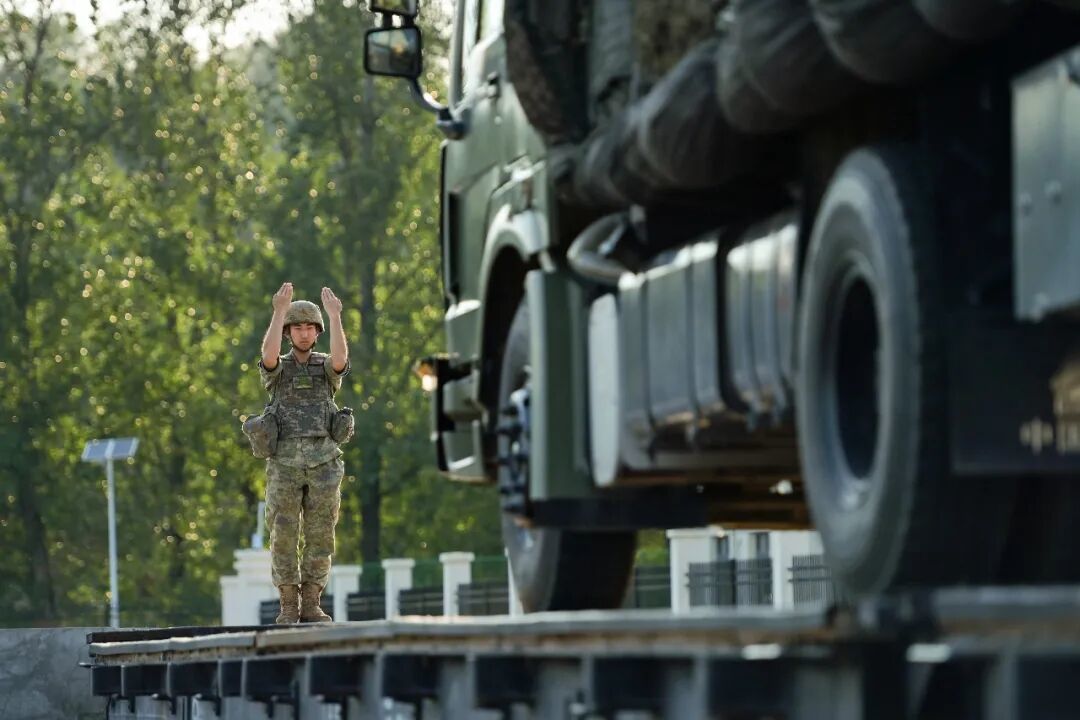
"It's not wrong to build a foundation, but if we only revolve around the basics and do not leap towards systemic capabilities, we are merely treading water." The unit's leadership pointed out sharply that the earlier problems are exposed, the more beneficial it is for combat power generation.
A top-down "brainstorming" quietly unfolded. The unit organized battalion and company commanders, and military staff to conduct training according to the outline, discussing training stubborn ailments such as "emphasizing appearance over substance", "emphasizing individual soldiers over collaboration", and "emphasizing assessment over practical combat". Everyone did not avoid contradictions or conceal shortcomings, addressing one problem at a time.
The problem targets are the growth points of combat power. "Any issue that affects system operational effectiveness must be rectified in a closed loop." The unit's party committee set a military order, optimizing the mechanism of "standing committee helping build regiment, departments helping build small remote units", fully covering and strengthening organizations, helping to grasp key personnel, and quickly transforming the "problem list" into an "effectiveness list".
From "individual soldiers training quickly" to "system integration", from "subjects passing" to "withstanding the battlefield", the unit's training model has undergone profound changes.
While battlefield support may not be the "first element" for winning, it is a "key variable" that determines victory or defeat.
"In the past, when equipment had issues, we could only make a distress call, and sometimes before the process was completed, the aircraft had already been delayed." Reflecting on the awkward situation during a cross-regional exercise a few years ago, Staff Officer Wan still feels regretful.
It was a concluding battle of a red-blue confrontation. A transport vehicle from a certain battalion was suddenly damaged by the "enemy", the engine stalled, and it became immobilized in the mountains. All the officers and soldiers in the battalion were anxious and could only report for support step by step via radio.
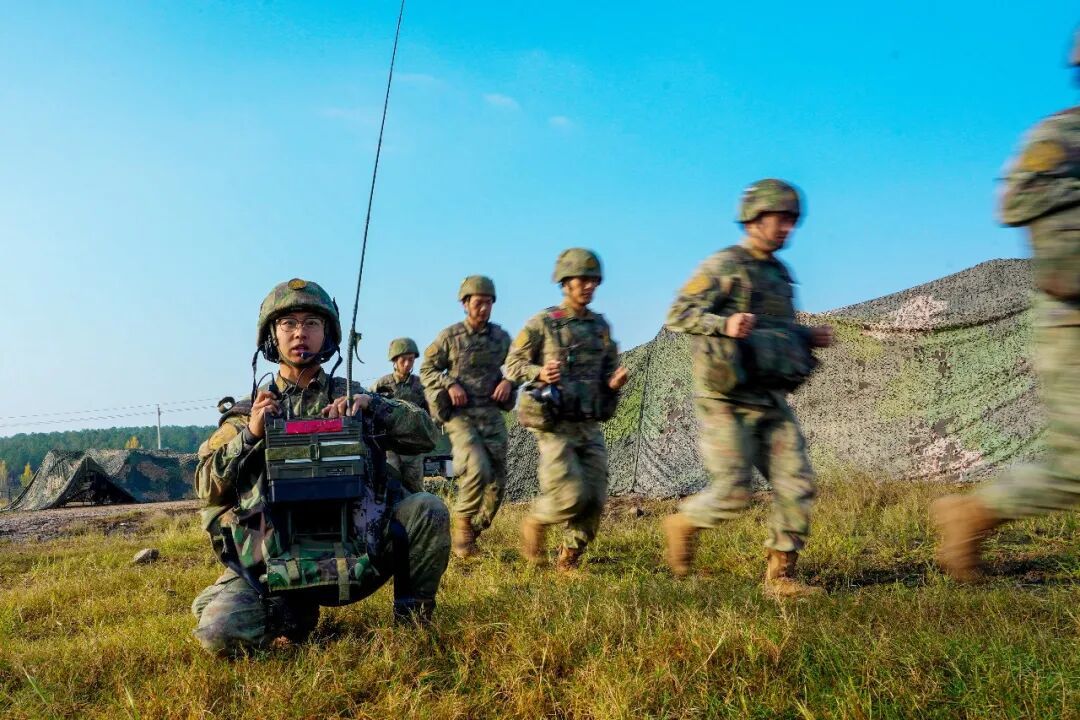
"After making a phone call and sending up rounds of requests, after a long wait, the support forces finally arrived." Staff Officer Wan said with a wry smile.
As a result, the mission ended in failure. Staff Officer Wan realized: while battlefield support may not be the "first element" for winning, it is a "key variable" that determines victory or defeat. If command is not smooth and resource allocation is not efficient, even if all forces are in the same training ground, they will be fragmented and lack unity, inevitably slowing down the pace and missing the opportunity.
To break the deadlock, reform is necessary. Integrating communication, transportation, engineering, chemical defense, repair, and medical support forces, breaking down professional barriers, hierarchical separations, and command disconnections, gradually constructing a new system of "modular grouping, integrated response, and full-chain support".
"Now, with one commander on site, all subordinate forces can be directly called upon." Wan Chufang remarked, no longer needing layers of requests, nor needing to "borrow personnel" or "borrow vehicles"—all resources are "coordinated for me", and the process is smooth.
Once the link is established, effectiveness improves. Captain Zhang of the transportation support team also deeply resonates: once the transport line is destroyed, he can directly command the engineering company to mobilize, clear the site, and quickly repair it, ensuring seamless connection of the support module.
To enhance the collaborative capability of support modules, the unit established a "two-level three-category" support system, continuously revising and improving action plans, formulating "module grouping training confrontation rules" and "module grouping training assessment scoring" standards, exploring a support path of "planning design—training implementation—review summary—research norms—rectification and improvement", laying the foundation for subsequent expansion of training content.

A practical task grouping training unfolded in a certain area. A transport vehicle from a certain battalion suddenly malfunctioned and could not proceed. Upon receiving the report, the unit activated the emergency mechanism. Soon, four technical backbones from the "repair module" arrived at the scene with equipment and a mobile cabin, riding in a transport vehicle.
"One person commands, multiple parties coordinate; one order issued, multiple capabilities collaborate." Staff Officer Wan said that under the coordination of various modules, the on-site commander can, based on the actual situation, complete personnel allocation, equipment mobilization, and material preparation, quickly reaching the battlefield.
From "fighting alone" to "forming a fist", various support modules can be plugged in and used, like field "Transformers".
"For a repair task, we can call upon 'engineering + repair + transportation + medical' modules; for a field camping, we can combine 'barrack construction + water and electricity support + material delivery' modules." A certain section chief, Tang, admitted that this "module grouping" model not only achieves "deploying troops as needed, grouping dynamically for battle", but also ensures efficient command and rapid response.
How to fight determines how to build support; what combat needs determines how support develops.
Being able to clearly outline its own capability indicators and achieve a leap in combat power, this transformation path has not been easy for the unit.
As soon as the unit was established, all support elements were brought to a certain area to explore new paths for combined training. The unit's leadership was resolute: "To temper the 'new quality support capability' in real combat, we must find the fulcrum to leverage combat power construction; this exercise is precisely a comprehensive exploration after transformation."
They explored, trained, and summarized results, delineating "four-level capability indicators aligned with actual combat needs" to refine standards for training and talent cultivation; they established "data links" between the command post and various combat and support units, relying on an integrated command platform to extend the command network to the battlefield front.

Changes are visible and tangible. From fuel supply to equipment repair, from hot meal delivery to engineering rapid construction, a new type of chain connects to the information network, gradually achieving "one map for command, one chessboard for coordination".
During an exercise, faced with a link interruption, a certain support team responded quickly. The communications team dispatched signalers carrying individual radios, portable satellite stations, Beidou terminals, and other equipment to provide support. One person with multiple machines, one machine with multiple functions, and multiple chains integrated to rebuild communication nodes. "Such a scene was something we wouldn't even dare to imagine before," a participating soldier remarked.
The deeper goal of the organizational adjustment is to unleash the endogenous potential of combat power. They focus on the most urgent generation issues, solving how various support teams can efficiently integrate into the combat system and how to achieve precise coupling with missile forces.
In the second half of last year, they proactively connected with battlefield needs, organizing logistics, equipment, engineering, and other support forces to conduct joint training with a certain missile brigade. From fuel supply, hot meal delivery, to transport support, material transportation, and equipment repair, the support tasks spanned the entire combat process and covered all task areas.
As soon as the battle began, the directing department issued orders: "The engineering support team needs to open up battlefield access for multiple launch teams." As the task area shifted, the officers and soldiers moved day and night, traversing mountainous forest areas and electromagnetic interference zones... Ultimately, multiple launchers completed their positions on time, and the missiles were launched as scheduled.
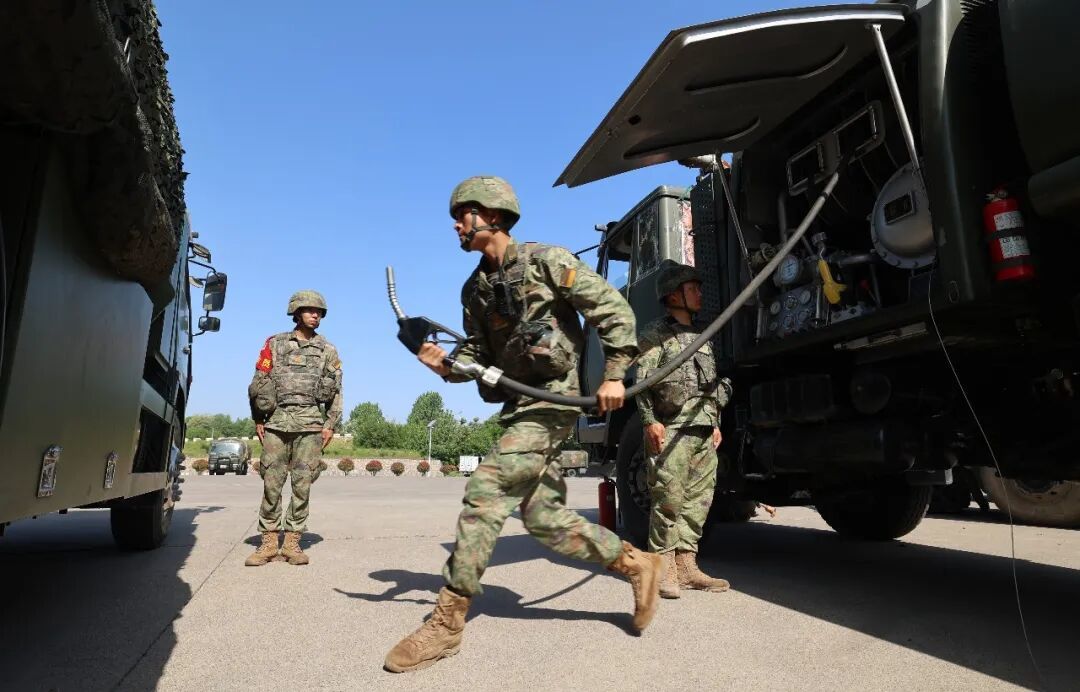
"How to fight determines how to build support; what combat needs determines how support develops." Facing the new support patterns of "small group, large synthesis, modular, and multi-functional" in future information warfare, the unit's traditional "single-skill" support model is no longer adequate.
To this end, they used the annual "weak training subject list" as a starting point, distinguishing between "command, technology, tactics, and joint" categories, conducting tiered training, adjusting and optimizing training plans to ensure improved training quality and effectiveness.
During a joint exercise, they relied on certain auxiliary software to achieve precise command control at the end, improving response speed by over 40%.
In recent years, a group of "combat-savvy, technically proficient, and command-capable" composite backbones in the unit have accelerated their growth and won two team championships in competitions organized by the Rocket Force...
Honor is a vivid portrayal of this new support force's accelerated transformation and a powerful motivation for them to strive for victory on future battlefields.
Authors: Fu Yu, Li Bingfeng, Zhang Xinkai, Duan Decheng
The Rocket Force is undergoing a transformation to enhance its logistics capabilities, integrating support forces with combat operations. This new support unit is focusing on adapting training and operational planning to meet the demands of modern warfare. They are developing a modular logistics response system to ensure efficient support during combat operations.
- A new support force has been established within the Rocket Force.
- The unit is focusing on integrating logistics with combat operations.
- Training and operational planning are being adapted to meet new combat styles and environments.
- The unit is developing a modular and integrated response system for logistics support.