
September 2026: The Air Defense Cooperation Demonstrated by the Training of 9 US-Japan F-22s and 4 F-15s East of Okinawa
 Tanaka Takashi
September 2026: Japan-U.S. F-22 and F-15 Training Exercises East of Okinawa Demonstrate Air Defense Cooperation
On September 18, four Japan Air Self-Defense Force F-15 fighter jets, nine U.S. Air Force F-22 fighter jets, and one KC-135 aerial refueling aircraft conducted tactical training over the Pacific Ocean east of Okinawa. The number of participating aircraft, as announced by the Joint Staff Office, is concise but represents a combination that cannot be overlooked when assessing the air defense posture in Northeast Asia.
Practical Capabilities Demonstrated by the Training
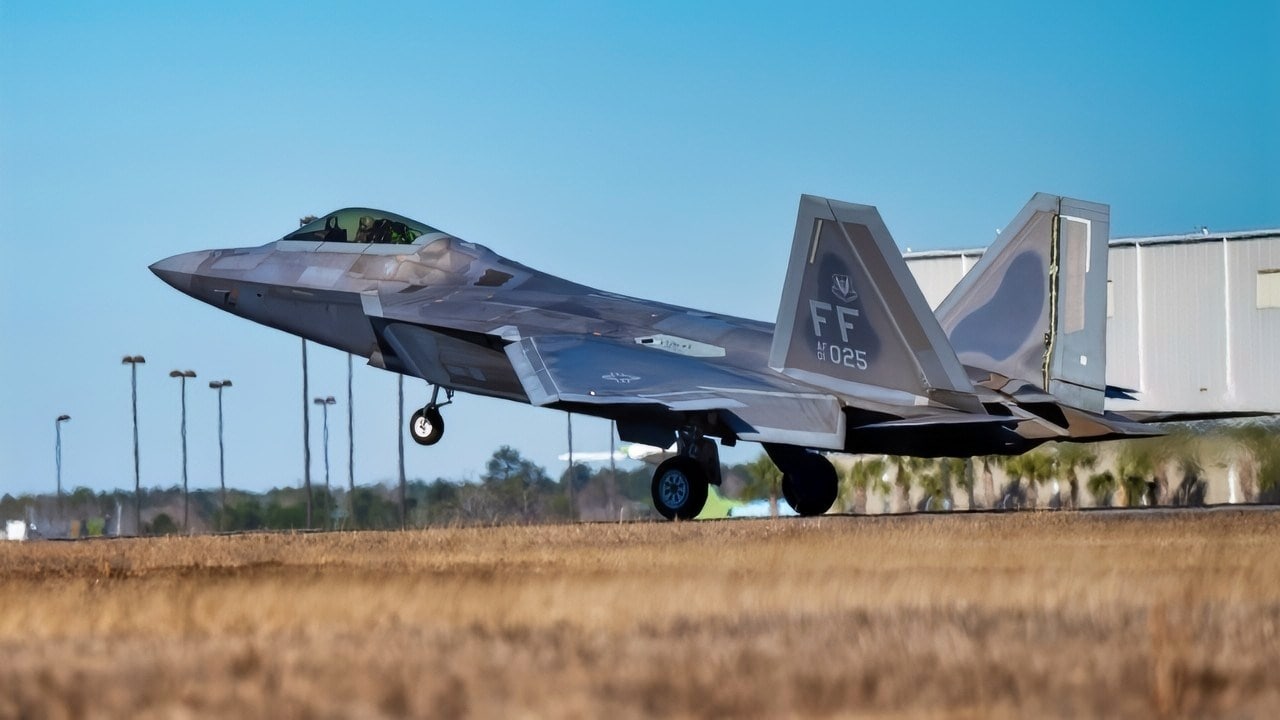
The F-22 is equipped with low observability and high air-to-air combat capabilities, while the F-15 is the mainstay aircraft integrated into Japan's base network and maintenance/control system. The addition of the KC-135 likely extended the fighters' flight time and operational radius, transforming the training into a continuous exercise of detection, identification, interception, and repositioning rather than mere formation flying. The specific details of the actual training items have not been disclosed, and this point should be approached with caution.
The Reality Presented by North Korea's Two Missiles
Two days after the training concluded, North Korea launched two ballistic missiles from near Wonsan. According to a report by Jiji Press, which conveyed the announcement from Japan, the flight distances were approximately 440 kilometers and 590 kilometers, with maximum altitudes of about 60 kilometers and 70 kilometers, both believed to have fallen outside Japan's territorial waters and exclusive economic zone. The U.S. military newspaper Stars and Stripes also reported the launch times and flight distances as announced by the South Korean military.
What is important here is not just whether the missiles directly attacked Japan from the launch site. In the Sea of Japan, East China Sea, and around the southwestern islands, it is necessary to simultaneously monitor ballistic missiles, cruise missiles, aircraft, and naval vessels. The speed at which the Japan Air Self-Defense Force's F-15s, aerial refueling, ground radar, and the Japan Maritime Self-Defense Force's Aegis ships can be connected to a unified air defense and missile defense network is more critical than simply inviting high-performance aircraft like the F-22.
Blind Spots in the Japan-U.S. Alliance
The scale of nine aircraft versus four is clear as a demonstration of deterrence, but it does not imply sustained air defense capability. The F-22 is not an aircraft owned by Japan; it relies on U.S. military deployment plans and base operations. Furthermore, even if the number of fighter jets increases, without proper threat direction, rules of engagement, data link latency, and protection for refueling aircraft, the decision-making for interception will not become faster.
The Ministry of Defense's public materials position this training as "strengthening the deterrent and response capabilities of the Japan-U.S. alliance."
In the author's view, the true value of this training lies not in the rarity of the F-22, but in whether the U.S. military's superior sensors and the Self-Defense Forces' continuous vigilance can operate as a single procedure from peacetime. What North Korea's missile launches have highlighted is not whether they can be prevented, but rather the more subtle and challenging issue of whether Japan and the U.S. can share the same situational picture in the minutes following a launch.
Sources
- Joint Staff Office "Japan-U.S. Bilateral Exercise" September 19, 2026
- Jiji Press (Nippon.com) "N. Korea Fires 2 Ballistic Missiles toward Sea of Japan" September 20, 2026
- Stars and Stripes "North Korea fires 2 ballistic missiles off east coast" September 20, 2026
- Army Recognition "US launches Freedom Edge 2026 with Japan and South Korea" September 2026
On September 18, 2026, Japan Air Self-Defense Force and United States Air Force conducted a joint tactical training exercise over the Pacific Ocean, involving 9 F-22s, 4 F-15s, and 1 KC-135. This exercise aimed to enhance air defense cooperation amid rising tensions, as evidenced by North Korea's subsequent launch of two ballistic missiles. The training focused on air-to-air combat capabilities and operational readiness.
- 9 F-22s and 4 F-15s participated in a training exercise over the Pacific Ocean on September 18, 2026.
- The exercise aimed to enhance air defense cooperation between Japan and the U.S.
- North Korea launched two ballistic missiles shortly after the training exercise, highlighting regional security concerns.
- The training involved air-to-air combat capabilities and extended operational range due to the inclusion of a KC-135 refueling aircraft.
- The exercise is part of ongoing efforts to strengthen the Japan-U.S. alliance against potential threats.