
Shahed-136 and the Russian Strike Network are Changing Aerial Warfare in Ukraine in 2026
 Dmitri Volkov
Shahed-136 and the Russian Strike Network are Changing Air Warfare in Ukraine in 2026
The most important figure in the current air campaign is not the number of downed drones, but the speed at which Russia is transforming individual launches into a sustainable production-operational system. According to Reuters on October 15, 2026, a new facility for launching strike drones was nearly completed near Ukraine in just a few weeks. This is no longer an improvised site for "Shaheds," but an infrastructure of constant pressure, where production, storage, crew training, and launching are combined into a single cycle.
From Raids to Serial Production
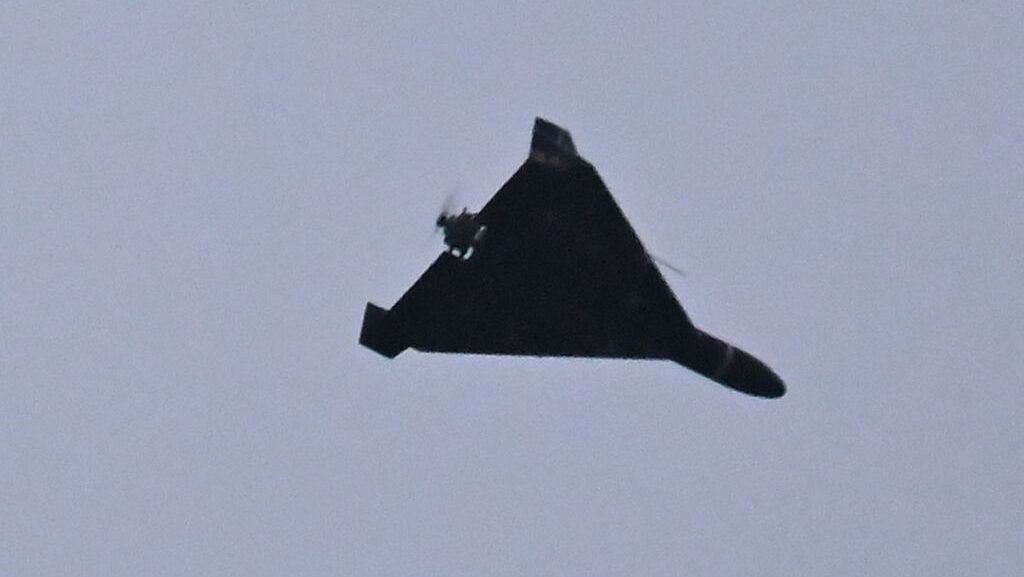
This is where the qualitative change lies. Early campaigns using the Shahed-136 were built around individual mass raids, dependent on stockpiles and weather conditions. Now, the Russian side, judging by satellite images and reports from Ukrainian authorities, is creating a distributed network capable of sustaining the rhythm of attacks for weeks. The military value of such a network is determined not by the maximum range of a single device, but by the ability to simultaneously overload several sections of Ukrainian defenses, forcing Kyiv to expend costly interceptors and redeploy mobile fire groups.
The Ukrainian Ministry of Defense reported at the end of October that since the beginning of 2026, 650 drone systems have been approved for use, most of which are produced domestically (Defence Industry Europe, October 26). This is an important figure, but it should not be read as simple quantitative superiority. Ukraine is expanding its nomenclature and experimenting with reconnaissance, strike, and intercept platforms; Russia, on the other hand, is trying to standardize mass expendable munitions and turn them into a tool for operational attrition.
Why the Base is More Important than an Individual Drone
The facility built in just a few weeks illustrates the nature of the Russian military economy. Moscow is not required to create a perfect system from the outset. It is sufficient for it to quickly bring functional sites into operation, accept losses, and adjust the design based on combat experience. In Soviet logic, this was called mobilizational rationality, although today it is supported not by giant state factories, but by a combination of regional construction, import substitution, and procurement of components through external channels.
This model reduces the vulnerability of a single center. If Ukraine strikes a warehouse or launch position, Russia can compensate for the loss with another node. But there are limits to distribution. A site requires fuel, navigation components, operators, maintenance, and secure communications. Therefore, satellite imagery captures only the physical part of the problem. The true indicator of effectiveness will not be the size of the facility, but its ability to maintain the launch tempo after Ukrainian strikes on logistics.
Communication and Electronic Warfare
A separate difficulty is that air warfare is increasingly less about the confrontation of "drone versus missile." Critical Threats noted on October 20 that the limitations on the speed of access for Ukrainian forces to Starlink and Starshield satellite communications complicate countering Russian drones with piston and jet engines. For Moscow, this does not mean automatic air dominance, but it creates a window of opportunity. If Ukrainian units cannot quickly transmit coordinates, coordinate interceptions, and change the routes of mobile groups, even a relatively simple device gains operational effectiveness disproportionate to its cost.
At the same time, the Russian system remains far from flawless. The Shahed-136 is slow, noisy, and vulnerable to anti-aircraft systems, machine gun crews, and specialized FPV interceptors. Its effectiveness primarily increases due to scale, decoys, route changes, and nighttime operations. Therefore, claims of "continuous control of airspace" would be as much propaganda as the assertion that a cheap drone can independently destroy Ukrainian air defense.
Strategic Significance for the War of Attrition
The Reuters report on October 26 about Russian strikes in Zaporizhzhia and Chernihiv regions shows the practical side of this campaign. Even limited-impact raids force Ukraine to maintain constant readiness, protect energy infrastructure, and allocate resources between the front and rear. The Russian command aims not only to destroy targets but also to increase the cost of every hour of Ukrainian defense.
Kyiv's response—a rapid expansion of its own drone industry—changes the balance but does not eliminate the problem. The 650 approved systems indicate technological dynamics; however, they do not equate to 650 mass-produced series. The systems vary in price, range, payload, resilience to electronic warfare, and production maturity. The main question of 2026 is which side will more quickly connect innovations with sustainable logistics. Russia is currently stronger in standardization and the scale of serial strikes; Ukraine excels in platform diversity and the speed of tactical adaptation.
The drone war has entered a stage where the advantage goes not to the one with the best device, but to the one who can replenish losses faster and maintain the command structure.
Forecast
In the coming months, the Russian strike drone network is likely to expand around already operational nodes rather than being replaced by a single "wonder system." This resembles the late Soviet emphasis on quantity, but with a fundamental difference: modern sensors, commercial electronics, and software updates allow for rapid tactical changes. Ukraine will retain the ability to deliver painful strikes on launch sites and Russian infrastructure if it can maintain the coherence of detection and interception. But as long as Moscow transforms the Shahed-136 from a munition into a production process, air warfare remains a competition of tempo. The Russian system will survive if its nodes prove cheaper than Ukrainian means of suppression; otherwise, even a quickly built base will become just an expensive target warehouse.
Sources: Reuters, October 15 and 26, 2026; Critical Threats Project, October 20, 2026; Defence Industry Europe, October 26, 2026.
Russia is establishing a distributed network for drone strikes, enhancing operational capabilities and pressure on Ukraine. A new launch site for Shahed-136 drones was constructed near Ukraine in just weeks. Ukrainian forces reported the deployment of 650 drones since early 2026, while facing challenges in countering Russian drone operations due to communication limitations. This shift indicates a significant change in the air war dynamics in Ukraine.
- Russia has built a new launch site for drones near Ukraine in a few weeks.
- 650 drones have been deployed by Ukraine since the beginning of 2026.
- Russia is creating a network to sustain drone attacks over weeks.
- Ukrainian forces face challenges in countering Russian drones due to communication limitations.
- The effectiveness of drone operations is linked to logistics and operational tempo.