
Six Allies Carry NATO's 2026 Ukraine Weapons Bill
 Alexandra Reeves
Six Allies Carry NATO's 2026 Ukraine Weapons Bill
Mark Rutte just said the awkward part out loud: NATO's Ukraine weapons pipeline is not really an alliance-wide burden yet. It is a small buyers' club, using European money to buy American weapons, while too many allies applaud from the cheap seats.
At the NATO foreign ministers' meeting in Helsingborg on 22 May, the secretary general pushed allies toward a July Ankara summit built around three linked promises: higher defence spending, faster industrial production, and sustained aid to Ukraine. NATO's official readout said ministers discussed a credible path to 5 percent defence investment and keeping support to Kyiv "substantial, predictable and sustainable." That language is polished. The problem underneath it is not.
According to European Pravda's report from the meeting, Rutte said only six or seven European allies are doing most of the work financing U.S. weapons for Ukraine under the Prioritised Ukraine Requirements List, or PURL. Kyiv Post reported the same basic message: ministers offered encouraging comments, but Rutte now wants delivery, not sympathy. His line that he will do everything to make them deliver was not diplomatic filler. It was a warning to capitals that have treated Ukraine aid as someone else's recurring invoice.
The PURL Mechanism Became Too Important to Be This Narrow
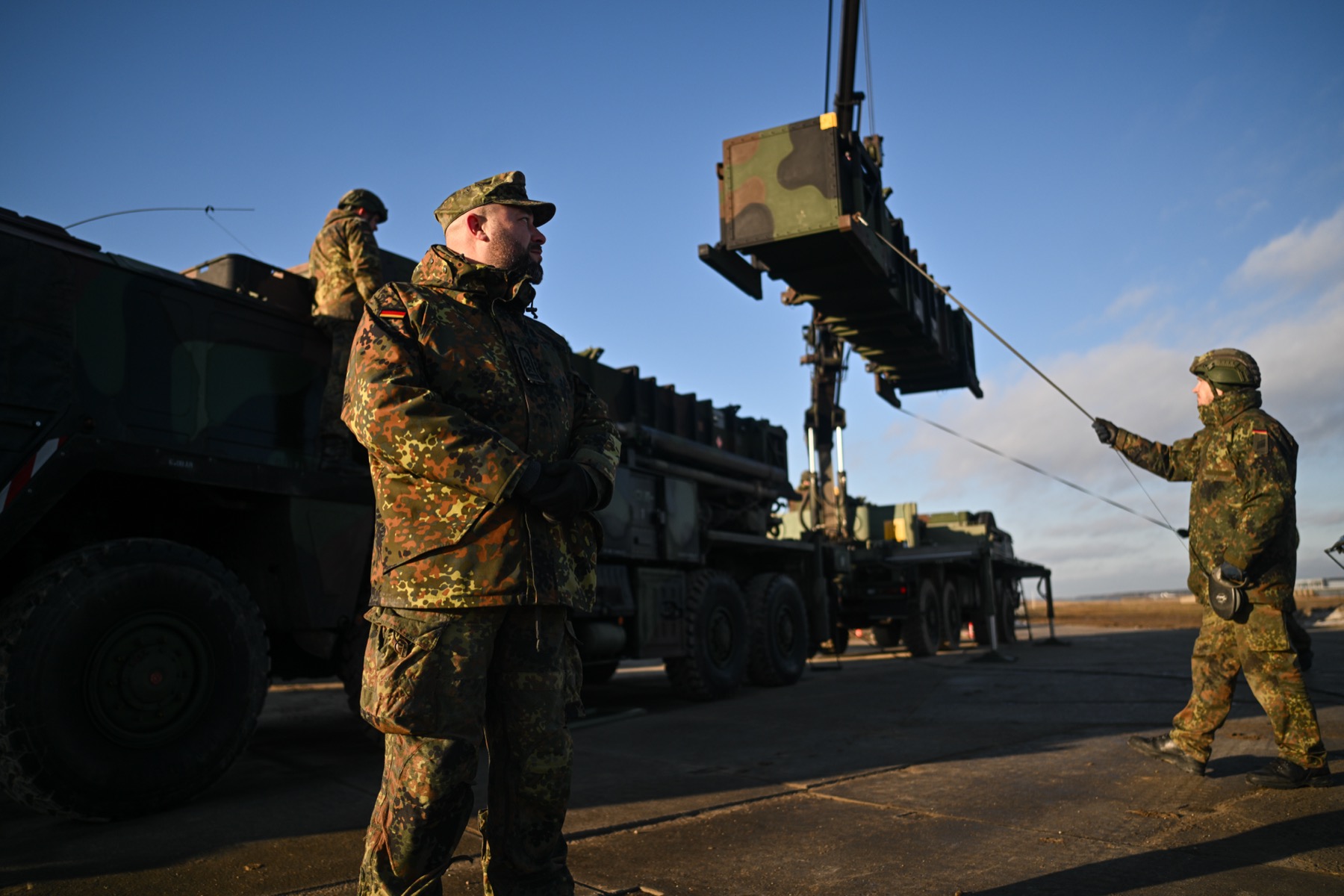
PURL matters because it moves the weapons Ukraine cannot simply improvise. The mechanism lets allies fund U.S.-made equipment for Ukrainian priority requirements, especially air and missile defence munitions. Reporting around the Helsingborg meeting said the programme has supplied a large share of missiles for Ukraine's Patriot batteries and other air-defence systems. That is the centre of gravity, not a side issue.
Patriot is expensive, slow to produce, and hard to substitute. A Patriot battery normally includes phased-array radar, engagement control stations, launchers, power generation, and interceptor missiles such as PAC-2 variants or hit-to-kill PAC-3 missiles. It is designed to defeat aircraft, cruise missiles, and ballistic missiles. For Ukraine, it is also a political instrument: every interceptor fired over Kyiv or Dnipro is a reminder that European security still depends on an American production line.
That dependence is becoming more uncomfortable because Russian strike volume has not slowed. Russia Matters' 15-22 May review, drawing on Ukrainian Air Force and ISW reporting, noted that Russia fired 14 Iskander-M or S-400 ballistic missiles, eight Iskander-K cruise missiles, and 524 Shahed, Geran, Gerbera, Italmas and decoy drones during the 17-18 May attack. Ukraine reportedly shot down four cruise missiles and 503 drones, but missiles and drones still hit dozens of locations. In plain English, Ukraine is intercepting a lot and still getting hurt.
This is why the PURL imbalance is not an accounting dispute. If six or seven countries carry the expensive part of Ukraine's air-defence bill, the system will eventually become politically brittle. The countries paying will ask why others are not. The countries not paying will get used to free strategic cover. Moscow will notice both.
The United States Is Using Scarcity as Leverage
The timing makes Rutte's complaint sharper. Defense News reported that Secretary of State Marco Rubio used the same Helsingborg gathering to question NATO's value to the United States after allies resisted Washington's Middle East campaign and refused some U.S. operational requests. Rubio argued that U.S. forces have global commitments in the Indo-Pacific, Middle East and Western Hemisphere, and that American troop presence in Europe will keep being adjusted.
Everyone in Washington likes to say Europe must do more. Fine. But here is the thing: Europe is not being asked only to spend more on itself. It is being asked to pay for U.S. weapons, absorb the political risk of escalation with Russia, keep Ukraine supplied, and still accept that the Pentagon may reprioritise scarce munitions when another theatre heats up. That is not burden sharing in the old NATO sense. It is alliance management under weapons scarcity.
The Iran war has made that scarcity impossible to ignore. Rubio's comments, the continued pressure over defence spending, and Rutte's push for wider PURL contributions all point in the same direction. Ankara will not just be another summit where allies argue over percentages. It will test whether European governments can turn budget promises into actual orders for interceptors, ammunition, drones, and spare parts fast enough to matter before the next Russian strike cycle.
Europe's Real Test Is Production, Not Rhetoric
The comforting assumption is that NATO can fix this by making more countries sign cheques. That is only half true. Money matters, but production slots matter more. Patriot interceptors are not widgets that appear because a finance minister finds a new line item. PAC-3 missiles compete with U.S. requirements, other allies' stockpile needs, and demand from partners watching the Middle East. Europe can buy American missiles for Ukraine, but it cannot wish away American prioritisation.
That is why NATO's official emphasis on defence industrial production is more than slogan work. If Ukraine's air defence depends on U.S. factories and European cheques, then NATO has built a bridge that works only while Washington wants it to work and a handful of European capitals keep paying tolls. A serious alliance would treat that as an emergency industrial problem. A less serious one will rename it burden sharing and move on.
There is also a political trap here. The states doing most of the paying are likely to demand more influence over what Ukraine receives and when. The states doing less will still claim the political benefits of solidarity. Kyiv will be stuck navigating both, while Russian drones keep testing the system every night. This is how a military logistics problem becomes an alliance cohesion problem.
What to Watch Before Ankara
The first thing to watch is whether Rutte names, shames, or privately pressures the non-payers before July. The second is whether new PURL pledges are tied to actual munitions deliveries, especially Patriot and other air-defence interceptors, rather than broad future funding. The third is whether Rubio's pressure campaign pushes Europe into a stronger Ukraine package or makes some capitals hedge against an unreliable United States.
The conclusion is uncomfortable but simple. NATO has found a mechanism that helps keep Ukraine's skies from collapsing, and then allowed that mechanism to rest on too few shoulders. Six or seven allies cannot be the permanent answer to a continental war. If Ankara produces another elegant communique without a wider funding base and faster production plan, Russia will not need to break NATO's promise to Ukraine. NATO will have underwritten it too narrowly from the start.
NATO allies discussed the Ukraine weapons pipeline in Helsingborg on 22 May, with six or seven European nations primarily financing U.S. weapons for Ukraine. Rutte called for increased defense spending and actual delivery of military aid. The PURL mechanism is vital for supplying U.S.-made equipment, especially air defense systems, as Russia escalates its attacks. The upcoming Ankara summit will assess European commitment to defense support for Ukraine.
- NATO's Ukraine weapons pipeline is primarily supported by six or seven European allies.
- Rutte emphasized the need for actual delivery of military aid rather than just sympathy.
- The PURL mechanism is crucial for supplying U.S.-made equipment to Ukraine.
- Russia has increased its missile and drone attacks on Ukraine.
- The upcoming Ankara summit will test European governments' commitment to defense spending.