
Small Atlanta firm’s drone interceptor advances in U.S. Army contest
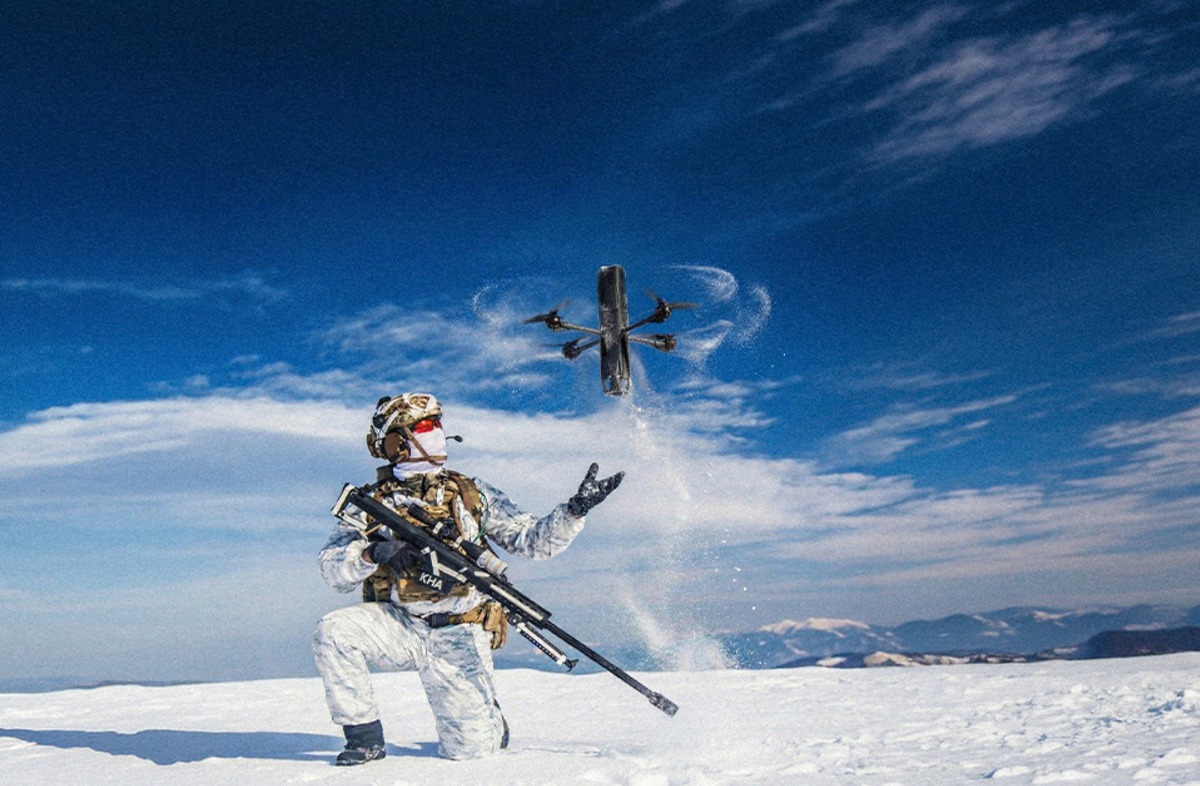
A small Atlanta defense startup has moved one step closer to putting its drone-killing invention directly into soldiers’ hands, advancing to the final round of a U.S. Army competition built to fast-track exactly the kind of battlefield problem that has left American ground troops exposed to a growing swarm of cheap enemy drones.
Askari Defense announced it has been selected as a finalist in the xTech|Adaptive Strike competition, a U.S. Army prize program that identifies promising commercial technology and pushes it through hands-on testing with actual soldiers rather than leaving it stuck in a slower traditional contracting pipeline, according to the company’s own announcement. The Army launched xTech|Adaptive Strike earlier in 2026 through its xTech innovation office, working alongside the Assistant Secretary of the Army for Acquisition, Logistics and Technology, the Army office responsible for overseeing how new weapons and equipment move from concept to the battlefield, offering competing companies prize money, direct access to Army decision-makers, and a shot at a follow-on contract or agreement.
The competition targets four specific capability gaps the Army has identified as urgent priorities, ranging from extended-range reconnaissance drones to affordable loitering munitions and small-unit power generation, but Askari’s entry falls squarely into the fourth category: counter-unmanned aerial systems technology built specifically for individual soldiers rather than vehicle-mounted or base-defense systems. That category matters because the small first-person-view drones that have come to dominate modern battlefields, particularly in Ukraine, are often too small, too cheap, and too numerous for traditional air defense systems to handle economically, leaving dismounted infantry with few good options beyond ducking for cover or shooting wildly with a rifle.
Askari’s answer is a hand-launched interceptor called Rift Alpha, built to engage what the military classifies as Group 1 and Group 2 unmanned aerial systems, small drones typically weighing under 25 kilograms (55 lb) that have proliferated across nearly every active conflict zone in the world, according to The Defence Blog’s earlier reporting on the company’s semifinalist selection. The company describes its design philosophy as prioritizing capability over complexity, aiming to give a soldier a tool that works reliably under real combat stress rather than one that looks impressive on a demonstration range but proves too complicated to operate in darkness, under jamming, or with minimal training.
The company said its goal remains straightforward, to deliver a dismounted counter-UAS capability that works when it matters, one that is quick to employ, intuitive to operate, and effective against small drone threats at close range, according to its announcement of the finalist selection.
Reaching this stage required Askari to clear a demanding earlier hurdle. Advancing from semifinalist to finalist status in xTech|Adaptive Strike means the company already passed through a Phase 2 field evaluation and a Soldier Exercise held at the National Training Center at Fort Irwin, California, one of the Army’s most demanding force-on-force training environments, where up to ten finalists are selected before a final round narrows the field to as few as five winners eligible for follow-on prize awards, according to competition details published on the Army’s xTech website. Testing an interceptor system inside that environment, alongside actual soldiers operating under conditions that approximate real combat rather than a controlled demonstration, represents a fundamentally tougher bar than most defense technology ever faces before reaching a program of record.
Askari is not the only company chasing this particular Army opportunity, and the competitive field illustrates just how much interest the counter-UAS problem has attracted from outside traditional defense contractors. Powerus, through its subsidiary Tandem Defense, separately announced in July 2026 that it had also advanced to the competition’s Phase 3 round after its own Soldier exercise evaluation, part of a broader field that included entries addressing everything from man-packable interceptors to modular battlefield power generation, according to a Powerus press release. That breadth of competition reflects how urgently the Army has signaled it wants working solutions to the small drone threat, a message defense consulting analysts have described as the service prioritizing operational credibility over technical specifications alone, according to E.B. Howard Consulting’s assessment of what the competition is actually testing for.
Askari’s announcement also credited its continued collaboration with the U.S. Army and ASA(ALT) as central to the company’s progress, framing the relationship as one of the organizations actively working to move practical capability into the hands of warfighters rather than leaving promising technology stalled in bureaucratic limbo.
For a small company built around a single piece of hardware meant to solve one very specific problem, that uncertainty is simply the nature of trying to break into a defense procurement system that has historically favored large, established contractors. What Askari has proven so far is that a soldier-designed answer to the drone threat can survive contact with the Army’s toughest available testing environment, and in a competition built explicitly to reward capability that works under pressure rather than capability that merely looks good on paper, that alone counts as real progress.
Content preview only. Full article available at source. View Full Article
Askari Defense advanced to the final round of the U.S. Army's xTech|Adaptive Strike competition in 2026 with its drone interceptor, Rift Alpha. This technology is designed to counter small drones and is intended for use by individual soldiers. The company successfully completed a Phase 2 field evaluation at Fort Irwin, California, demonstrating its capability under combat-like conditions.
- Askari Defense is a finalist in the U.S. Army's xTech|Adaptive Strike competition.
- The company developed a hand-launched drone interceptor called Rift Alpha.
- The competition aims to address urgent capability gaps in counter-UAS technology.
- Askari's technology is designed for individual soldiers rather than vehicle-mounted systems.
- The company passed a Phase 2 field evaluation at Fort Irwin, California.