
Somalia 2026 — 68 American Strikes Replace al-Shabaab at the Center of the Invisible War
 Marie Dubois
Somalia 2026 — 68 American Strikes Place al-Shabaab at the Center of the Invisible War
On June 19, in southern Somalia, the U.S. Africa Command announced a new strike against al-Shabaab. This was not an isolated event, but the fourth strike made public in six days, following those on June 14, 16, and 18. The important figure lies elsewhere: according to AFRICOM, at least 68 American strikes have already been conducted in Somalia since the beginning of 2026.
On the ground, this pace changes the nature of the war. A drone strike can destroy a cell, a vehicle, or a local command post. It does not hold a road, secure a market, or convince a clan to remain loyal to Mogadishu. This is the old limit of counterinsurgency air campaigns: they strike quickly, but they leave the ground politics to decide the next steps.
A Resumption After a Short Pause, Not a Strategic Shift
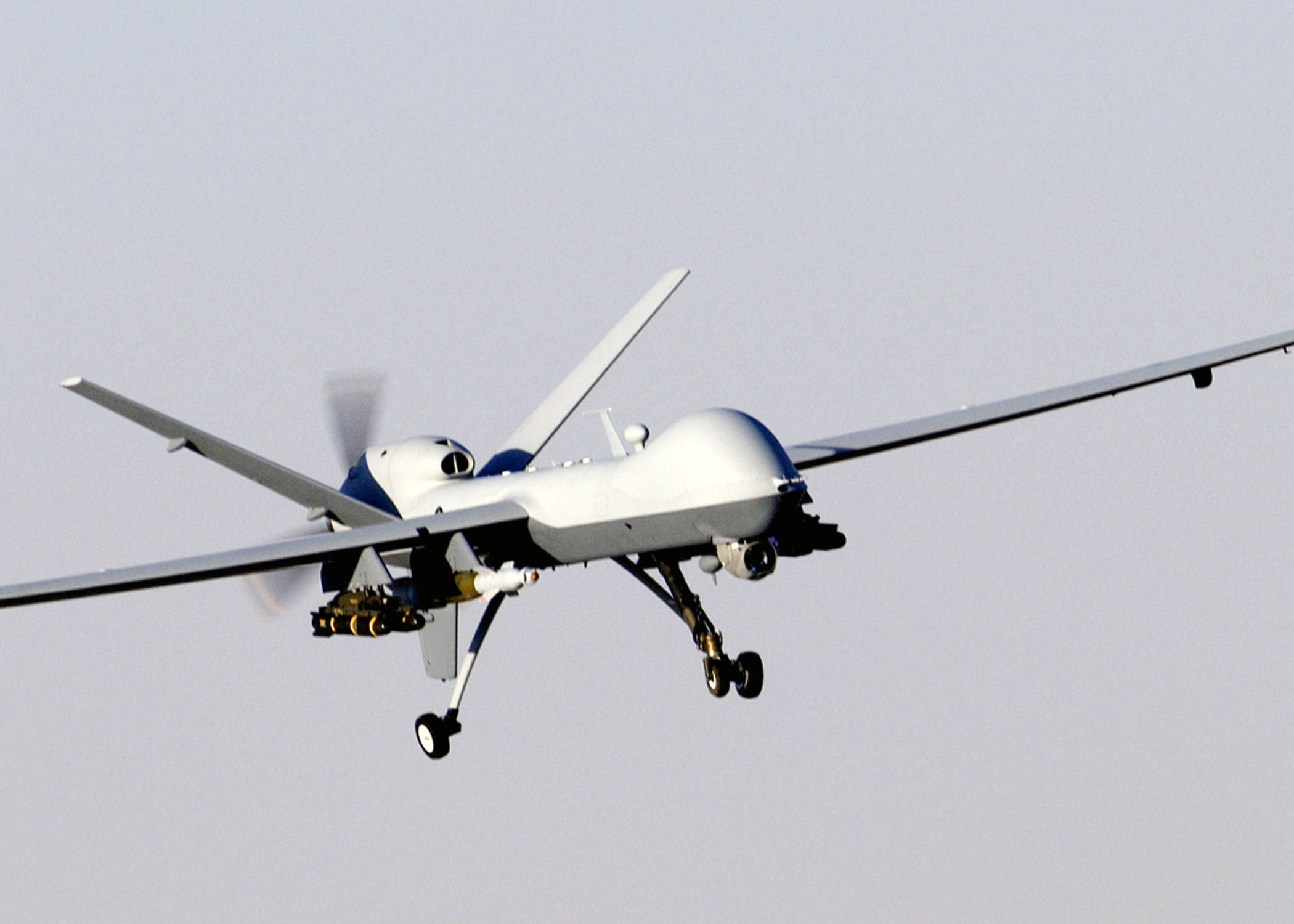
AFRICOM had communicated little after May 6. The series of strikes in June signals a visible resumption, but not a break. The American command has maintained the same formula: target al-Shabaab, operational details not published, no precise assessment of casualties, no public civil toll. This opacity has become an operational parameter in itself.
The Somali Ministry of Defense, for its part, mentioned an operation by the Danab unit on June 14 in the south of the country, with 14 al-Shabaab fighters killed according to Mogadishu. It is not certain that this operation corresponds exactly to the American strike on the same day. This ambiguity is significant. In Somalia, a ground action, an airstrike, and a political statement can describe three partially overlapping realities.
The areas in question are located in a theater that maps often oversimplify. Between Lower Juba, Middle Juba, and the routes leading to Mogadishu, al-Shabaab does not only control villages; it controls passages, taxes, information, and sometimes the pace of movement. From experience, the question is never just about who holds a point on the map. The real question is who can move between two points without asking for permission.
The Figure of 68 Strikes Reveals a Dependence on Air Power
If the figure of 68 strikes is accurate, Washington is already on a very high trajectory for 2026. The data cited by New America placed 2025 at 124 American strikes in Somalia, a level higher than the cumulative total of the Biden, Obama, and George W. Bush administrations according to the tracking mentioned by Antiwar.com. Even accounting for methodological differences, the trend is clear: the United States has placed Somalia back at the center of its African counterterrorism war.
This intensity produces a paradox. The more strikes multiply, the harder it becomes to measure their real effect. A drone campaign yields visible short-term results: explosions, statements, claimed deaths. But it can also push al-Shabaab to disperse its leaders, reduce its communications, and delegate more to local commanders. This makes the movement less spectacular, sometimes more resilient.
- The main target remains al-Shabaab in the south, an organization affiliated with al-Qaeda since 2012.
- The northeast, especially Puntland, remains concerned with the local Islamic State, smaller but useful to Washington to justify a continued counterterrorism presence.
- The Somali units trained by the United States, notably Danab, serve as ground relays, but their effectiveness depends on national political cohesion.
This last condition is dangerously lacking.
Mogadishu Faces a Political Crisis at the Wrong Time
In early June, Mogadishu experienced fighting between government forces and militias linked to the opposition, following President Hassan Sheikh Mohamud's decision to remain in office despite the contested expiration of his mandate. Al Jazeera reported heavy weapon fire, residents fleeing certain neighborhoods, and calls from the African Union for restraint. For an army engaged against al-Shabaab, this is a very bad signal.
When the political center fractures, jihadist groups do not need to win outright. They wait for checkpoints to change loyalty, for clans to hesitate, for intelligence to stop flowing to the capital. In the Sahel, I have seen this mechanism several times: the institutional crisis does not replace war; it opens secondary paths for it.
Somalia is not Mali, nor Burkina Faso. But the reflex is comparable. A foreign force compensates with fire for what the local state cannot stabilize politically. This can work during a limited operation. It works much less well as a war architecture.
The Civilian Risk Becomes a Strategic Flaw
The issue of civilian casualties cannot be treated as a mere reputational damage. The Guardian published on June 16 a detailed investigation into an American strike on November 15, 2025, in Jamaame, southern Somalia, which reportedly killed at least 12 civilians, including eight children. AFRICOM did not acknowledge any civilian toll in this incident. The information remains contested, and the available images partly come from channels close to al-Shabaab; thus, they must be handled with caution. But the absence of a public investigation precisely fuels the information void in which al-Shabaab recruits.
In a theater like Jubba, a family mistakenly affected becomes more than a human tragedy. It becomes a narrative. And a narrative, in an insurgent war, circulates better than a command statement. Drones see far, but they do not always see the political effect of the strike the next day, at the market, at the mosque, in clan negotiations.
The American campaign may temporarily reduce al-Shabaab's freedom of movement. It cannot, alone, repair the Somali political contract.
What to Watch Now
Three indicators will tell if the June resumption truly changes the balance of power. The first is the frequency of Danab operations after the strikes: without rapid ground exploitation, air power remains sporadic. The second is the reaction of clans in Lower Juba and around Mogadishu: if the political crisis widens, al-Shabaab will gain space without a major offensive. The third is Puntland, where the rivalry between Mogadishu and local authorities could complicate the fight against the Islamic State branch.
The next vulnerable area is not necessarily the one that will receive the next strike. It may be a secondary axis, a transit locality, a taxation point near Jubba. That is where al-Shabaab knows how to catch its breath. And that is where drones, despite their precision, often arrive too late.
Sources
- Antiwar.com, June 23, 2026, AFRICOM statement on 68 American strikes in Somalia in 2026.
- Antiwar.com, June 21, 2026, series of AFRICOM strikes on June 14, 16, 18, and 19 against al-Shabaab.
- Al Jazeera, June 4, 2026, fighting in Mogadishu related to the electoral crisis.
- The Guardian, June 16, 2026, investigation into alleged civilian casualties during an American strike in Jamaame in November 2025.
U.S. Africa Command conducted 68 airstrikes against al-Shabaab in Somalia since early 2026, with four strikes reported in June alone. The airstrikes aim to disrupt al-Shabaab's operations, but political instability in Mogadishu complicates the situation. Reports indicate civilian casualties from previous strikes, raising concerns about the effectiveness and consequences of the air campaign.
- 68 U.S. airstrikes conducted in Somalia since the beginning of 2026
- Four airstrikes reported in six days in June 2026
- Al-Shabaab remains the primary target of U.S. operations
- Civilian casualties reported from a previous airstrike in November 2025
- Political instability in Mogadishu affects military operations