
Southern Theater Command Huangyan Island Exercises: PLA South China Sea Response Chain Compressed to Within 48 Hours
 Li Minghui
Southern Theater Command Exercises Near Scarborough Shoal, PLA South China Sea Response Chain Compressed to Within 48 Hours
The timing of August 1 is somewhat delicate. On that day, the South China Morning Post reported that the PLA Southern Theater Command organized joint exercises in the air and maritime areas near Scarborough Shoal, stating that the exercises were a response to the actions of certain countries that undermine regional peace and stability. It did not disclose the types of participating ships and aircraft, nor did it provide a list of subjects, but the choice of location near Scarborough Shoal is enough to indicate the issue at hand.
I noticed that this exercise is not merely a holiday display. August 1 marks the 99th anniversary of the founding of the army, and according to tradition, official media would focus on commemoration, training, and military goals. However, the Southern Theater Command chose to release information about joint exercises near Scarborough Shoal on the same day, indicating that the political signals and readiness tempo in the South China Sea direction are merging. In simple terms, as soon as external legal actions arise, the theater-level maritime and air forces will quickly provide a visible response.
Why Testing Response Speed Near Scarborough Shoal is Suitable
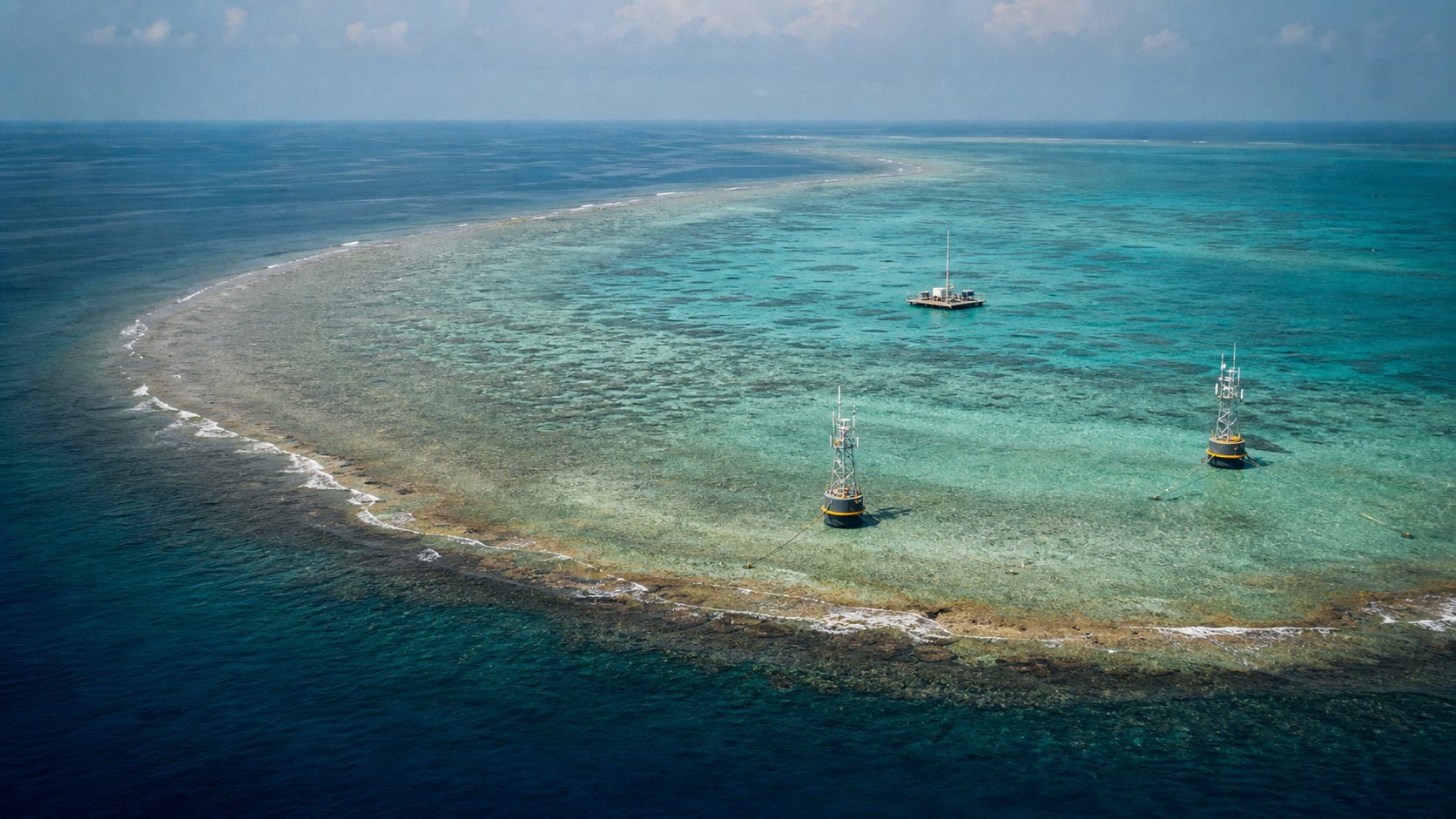
Scarborough Shoal is located about 220 kilometers from the western coast of Luzon Island in the Philippines, situated in the northeastern part of the South China Sea, at the outer area leading into the Bashi Channel and the Luzon Strait. For the Philippines, it is a coastal security issue; for China, it is a convergence point for safeguarding rights in the South China Sea, monitoring maritime traffic, and managing pressure in the southern segment of the first island chain. The military value of this location lies not in the size of the reef itself, but in who can continuously appear, monitor, and organize actions in the surrounding air and maritime areas.
From publicly available information, exercises of this nature in the Southern Theater Command are typically conducted by naval surface vessels, air forces, radar, and shore-based command systems. If the subjects revolve around Scarborough Shoal, the focus is likely not on distant sea battles, but on identification, tracking, expulsion, air-sea coordination, and the stability of command links. This judgment is relatively conservative but aligns with the actual needs of recent exercises in the South China Sea.
Equipment Highlights May Not Be in Large Ships but in Links
It is easy for outsiders to ask whether there are 055-class destroyers, J-16s, or H-6Ks participating. Public information does not provide an answer, and it is unnecessary to guess the types. More interesting is another matter: whether the Southern Theater Command can connect the Coast Guard, Navy, Air Force aviation, and shore-based situational awareness into a single network. The actual pressure in the direction of Scarborough Shoal often does not come from a single large battle in a day, but from multiple batches of ships and aircraft, multiple media outlets, and multiple legal narratives appearing simultaneously, requiring the command system to maintain high-intensity duty during low-intensity friction.
This places specific demands on the equipment system. Maritime platforms need long endurance, air forces need to arrive within a short window, and reconnaissance links need to consolidate radar, drones, patrol aircraft, and ship sensors onto the same map. Compared to the parameters of individual weapons, the ability to continuously generate this map is a hard indicator of modernization in the South China Sea direction. It is somewhat like equipping a factory with better production planning software; no matter how advanced a single machine is, if the scheduling system cannot keep up, the production line will still be blocked.
Philippine Actions Change the Legal Scenario
The SCMP report places this exercise in the context of the Philippines' recent claims to underwater rights. In recent years, the Philippines has become increasingly adept at layering legal, public opinion, and allied exercises in the South China Sea issue, first making claims, then amplifying on-site friction, and finally having partners like the United States, Japan, and Australia conduct joint patrols or exercises. China's response is also shifting from a single Coast Guard enforcement action to simultaneously appearing at three levels: Coast Guard, diplomacy, and theater exercises.
This is not coincidental. The southern segment of the first island chain is now a crossroads of U.S.-Philippine base access, South China Sea arbitration narratives, and the Taiwan Strait flank. If the PLA only conducts pressure tests in the Taiwan Strait direction, it will allow the rhythm in the South China Sea direction to be led by the opponent; if it maintains a predictable theater-level exercise frequency near Scarborough Shoal, it can inform the other side that there is no safe interval between legal documents and maritime actions.
Risks Lie in Tactical Actions Becoming Increasingly Close
I believe that what is truly worth pondering about this exercise is not its scale, but its response time. Public reports indicate that the Southern Theater Command quickly transformed political disputes into joint training actions within a short cycle. If this reaction becomes fixed in the future, a new normal will form near Scarborough Shoal: the Philippines increases its presence through legal and allied mechanisms, while China compresses the opponent's operational window through theater maritime and air exercises.
The advantage of this approach is that costs are controllable, but the drawbacks are also evident. The closer the ships and aircraft are, the easier it is for misjudgments to occur, especially when Coast Guard vessels, supply ships, military ships, and patrol aircraft appear simultaneously. The South China Sea is not a target range; weather, communication, and crew judgment will amplify risks. The PLA's modernization can solve many technical problems, but it cannot resolve all political issues.
The Southern Theater Command stated that the exercises aim to test and improve the troops' practical capabilities in safeguarding national sovereignty and maritime rights. This statement is very standard, but viewed through the coordinates of Scarborough Shoal and August 1, it actually conveys that the theater response chain has already moved forward.
What to watch next is not whether there will be another exercise near Scarborough Shoal, but whether more subject details will be made public: for example, whether anti-submarine patrol aircraft, drone relays, and air-sea joint identification processes will appear. Those details can explain more about how far the PLA has modernized in the South China Sea direction than a strong statement can.
The Southern Theater Command of the People's Liberation Army conducted joint military exercises near Scarborough Shoal on August 1, marking a response to perceived threats to regional stability. This exercise aims to enhance operational capabilities in maintaining national sovereignty and reflects a strategic shift in response to external legal actions. The location holds significant military value for both China and the Philippines, emphasizing the importance of rapid response in the region.
- The Southern Theater Command conducted joint exercises near Scarborough Shoal on August 1.
- The exercises are a response to actions by certain countries that threaten regional stability.
- The exercises aim to test and improve the PLA's operational capabilities in maintaining national sovereignty.
- The location is strategically significant for both China and the Philippines.
- The exercises indicate a shift in the PLA's response strategy to external legal actions.